
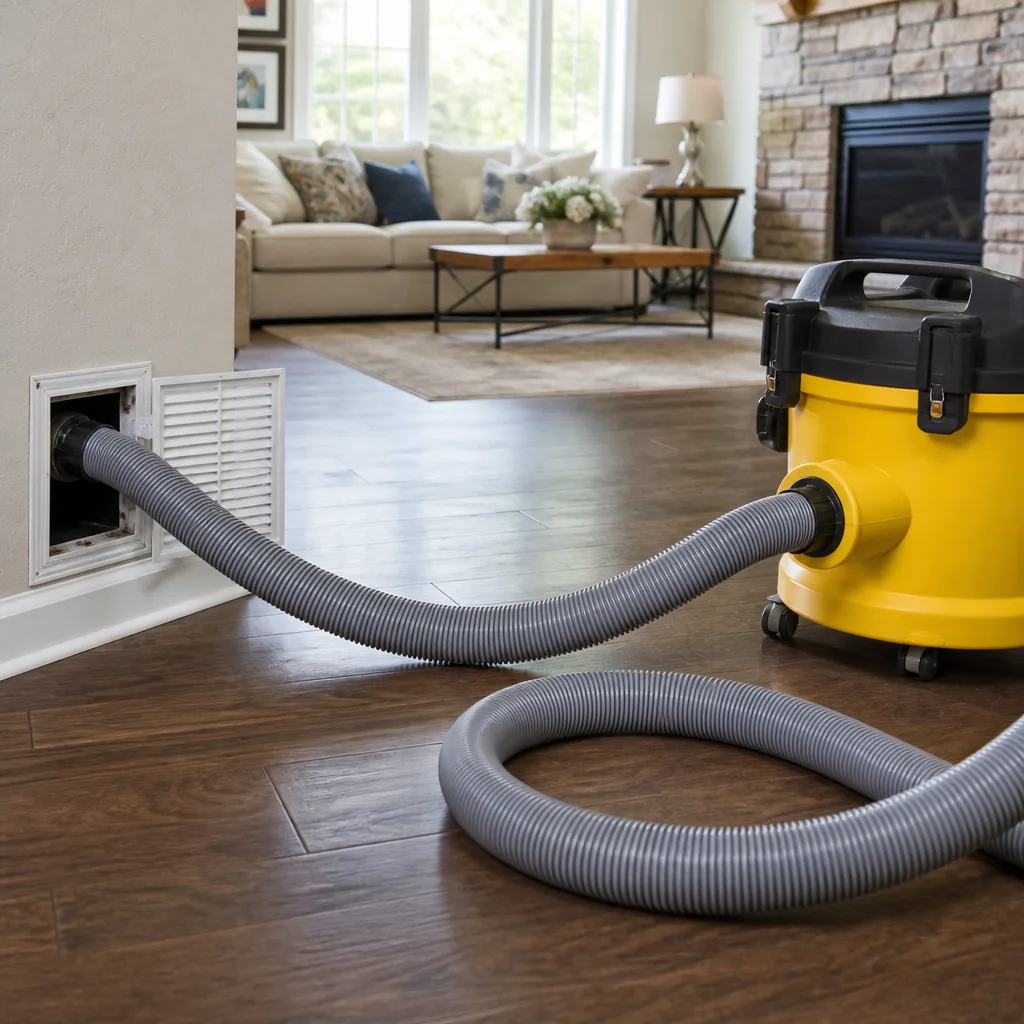
 Whole-home duct cleaning
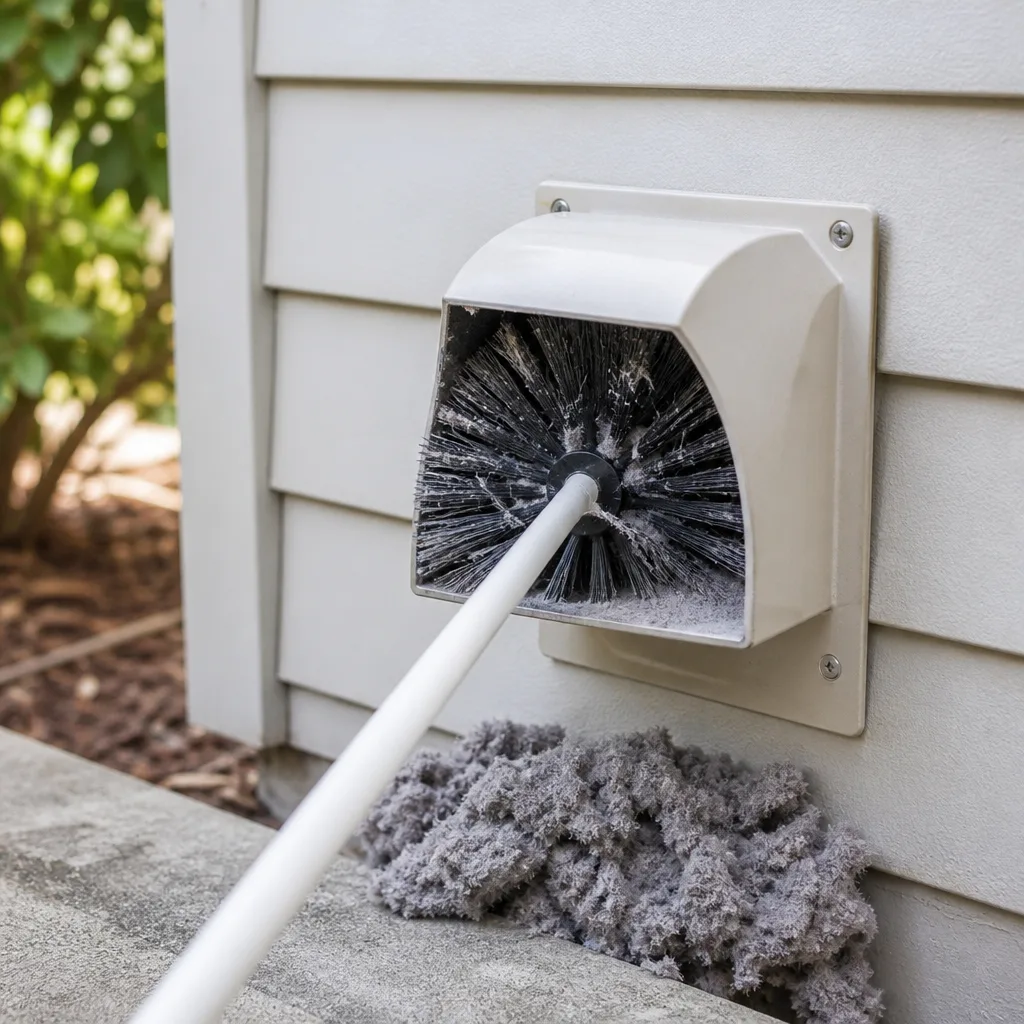 Dryer vent cleaning
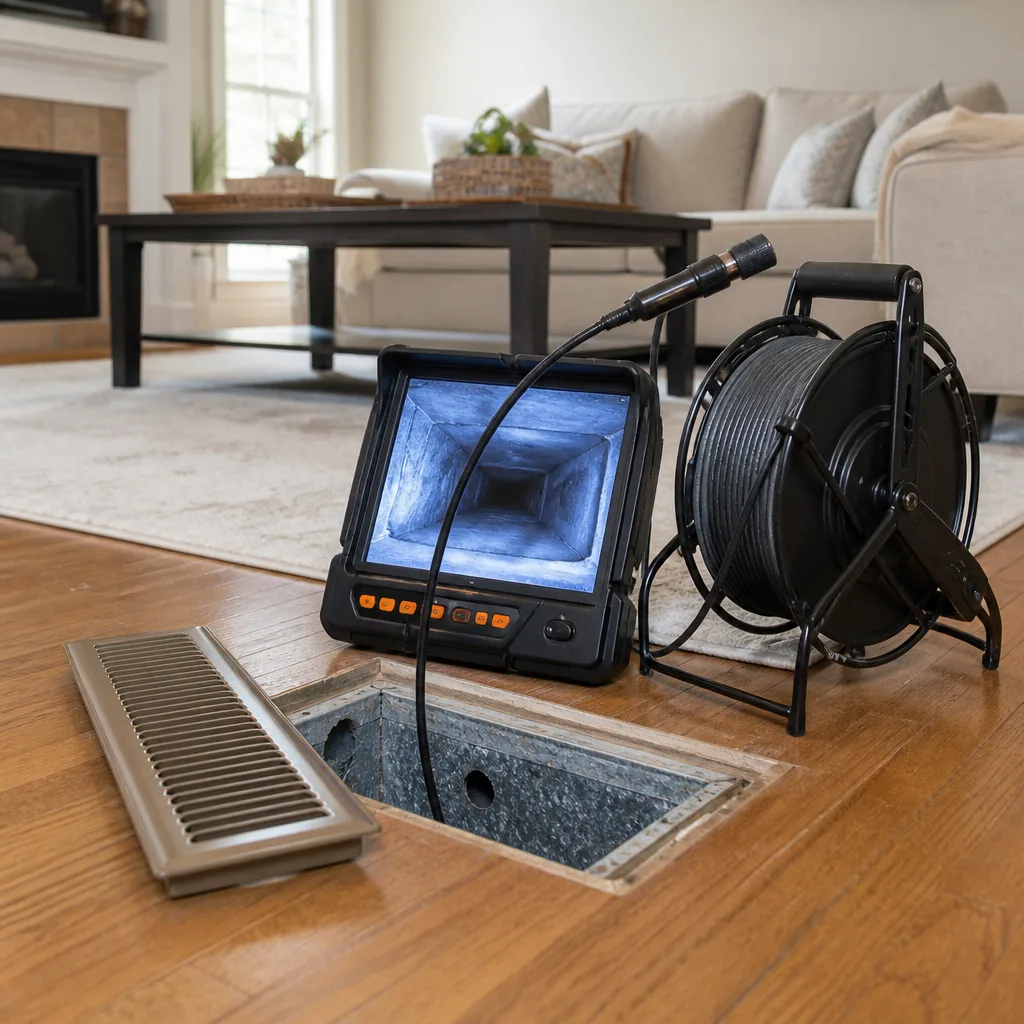 Camera inspection
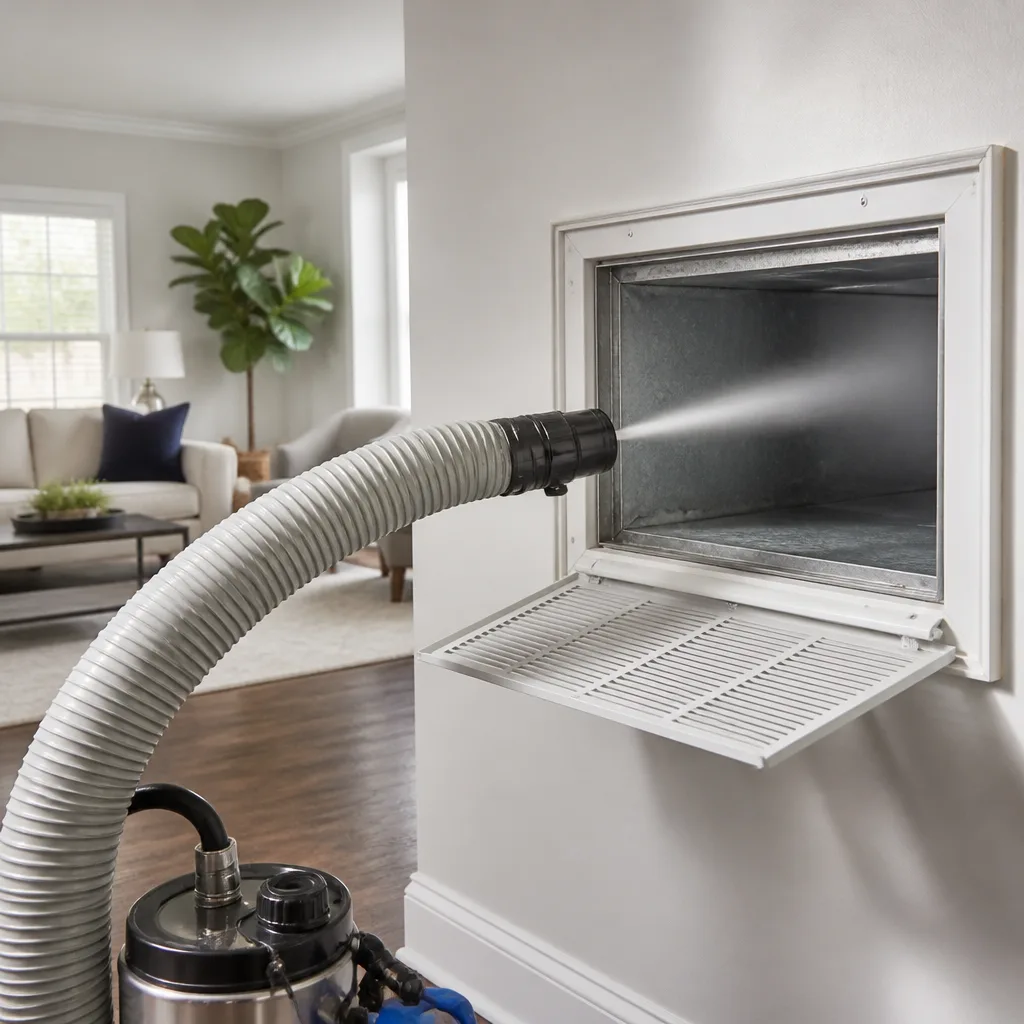 Sanitizing & deodorizing
Whole-system duct and dryer vent check with before-and-after photos - you see exactly what came out of your vents
That "$99 whole-house special" is a bait ad - the real number appears once they are in your hallway, or the "clean" is a shop-vac at the register. We photograph the inside of your ducts before and after instead.
Honeywell Duct Sealing & Repair: The Atlanta Owner’s Guide
Honeywell duct sealing and repair in Atlanta typically runs between $350 and $1,400 depending on how much of your ductwork has failed and whether we’re sealing leaks, replacing sections, or both. We stock Honeywell-compatible sealing products on our trucks and can usually complete the job in a single visit. Most Atlanta homeowners discover the problem the same way: one room never quite cools in August, the utility bill creeps up month after month, or they open a vent and find gray duct tape peeling away from the joint like old wallpaper.
That duct tape is the usual suspect. Honeywell systems are built well, but their duct connections rely on proper sealing at installation, and in Atlanta’s humidity, the adhesive on standard tape breaks down within three to five years. Once that seal fails, conditioned air leaks into your attic or crawlspace, and your system works harder for worse results.
Which Honeywell Models This Applies To
Honeywell doesn’t manufacture ductwork itself, so when we talk about Honeywell duct sealing, we’re talking about the connections, collars, dampers, and plenum interfaces tied to your Honeywell air handler, zoning system, or whole-home ventilation setup. The most common callers in Atlanta have Honeywell TrueZONE panels driving dampers that are leaking at the duct connection, or Honeywell whole-home dehumidifiers and ventilators that were spliced into existing duct runs and are now bleeding air at the splice.
Here’s the compatibility gotcha most people don’t know: Honeywell TrueZONE dampers come in round and rectangular sizes that match standard duct dimensions, but the damper collars are slightly narrower than the duct they slide into. If the gap isn’t sealed with mastic or a proper foil-backed tape at installation, that perimeter leak can cost you 8 to 12 percent of your conditioned air. We see it regularly in Atlanta, especially in homes where the original install was done quickly. The good news is that this is a repair, not a replacement: we can reseal the collar correctly and restore the seal without pulling the damper.
For the sealing materials themselves, we use commercial-grade water-based mastic and UL-listed foil tape, the same class of product Honeywell specifies for their system installs. On the OEM versus aftermarket question: for sealing, there is no Honeywell-branded tape you need to chase down. What matters is that the product is rated for HVAC use and applied correctly. What we stock and use meets that standard, and we’ll show you the product before it goes on your ducts.
Styles & brands we work with
Signs Your Honeywell Duct Sealing Is Failing
Duct seal failures tend to announce themselves in patterns. Here are the five signs we see most often in Atlanta homes, each with the underlying cause:
- One or two rooms never hold temperature. The duct run serving those rooms has a separated or poorly sealed joint, and most of the air is ending up in the attic or crawlspace instead of the register. Your thermostat is happy, but that bedroom isn’t.
- Your electric bill climbs without explanation. A Honeywell system losing 10 to 20 percent of its conditioned air through leaky connections runs noticeably longer to satisfy the thermostat. In Atlanta summers, that adds up fast.
- You can feel air blowing around a vent, not through it. The register boot has separated from the drywall or the duct collar is loose. Air takes the path of least resistance, and a gap around the boot is easier than the vent itself.
- Dust builds up quickly on surfaces near vents. Leaks on the return side pull attic or crawlspace air into your system, and that air carries dust, insulation fibers, and whatever else lives up there.
- You hear a faint whistling or fluttering sound. That’s air moving through a small gap under pressure. It’s not a problem that fixes itself, and it usually gets louder as the seal deteriorates further.
See the difference
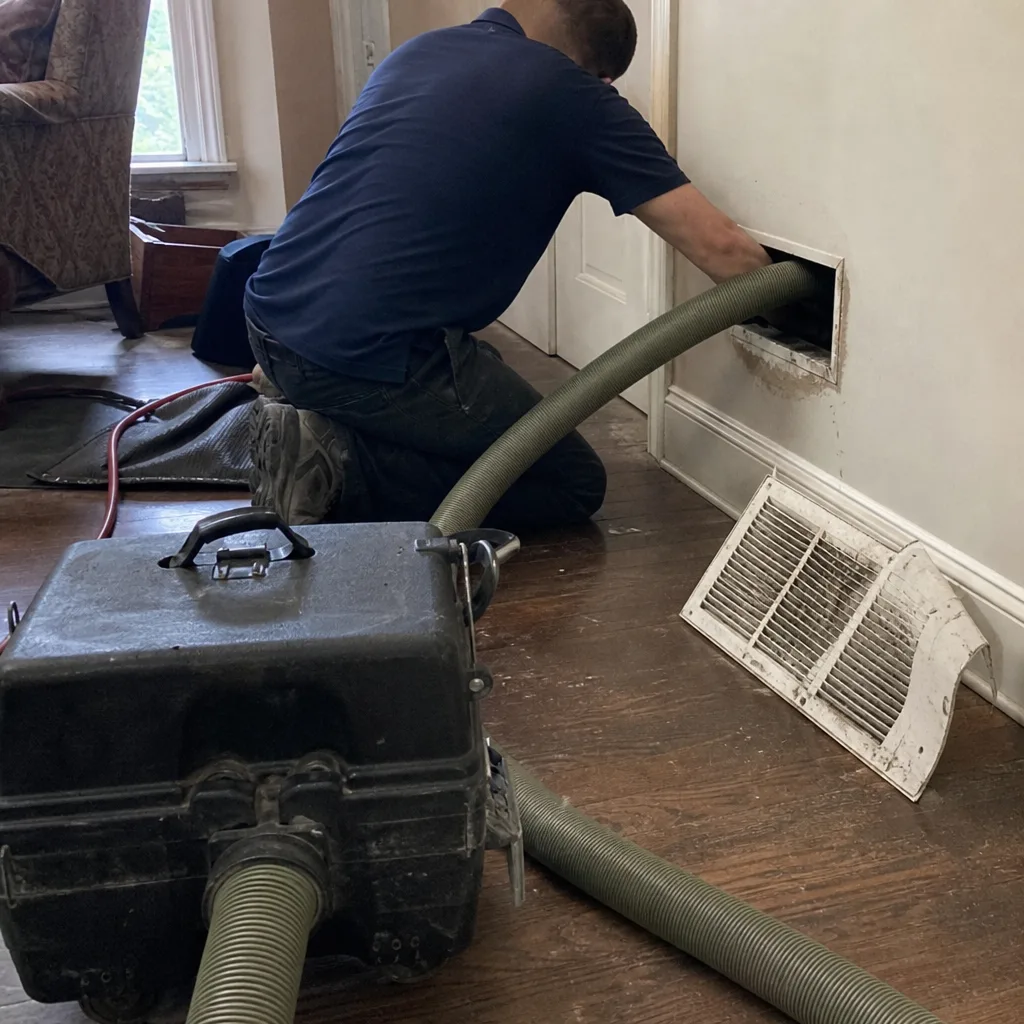 Before
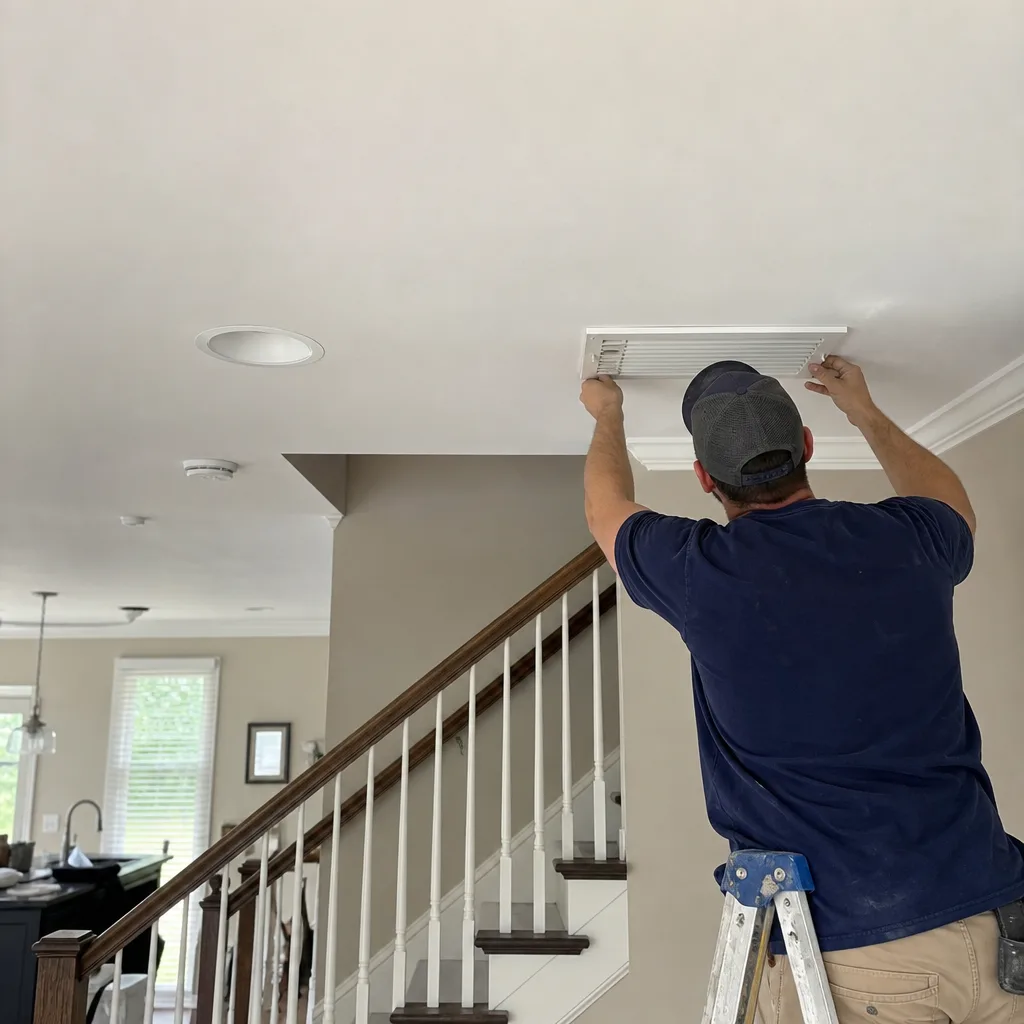 After
After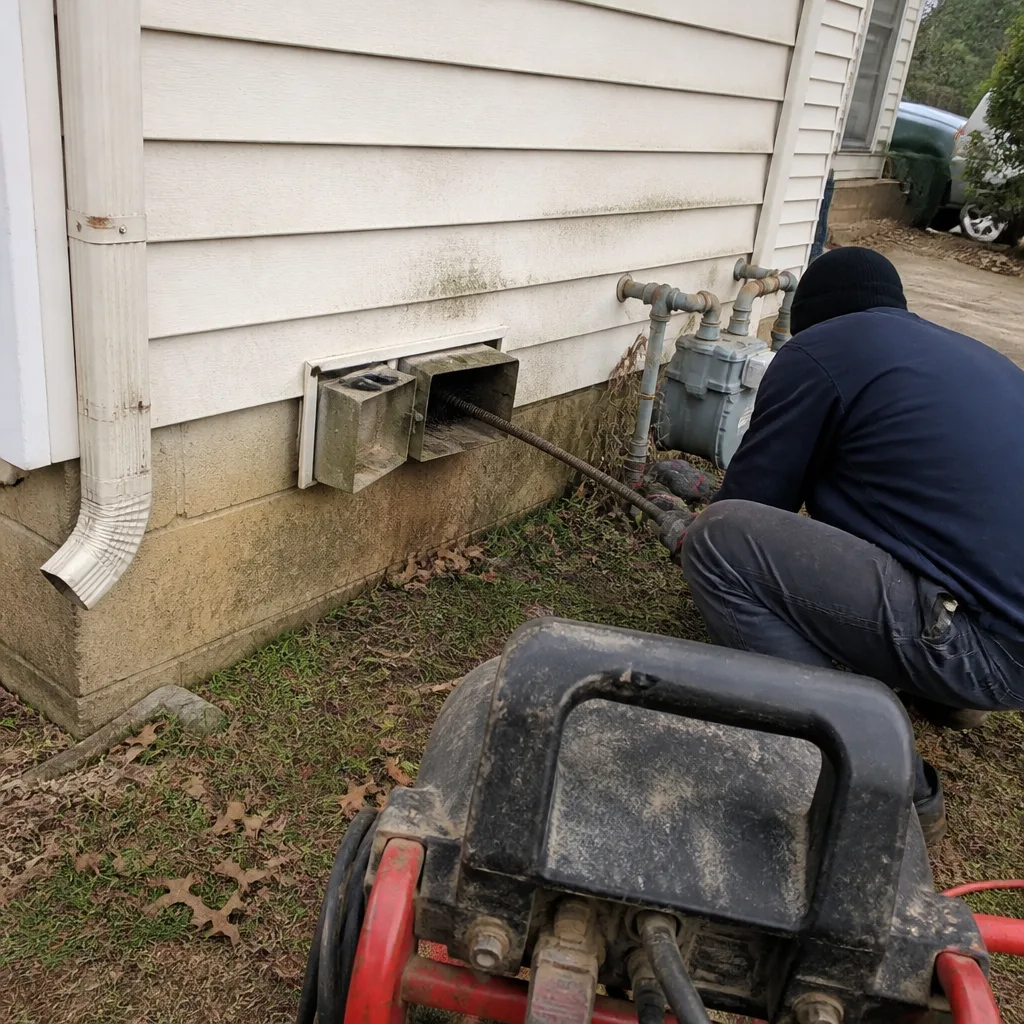 Before
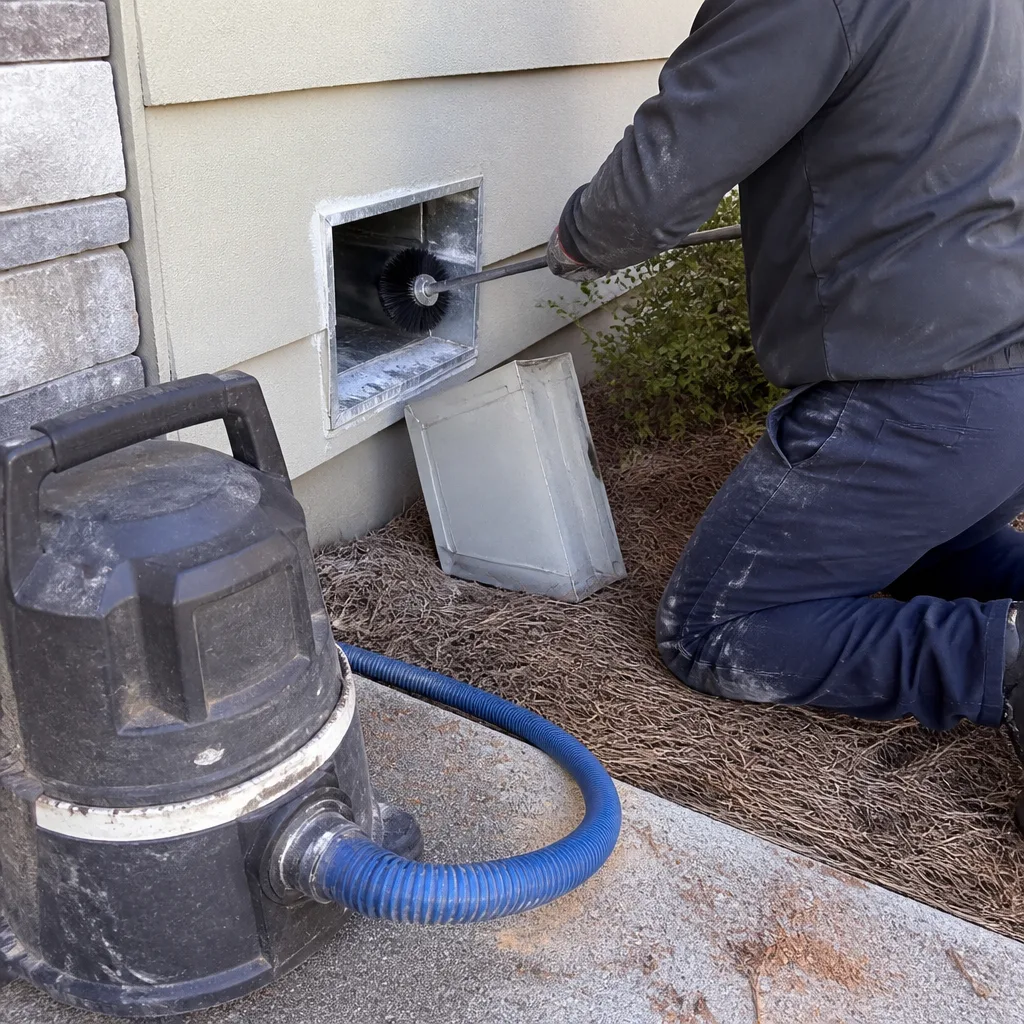 After
After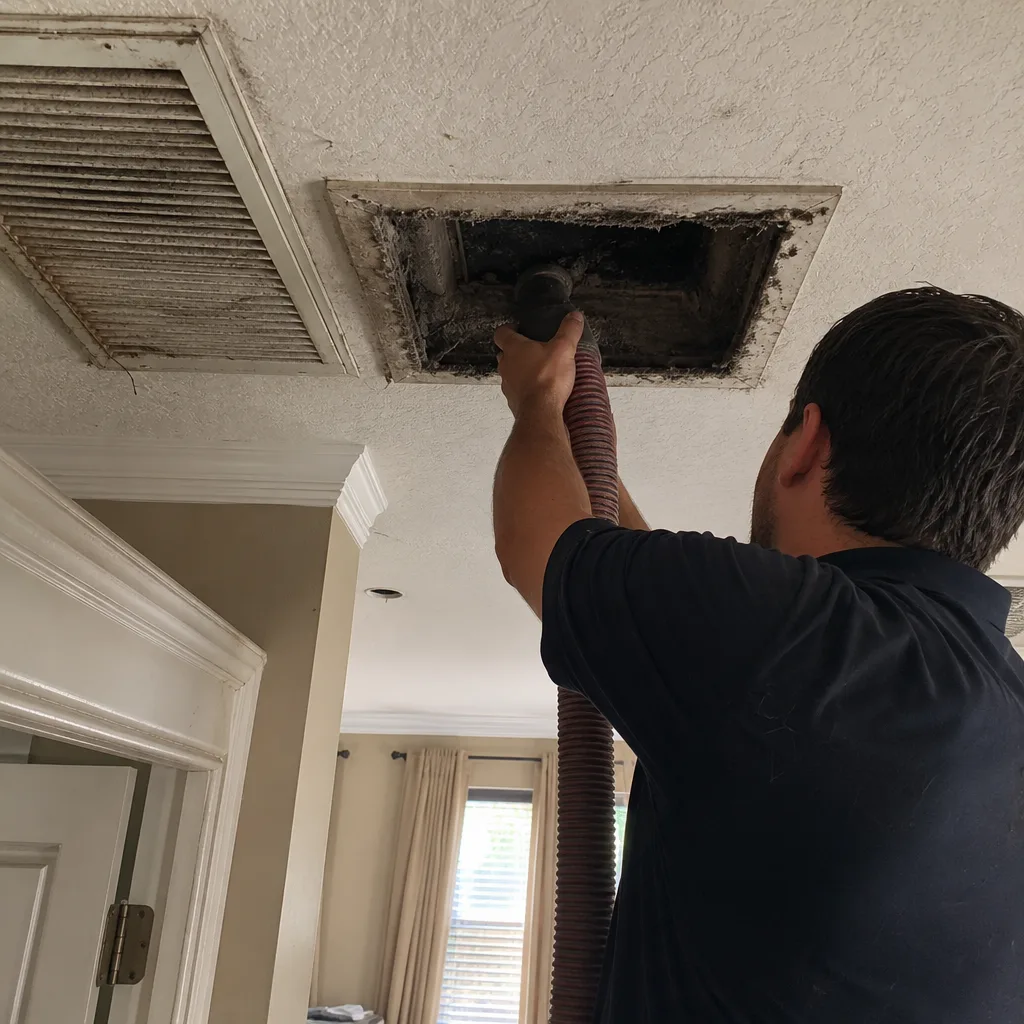 Before
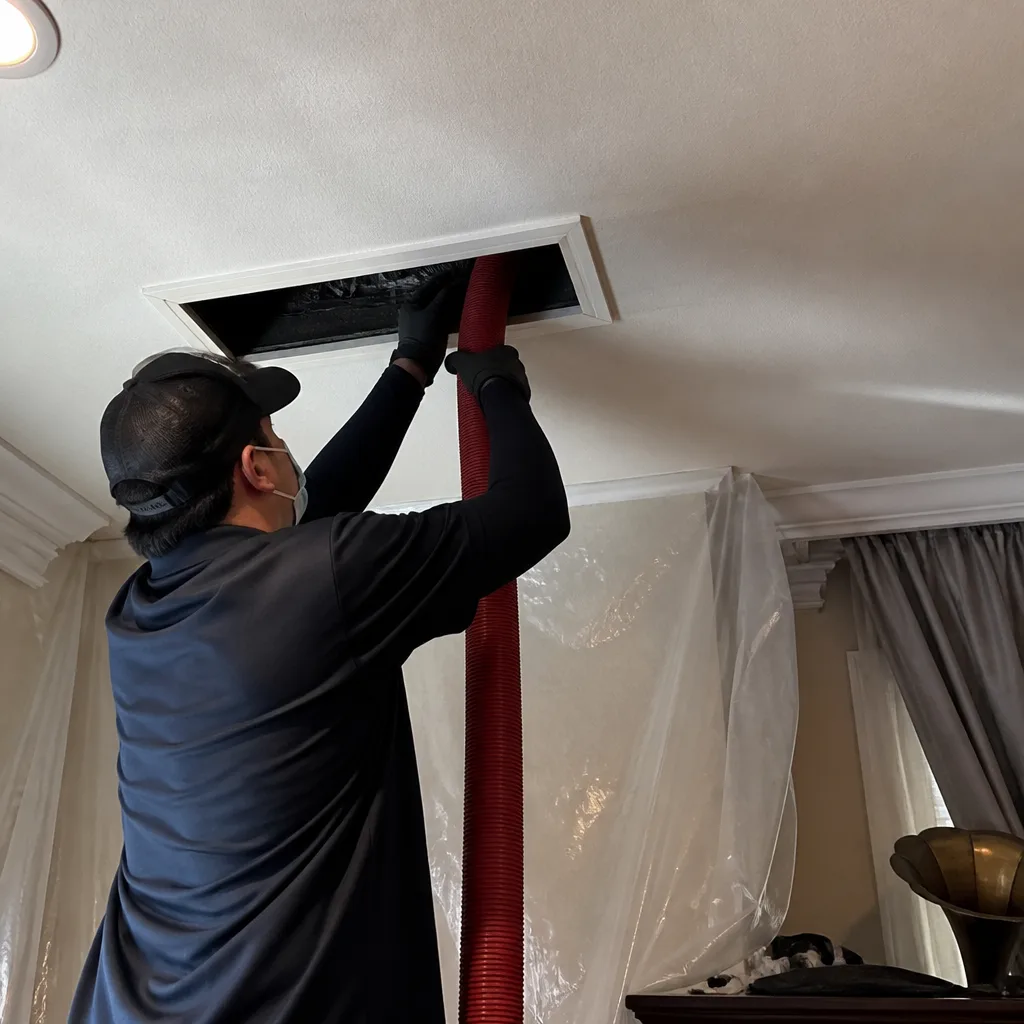 After
AfterReplacement Cost & What’s Included
Here’s what Atlanta homeowners can expect to pay for Honeywell duct sealing and repair, based on the scope of the work:
| Job Scope | Typical Atlanta Price Range |
|---|---|
| Single duct joint or damper collar reseal | $350 – $550 |
| Multiple connections in one accessible run | $550 – $900 |
| Full system sealing, multiple runs and plenum | $900 – $1,400 |
Those prices include labor, materials, and our written guarantee. What drives the range is access: ductwork in a walkable Atlanta attic is faster and cheaper to reach than ductwork in a low crawlspace under a ranch house in Decatur. The price you get before we start is the price you pay. That’s written, always, no exceptions. If the seal fails within 365 days, we come back and fix it at no charge under our 365-Day Done Right Promise.
DIY or Call Us?
You can do some useful detective work yourself. Turn on the fan, then run your hand along accessible duct connections in the attic or crawlspace. You’ll feel the leak before you see it. Take photos of any separated joints or peeling tape. That helps us quote accurately over the phone.
Where DIY goes wrong is the repair itself. Duct sealing done properly means cleaning the joint, applying mastic correctly, and reinforcing with foil tape in the right order, and doing it in a Georgia attic in July is not how most people want to spend a Saturday. If the leak is on a Honeywell damper or zoning connection, an improper seal can bind the damper mechanism or restrict airflow. That turns a $400 reseal into a $900 damper replacement. If you’re not sure what you’re looking at, call (912) 493-7110 and describe what you found. We’ll tell you honestly whether it needs a technician.
FAQs
Properly applied mastic and foil tape on clean metal connections will last 10 to 15 years in Atlanta conditions. The wildcard is humidity and attic heat cycles, which is exactly why so many tape-only seals fail within a few years here. We use mastic as the primary seal and foil tape as the mechanical reinforcement, which is the combination that holds up.
In most cases, yes. The duct itself is usually fine; it’s the connection that failed. We reseal the joint, and that’s the permanent fix. We only recommend section replacement when the duct metal is crushed, rusted through, or has separated beyond a simple reseal. Call (912) 493-7110 and we’ll walk through what you’re seeing before recommending anything.
A single-joint reseal takes about one to two hours. A full-system sealing on a typical Atlanta home runs three to five hours depending on access and how many connections need attention. We’ll give you a time window before the visit and our technician, whose name and photo you’ll already have, will walk you through the before and after.
Yes. Our trucks carry commercial-grade mastic, HVAC-rated foil tape, and replacement collars and register boots for common Atlanta duct configurations. We also service and seal connections on systems from Lennox, Trane, and Carrier, so if your Honeywell system connects to older ductwork from a previous brand, we’re equipped for that too.
If your Honeywell system is leaking air somewhere in the attic or crawlspace, we’re the crew to call. You’ll get a written price before anything starts, a technician whose name and photo you receive before the visit and whose badge you’ll see at the door, and a 365-day guarantee that the seal holds. Marcus Veale has spent the better part of two decades in Atlanta ductwork, and he won’t leave your house without showing you exactly what was sealed and why it will hold. Call (912) 493-7110 for a free estimate.
Written by Marcus Veale, Owner, Linden Air Duct Atlanta at Linden Air Duct Atlanta, serving Atlanta and nearby areas.