
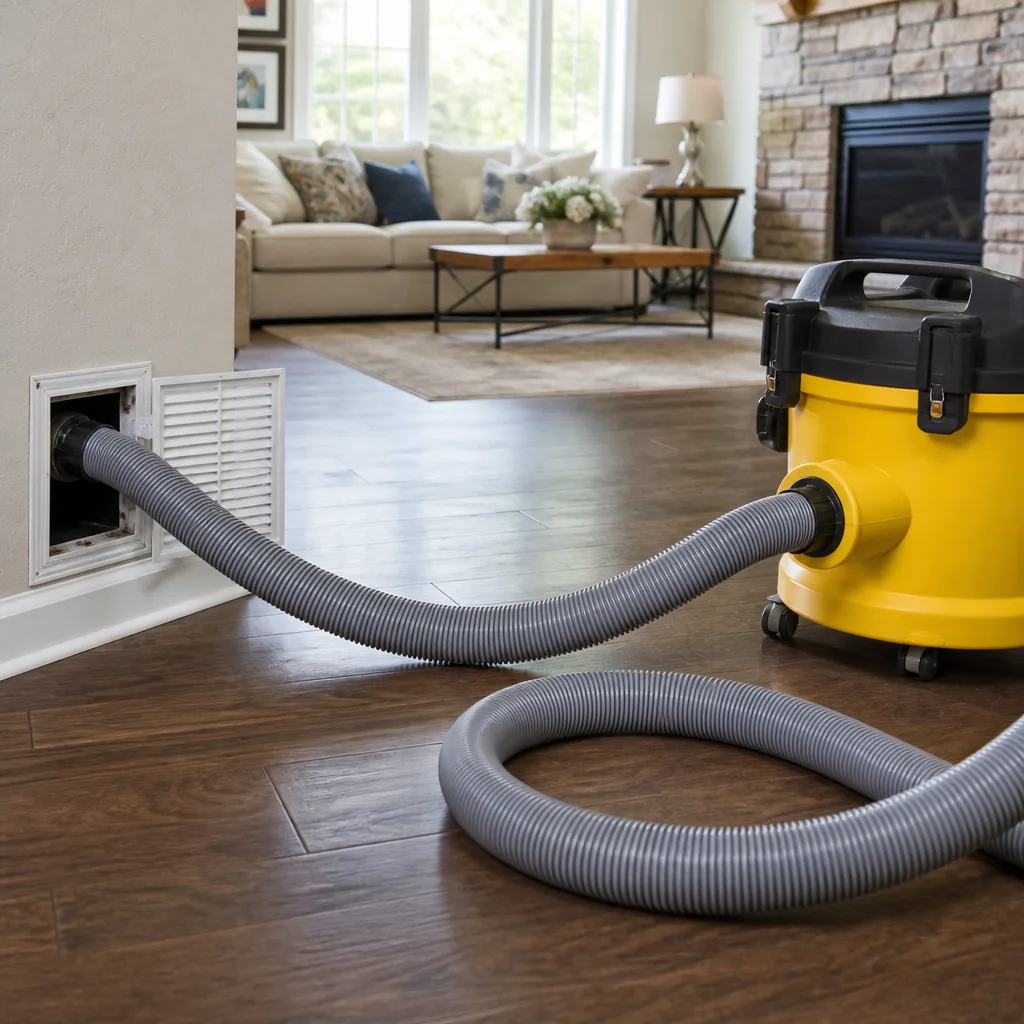
 Whole-home duct cleaning
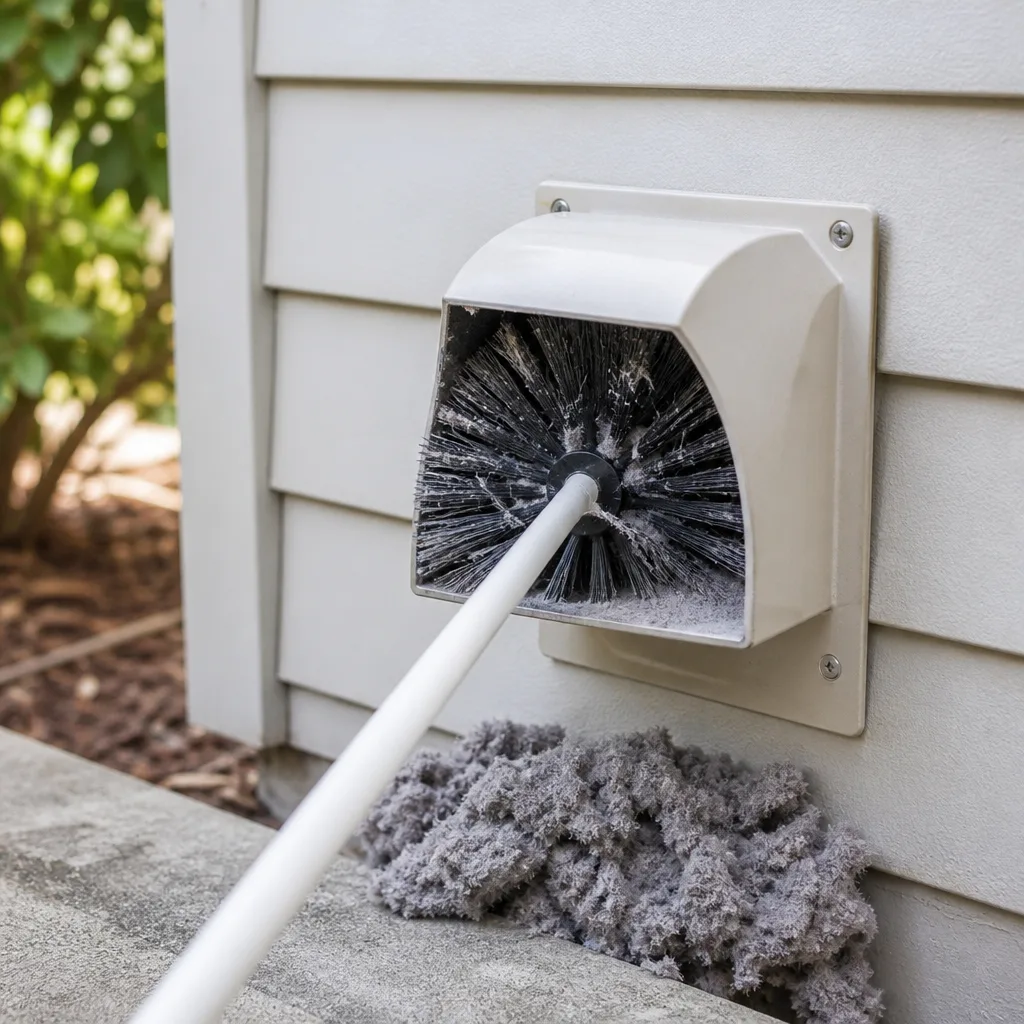 Dryer vent cleaning
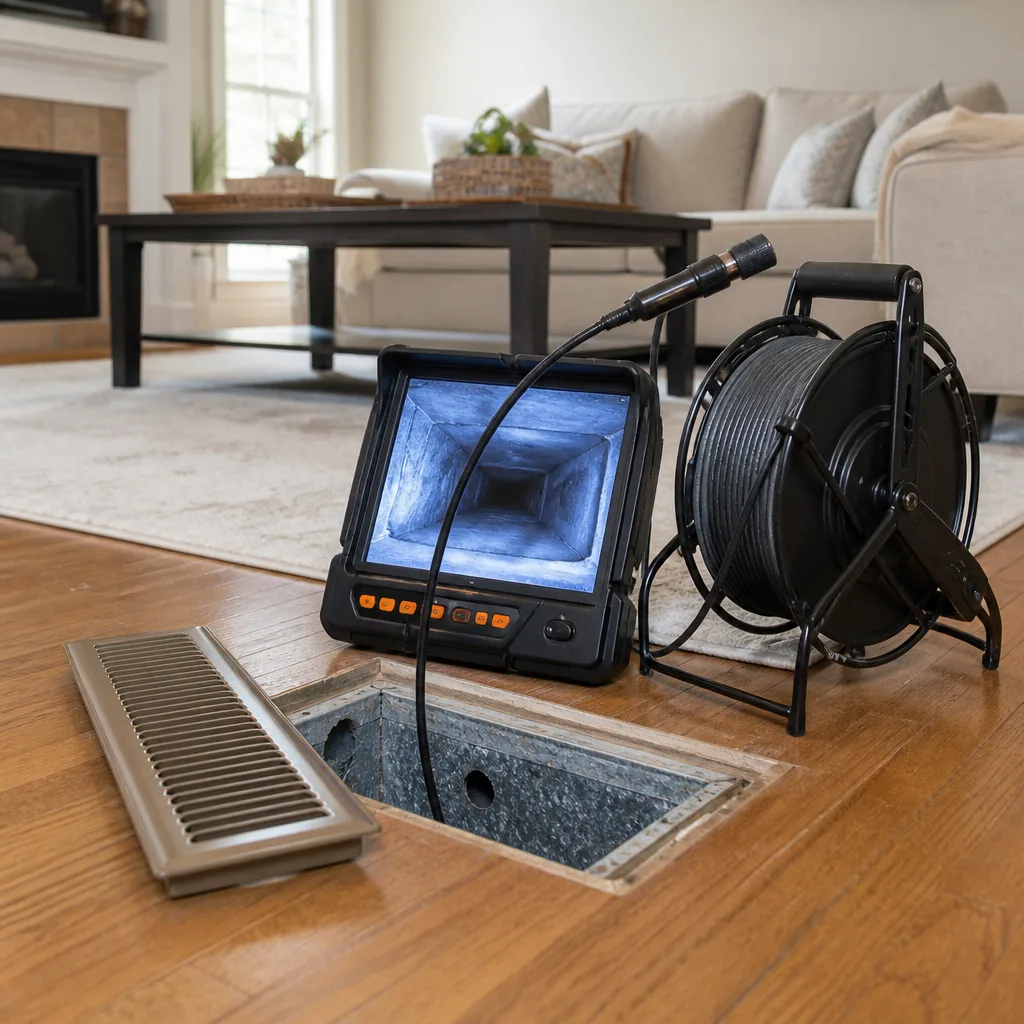 Camera inspection
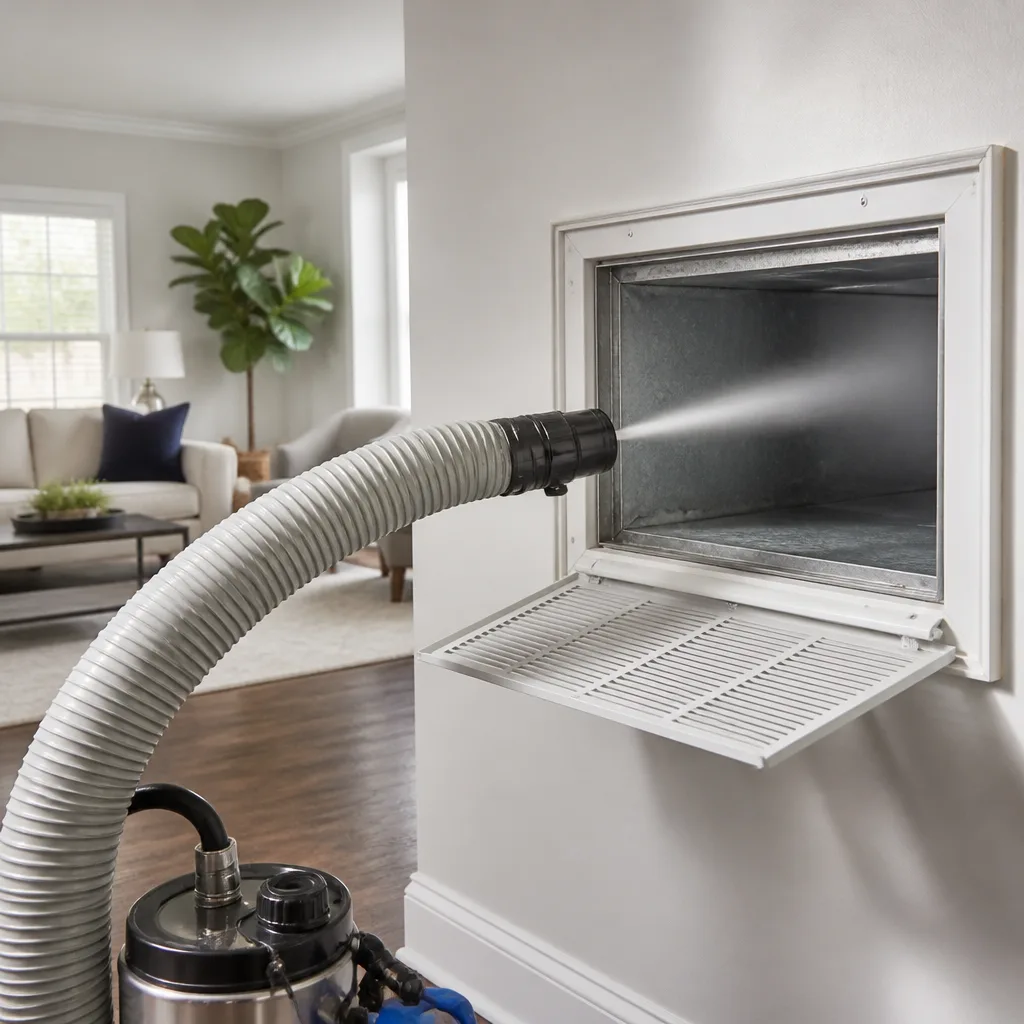 Sanitizing & deodorizing
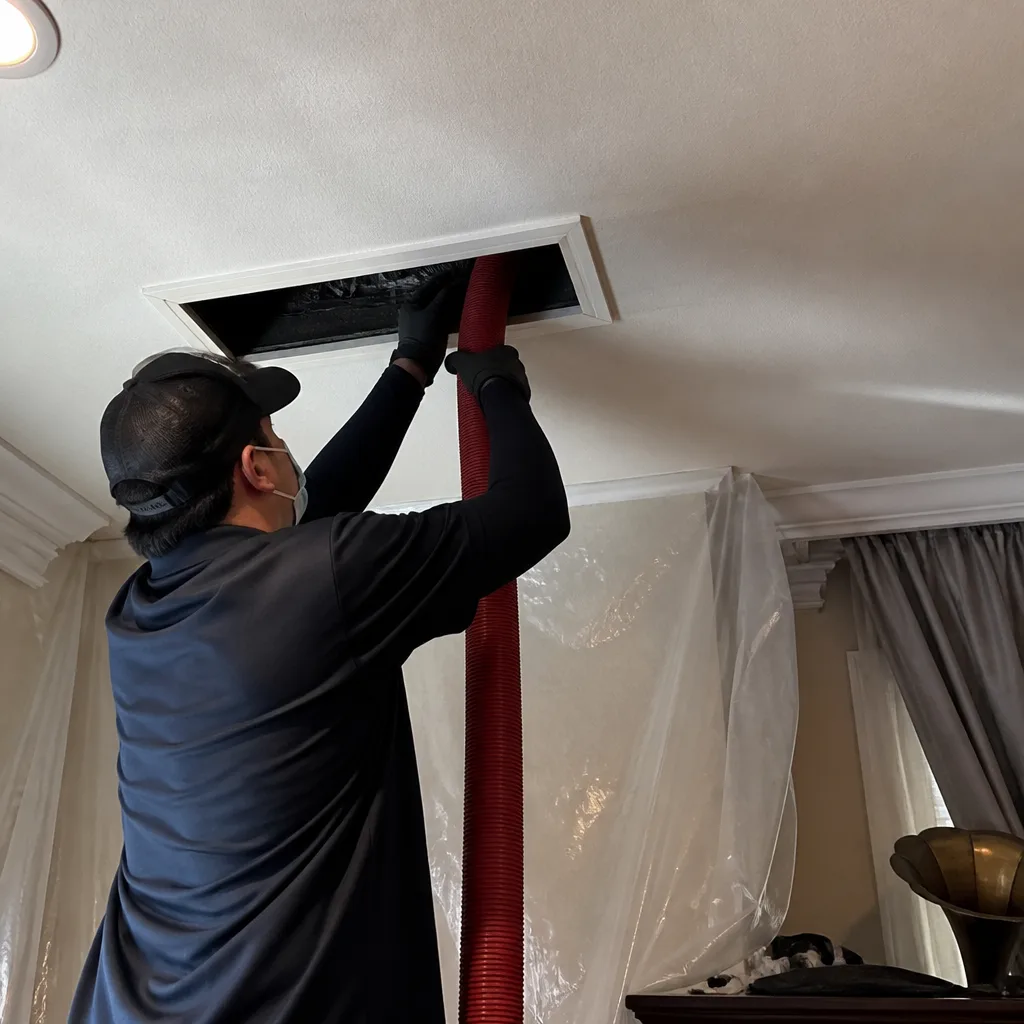
Whole-system duct and dryer vent check with before-and-after photos - you see exactly what came out of your vents
That "$99 whole-house special" is a bait ad - the real number appears once they are in your hallway, or the "clean" is a shop-vac at the register. We photograph the inside of your ducts before and after instead.
Honeywell Register & Grille Cleaning: The Atlanta Owner’s Guide
Honeywell register and grille cleaning in Atlanta typically runs $90 to $180 per vent when done as part of a full-system air duct cleaning, or $12 to $25 per register for a standalone wipe-down and deep clean service. We stock cleaning solutions, soft-bristle brushes, and microfiber kits sized for Honeywell’s stamped-steel and aluminum grille lines, and most homes are serviceable in a single visit. The job usually surfaces because a homeowner notices gray streaks forming around the vent edges, a musty smell that intensifies when the AC kicks on, or black dust accumulating on the grille fins faster than anywhere else in the room.
What most Atlanta homeowners don’t realize is that the grille itself is rarely the source of the problem. It’s the register boot behind it, the metal box connecting the grille to the duct run. Honeywell grilles use a tighter fin spacing than many generic brands, which means they trap more dust on the visible face while the real buildup accumulates unseen in the boot and the first few feet of duct. That’s why a register cleaning that only wipes the visible surface is a half-measure. Our crews clean both the grille and the boot, because doing one without the other means the streaking comes back in weeks, not years.
We’ve been cleaning Honeywell registers in Atlanta homes since 2004, and we’ve seen grilles pulled from 1920s bungalows in Grant Park coated in layers of paint and nicotine, and we’ve seen three-year-old registers in Buckhead high-rises that look worse than those. The variable isn’t the grille. It’s what’s moving through it.
Which Honeywell Models This Applies To
Our register and grille cleaning service covers essentially every Honeywell residential vent line sold in the Atlanta market over the past three decades. That includes the current Home Pro series of steel floor, wall, and ceiling registers, the older CT and RC stamped-steel lines, the aluminum 360-series return grilles, and the decorative wood-core models Honeywell distributed through big-box retailers in the mid-2000s.
The key thing to know: Honeywell registers are cut to standard duct opening sizes – 4×10, 4×12, 6×10, 6×12, and 12×12 are the ones we see most often in Atlanta homes. But the fin depth and angle differ from what you’ll find on a no-name builder-grade register. Honeywell fins are slightly deeper and set at a steeper pitch, which directs airflow more efficiently into the room but also traps more particulate on the back side of each fin. That’s not a defect. It’s a tradeoff. Efficient directional airflow means more surface area for dust to grab.
If you’re trying to identify which grille you have, look for the stamped “Honeywell” mark on the face of the outer frame or the back edge of the damper blade. Older models sometimes only carry the model number, which is usually a two-letter prefix (RC, CT, or HG) followed by dimensions. If you can’t find any marking, measure the opening, not the outer frame. The opening measurement is what matters when you’re ordering a replacement or matching a missing grille.
On the OEM versus aftermarket question: Honeywell registers are widely available and the aftermarket equivalents from manufacturers like TruAire and Accord are perfectly serviceable for the visible grille. But we’ve found that the aftermarket damper mechanisms, the little metal blade you flip to open or close airflow, wear out noticeably faster than Honeywell’s OEM damper. If you’re replacing a grille, not just cleaning it, and the damper matters to you, the OEM part is worth the extra few dollars. We can advise on that when we’re in your home.
Styles & brands we work with
How Atlanta’s Climate Affects Honeywell Registers
Atlanta’s humidity does something specific to register grilles that drier climates never see: condensation. When cold conditioned air hits a warm, humid room, moisture forms on the metal face of the grille, especially on registers closest to the air handler. That moisture mixes with airborne dust, and the result is a gray, slightly tacky film that bakes onto the metal over time. In neighborhoods like Decatur, East Lake, and Vinings, where the tree canopy is heavy, that film also captures pollen and fine organic matter that sticks harder and smells mustier.
We see this most often on ceiling registers in bedrooms and on floor registers near entry doors. The fix isn’t a different grille. It’s cleaning frequency and, in some homes, repositioning or replacing a register with a model that has a wider fin gap to allow more laminar airflow. But that’s a conversation better had standing in front of the vent than over the phone.
Signs Your Honeywell Register & Grille Cleaning Is Overdue
- Gray or black streaking around the grille frame. This is dust and condensation mixing at the metal seam where the grille meets the drywall or floor. The streak pattern usually matches the airflow direction, which tells us the buildup is inside the boot, not just on the surface.
- Visible dust clumps on the back side of the fins. If you remove the grille and the fin edges facing the duct opening look fuzzy or coated, the grille has been filtering return air passively while the actual filter upstream has been underperforming. That means the filter slot, the boot, and the first few feet of duct all need attention.
- Musty odor that spikes when the system cycles on. In Atlanta’s summer, the evaporator coil produces a lot of condensation. If the drain pan or coil is even slightly dirty, that moisture carries microbial growth into the duct, and the grille is the first place you’ll smell it. Cleaning the grille alone won’t touch this. The source is upstream.
- Damper blade that’s stiff, stuck, or won’t stay open. Honeywell damper blades sit directly in the airstream. Dust and moisture combine to rust the pivot pins over time, particularly on floor registers in kitchens and bathrooms. If the damper won’t hold its position, it’s a cheap part to replace, but the rust tells us the airflow has been carrying moisture, which is a system-level issue.
- Uneven airflow between rooms. When a grille face loads up with enough film and dust, the pressure drop across it changes. One room starts feeling stuffy while another stays comfortable. Homeowners often blame the thermostat or the zoning system. We usually find a fouled register and an equally fouled boot.
See the difference
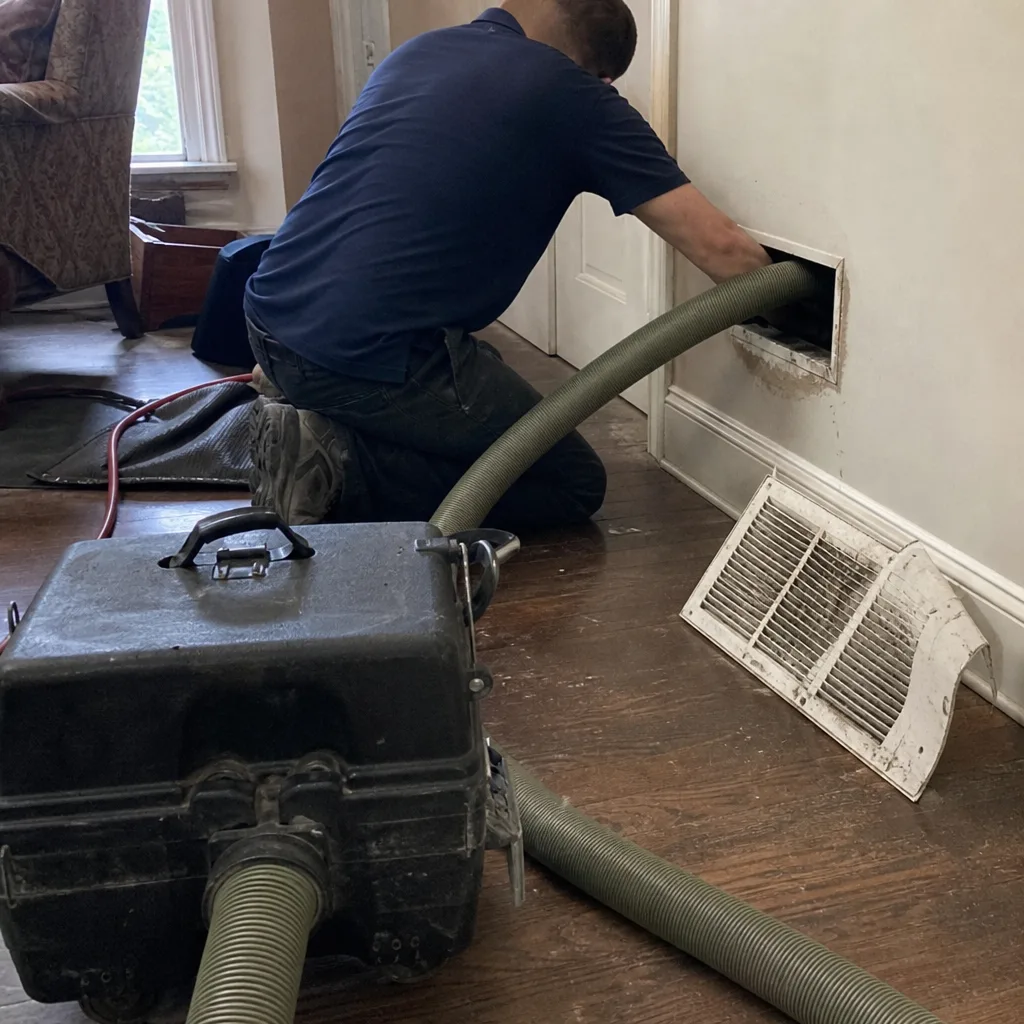 Before
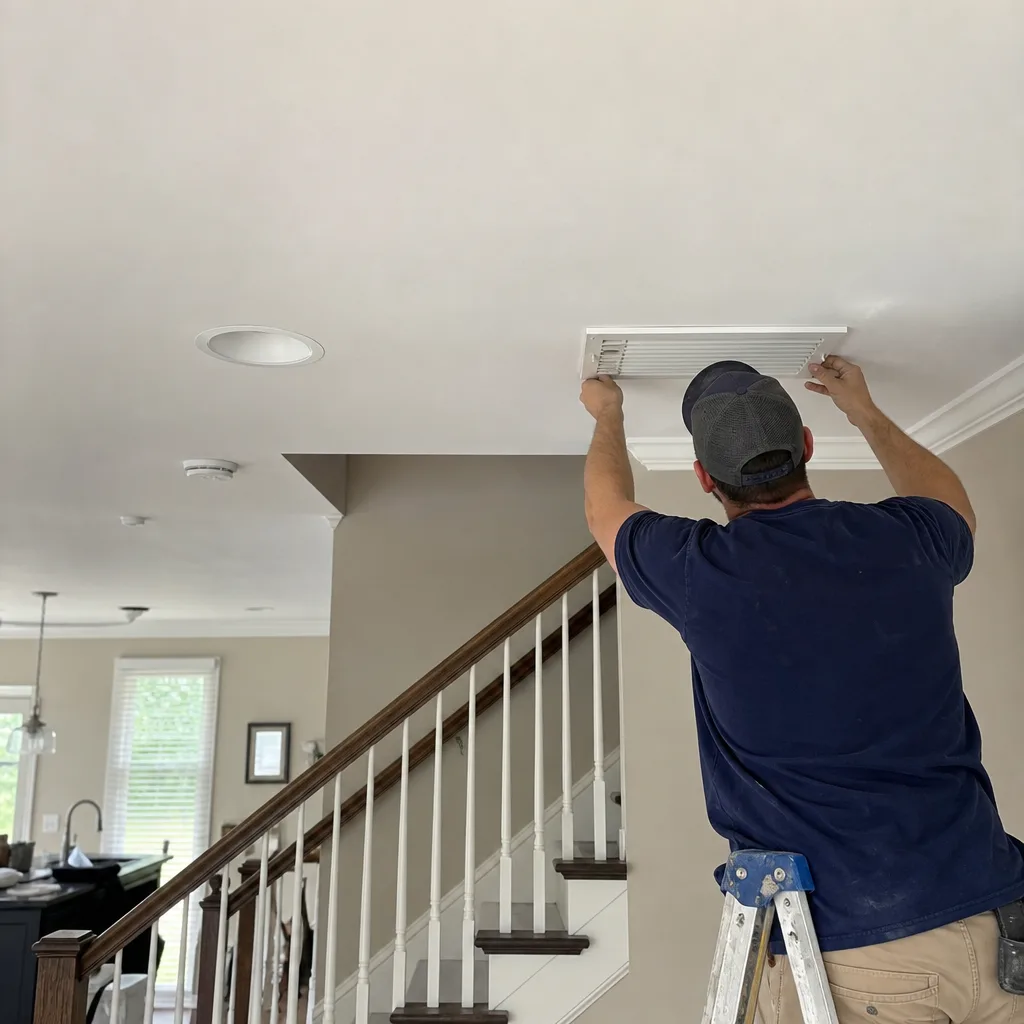 After
After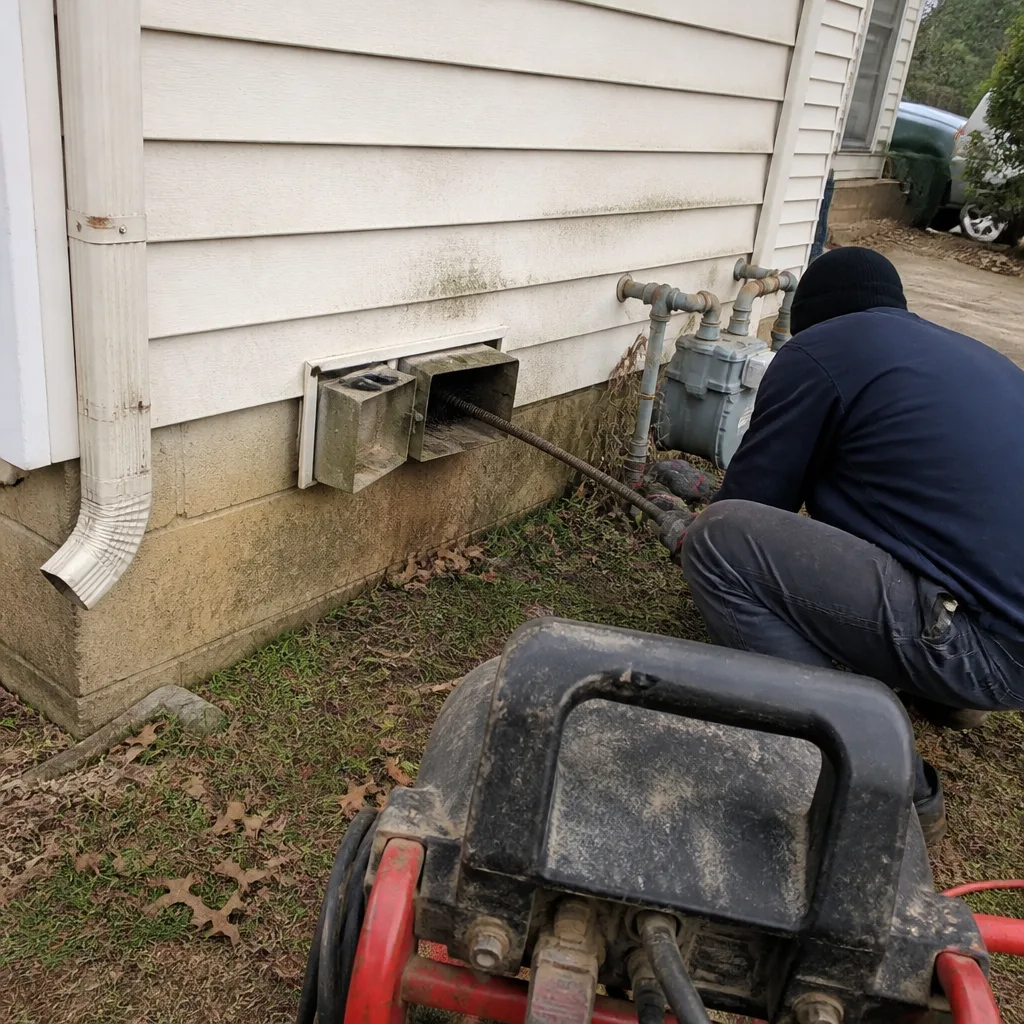 Before
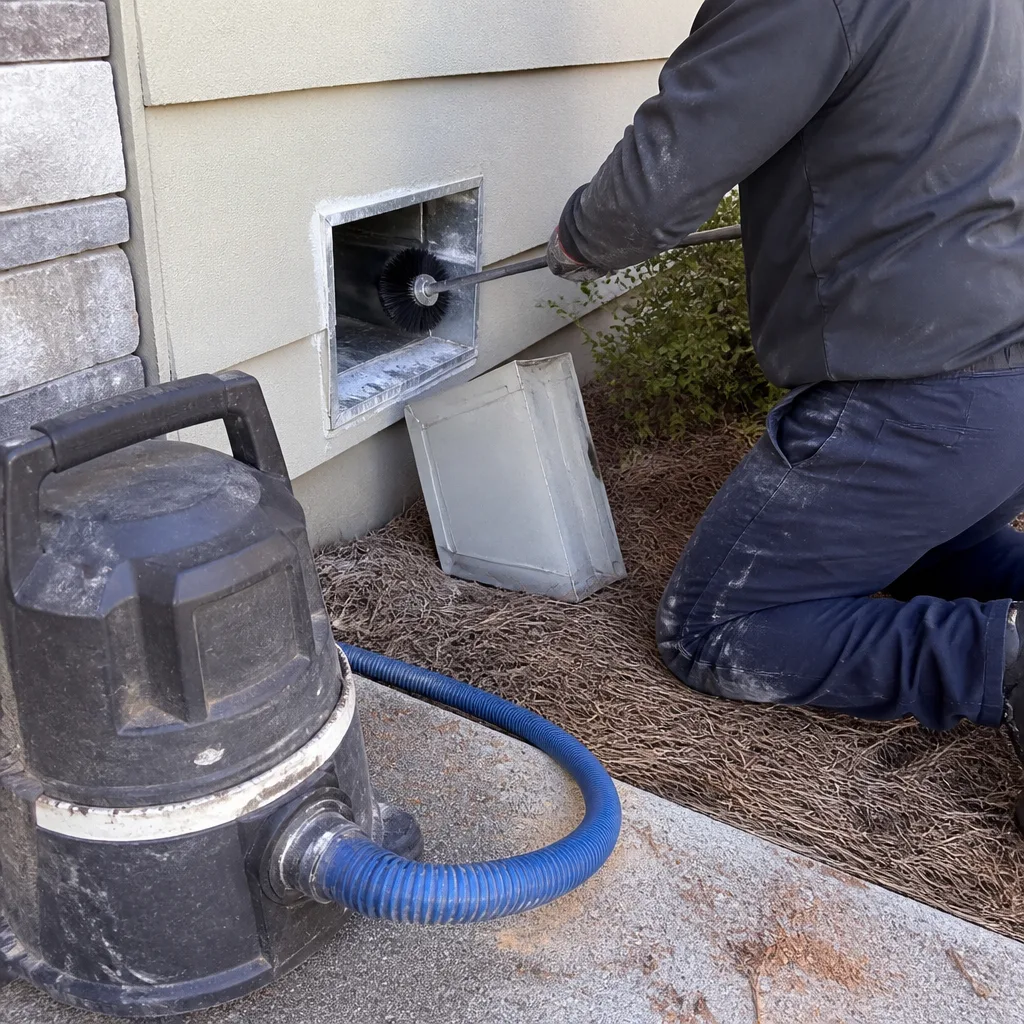 After
After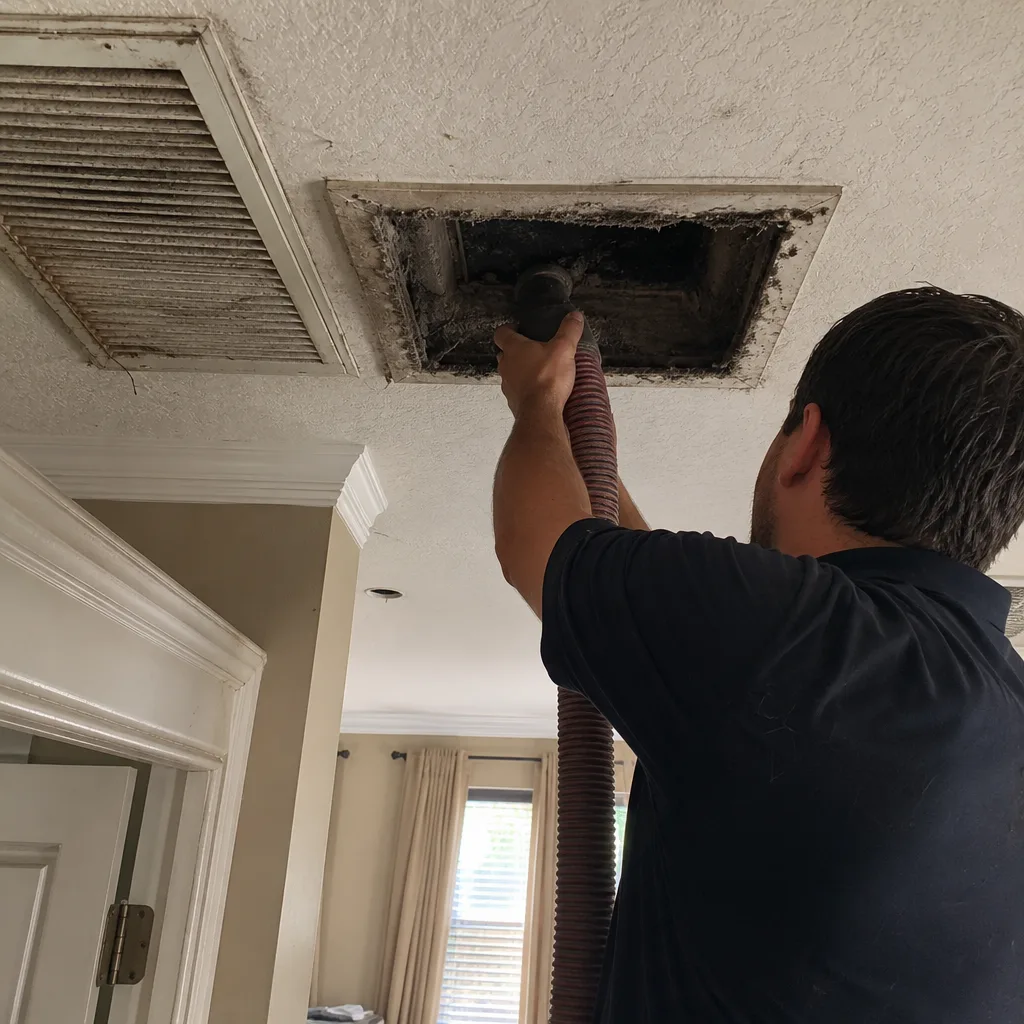 Before
 After
AfterReplacement Cost & What’s Included
Let us give you straight numbers. A full air duct cleaning for a typical Atlanta home runs $450 to $800 depending on square footage and the number of returns. During that job, every register and return grille is removed, cleaned, and reinstalled as part of the service. If you only want register and grille cleaning without touching the main lines, we price that at $12 to $25 per register based on size, condition, and whether the boot needs vacuuming.
If a grille is beyond cleaning – rusted through, fins bent beyond straightening, or a damper that won’t hold – a replacement Honeywell register is $18 to $45 for standard sizes, and we install it as part of the visit. The written price you get before work starts covers removal, cleaning, reinstallation, and any replacement grille you approve. No per-vent add-ons at the end.
| Service | Typical Atlanta Price |
|---|---|
| Standalone register & grille cleaning (per vent) | $12 – $25 |
| Full system air duct cleaning (includes all registers) | $450 – $800 |
| Honeywell replacement grille (standard sizes) | $18 – $45 each |
| Register boot cleaning (added to standalone service, per boot) | $8 – $15 |
Every register cleaning we do carries the same 365-Day Done Right Promise as our full duct cleaning work. If the grille is streaking again within a year and we can trace it to something we missed, we come back and make it right at no charge. That’s in writing, on every job.
DIY or Call Us?
Some of this work is genuinely within a homeowner’s reach. Removing a register grille, washing it with warm water and a mild degreaser, letting it dry completely, and reinstalling it is a safe, simple job that takes ten minutes. You don’t need us for that part.
Here’s where DIY goes sideways: the register boot. The metal box behind the grille connects directly to your ductwork. Vacuuming it without the right attachments just pushes dust deeper into the duct run, where it’ll come right back. Worse, some homeowners try to reach down into the boot with a household rag and end up cutting themselves on the sheet metal seams or the damper edges. Sheet metal edges inside a duct are sharp enough to require stitches. We’ve seen it.
If the grille itself is clean and the streaks won’t stop, or you smell mustiness that doesn’t go away, the problem is upstream. That needs a real inspection, a negative-pressure extraction setup, and someone who can see the system, not just the vent. Call us at (912) 493-7110 and we’ll tell you straight what’s worth doing and what isn’t.
FAQs
In Atlanta’s humidity, we recommend a professional register and grille cleaning every 3 to 5 years for most homes, more often if you have pets, live near heavy tree cover, or notice streaking within months of a cleaning. The grille face can be wiped by the homeowner as often as you like, but the boot and the first foot of duct need professional extraction to stay clean.
A grille with surface rust can be wire-brushed, primed, and repainted, and we do that on older homes in Grant Park and Inman Park where the original grilles are part of the house’s character. But if rust has eaten through the metal or the damper pivot is seized, replacement is cheaper and more effective than repair. Call us at (912) 493-7110 and we’ll give you an honest read on which side of that line your grille falls.
For a whole-home register and grille cleaning, plan on 1 to 2 hours for a typical Atlanta house. Each grille takes 10 to 15 minutes to remove, clean, and reinstall, plus time for the boot work behind it. A full duct cleaning with all registers runs 3 to 5 hours depending on the size of the system.
We carry the most common Honeywell grille sizes (4×10, 4×12, 6×10, 6×12, and 12×12) in stamped steel and aluminum on our trucks, along with aftermarket equivalents from TruAire and Accord for less common dimensions. If your grille is a discontinued model or an unusual size, we source it from our Atlanta suppliers and schedule a return visit. We also work with registers from other major brands, including Lennox, Trane, and Carrier, if your system uses those instead.
Marcus Veale has been cleaning and replacing Honeywell registers in Atlanta homes long enough to know that the grille is usually the messenger, not the message. He’ll show you exactly what changed when the work is done, and he won’t leave until you understand what you’re looking at. A clean duct doesn’t announce itself – you just breathe easier and stop wondering.
Call Linden Air Duct Atlanta at (912) 493-7110 for a free estimate on Honeywell register and grille cleaning. Your written price comes before any work starts, and the tech’s name and photo arrive before the visit.
Written by Marcus Veale, Owner, Linden Air Duct Atlanta at Linden Air Duct Atlanta, serving Atlanta and nearby areas.