

Last updated October 17, 2026
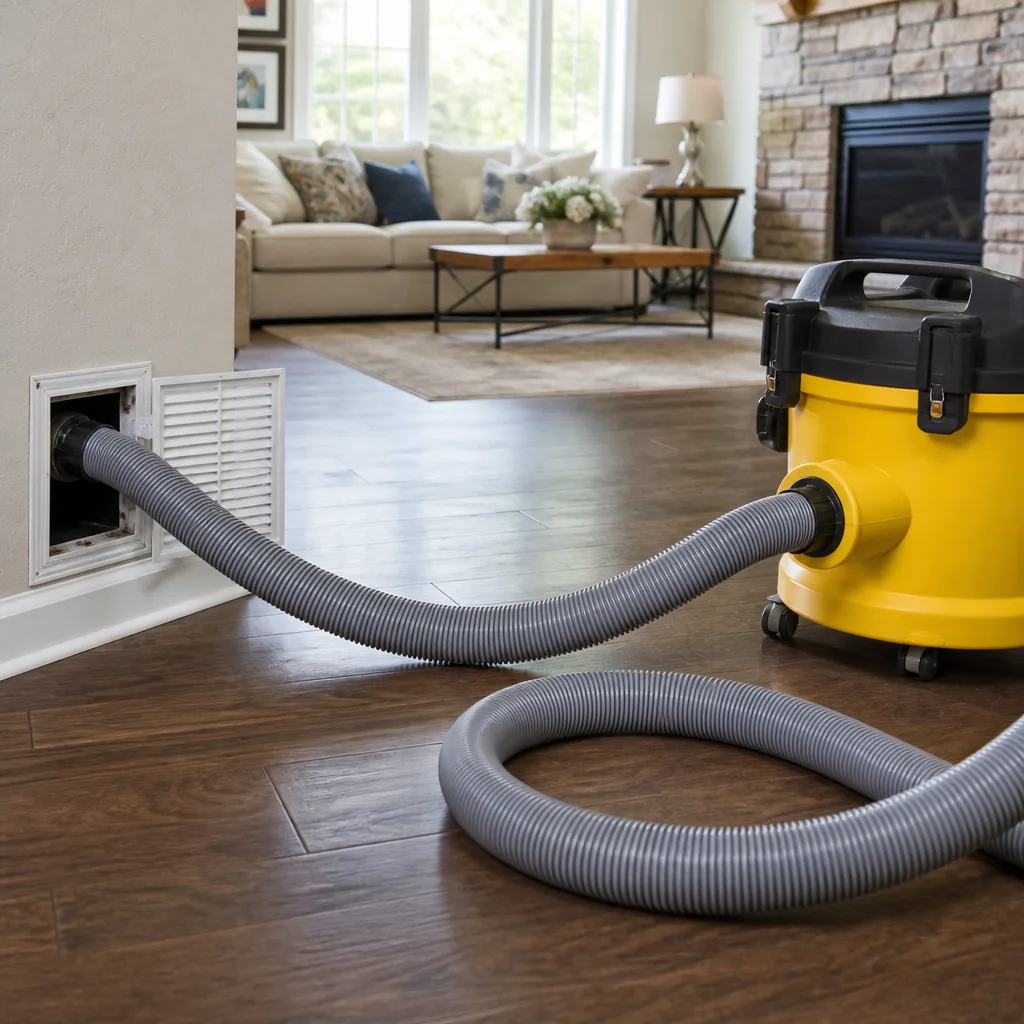 Whole-home duct cleaning
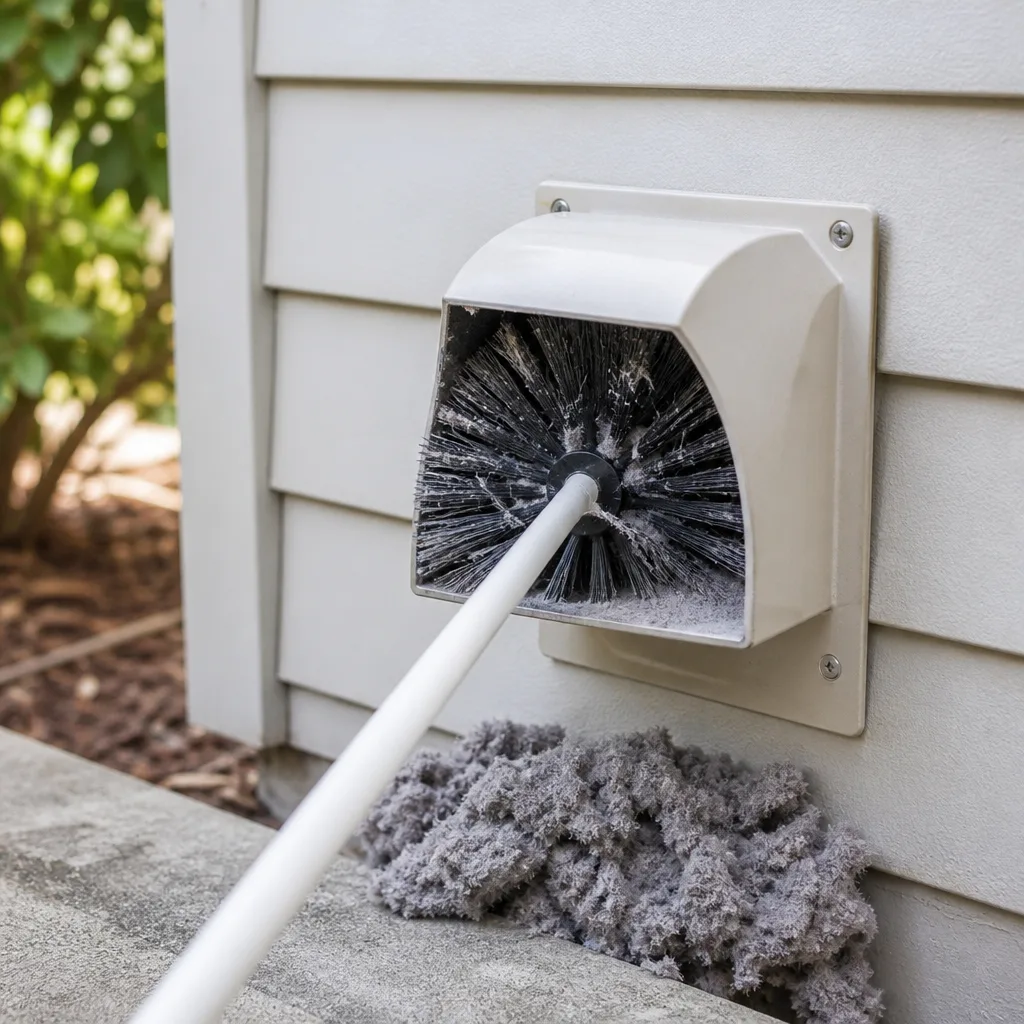 Dryer vent cleaning
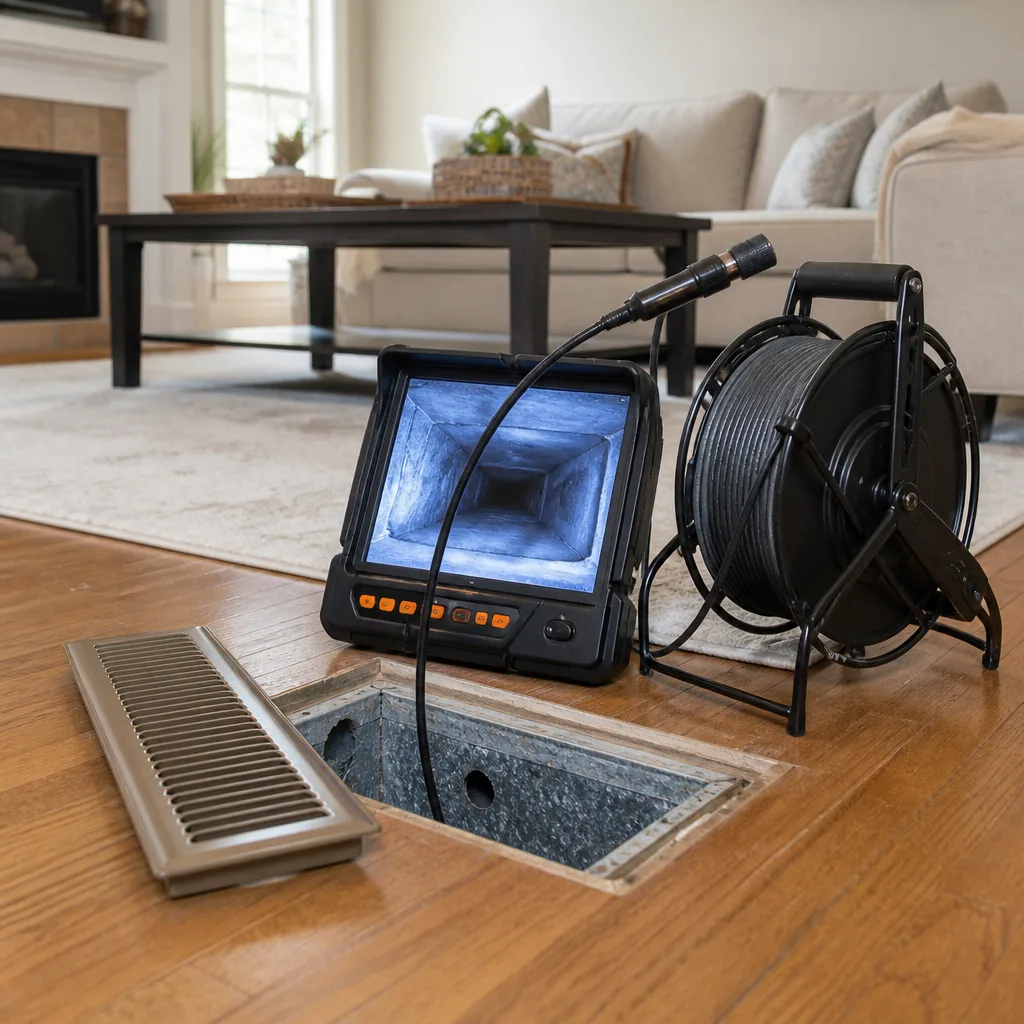 Camera inspection
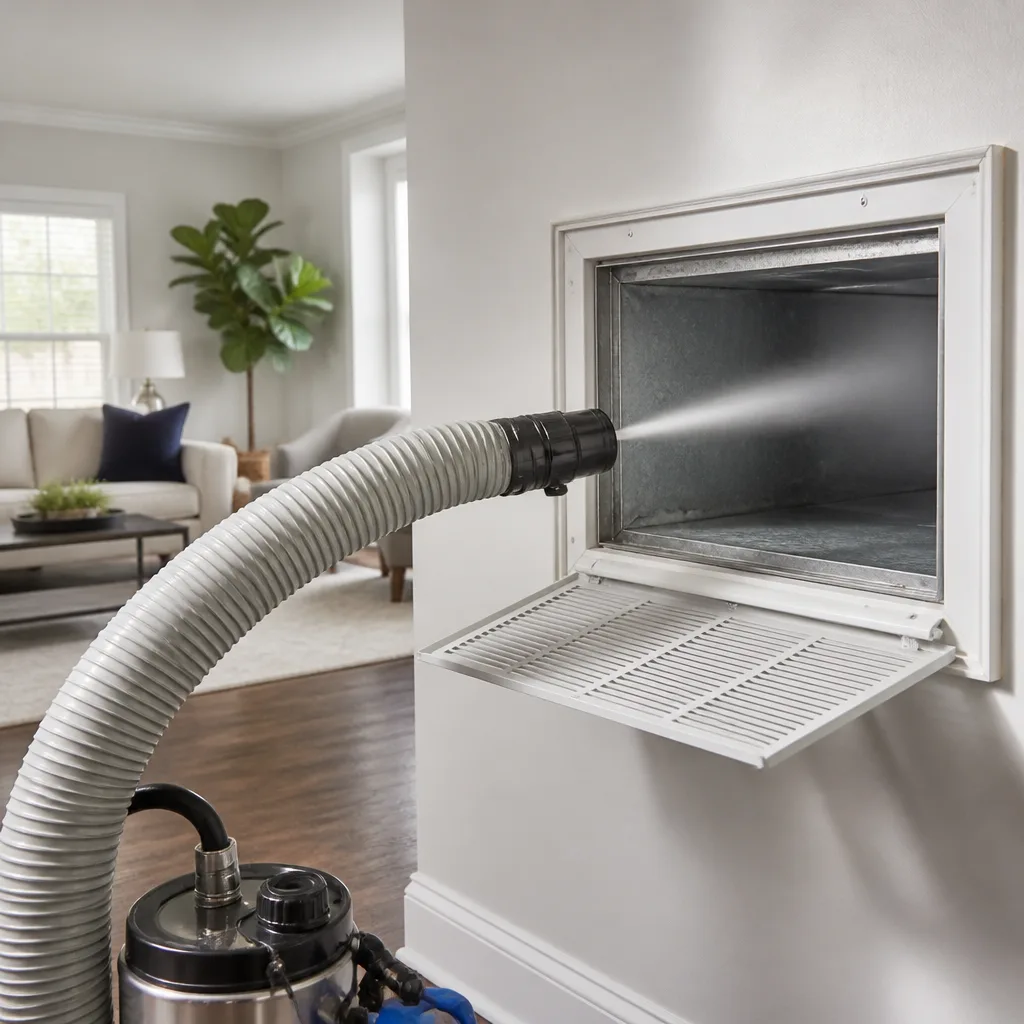 Sanitizing & deodorizing
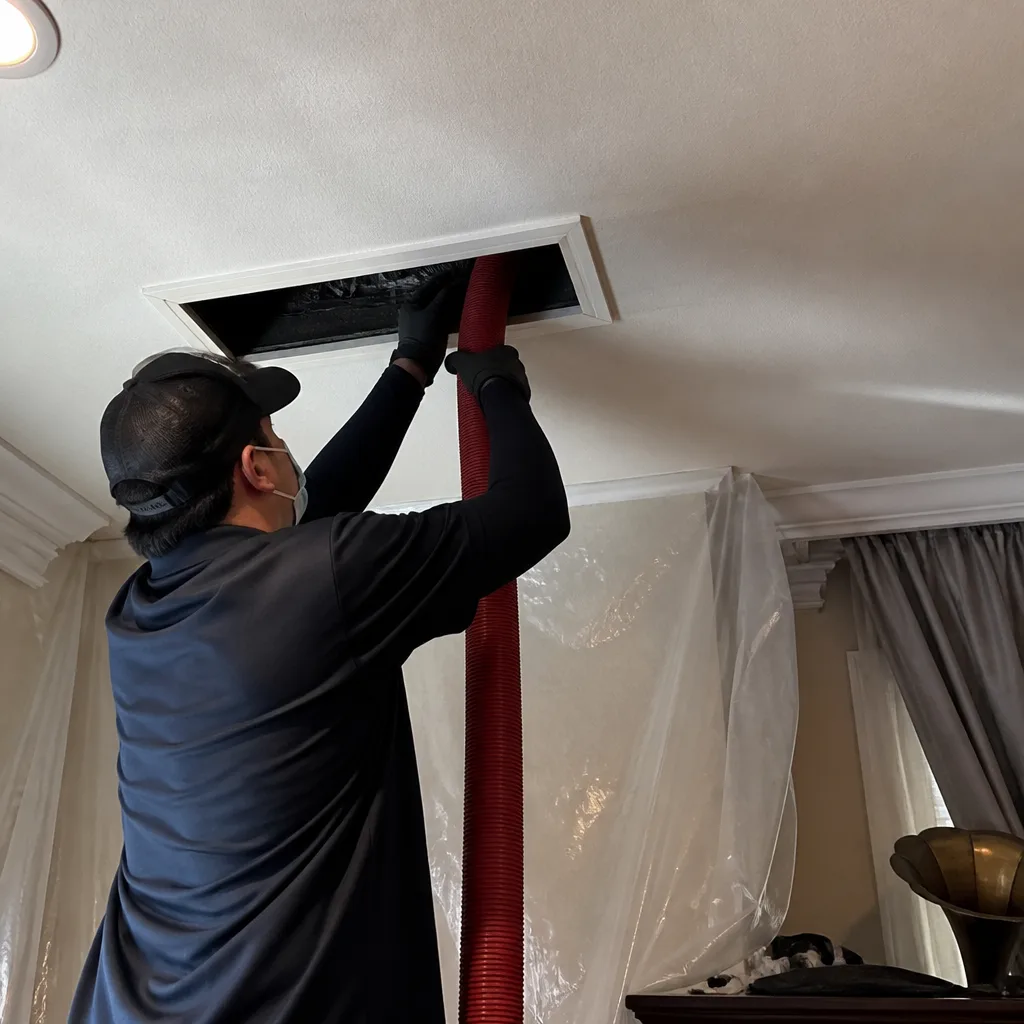
Whole-system duct and dryer vent check with before-and-after photos - you see exactly what came out of your vents
That "$99 whole-house special" is a bait ad - the real number appears once they are in your hallway, or the "clean" is a shop-vac at the register. We photograph the inside of your ducts before and after instead.
Air Duct Cleaning Maintenance Checklist for Atlanta Homeowners
Most duct maintenance checklists tell you to change your filter every 90 days. But in Atlanta, a 90-day MERV-8 filter during spring pollen season is already clogged at week six, forcing your system to pull air around the edges and bypass filtration entirely. That single fact changes how homeowners in this city should think about duct care. This guide gives you a month-by-month Atlanta-specific maintenance plan, teaches you how to read the warning signs at your own registers, and tells you exactly when to pick up the phone instead of reaching for another DIY fix.
Styles & brands we work with
Quick Answer
Atlanta homeowners should inspect supply registers monthly during pollen season (March through May), change filters every 60 days during heavy pollen and every 90 days the rest of the year, and schedule professional air duct cleaning every 3 to 5 years, or sooner if you see dark dust accumulation, smell musty air, or have recently completed renovation work. The five failure points specific to Atlanta’s climate are pollen-caked filters, summer humidity-driven microbial growth, post-renovation drywall dust, crawlspace moisture intrusion, and dryer vent lint bypass.
Table of Contents
- The Month-by-Month Atlanta Duct Maintenance Checklist
- How to Read Your Supply Registers: A No-Tools Visual Inspection
- The Filter-Sizing Mistake That Voids the Point of Duct Cleaning
- The Five Atlanta-Specific Duct Failure Points
- When to Call Mid-Cycle: Specific Triggers, Not Guesswork
- How to Log Duct Maintenance for Warranties and Resale
- What Professional Duct Cleaning Actually Covers in Atlanta
- Common Mistakes to Avoid
- When to Call a Professional
- Frequently Asked Questions
- The Bottom Line
The Month-by-Month Atlanta Duct Maintenance Checklist
Atlanta’s climate doesn’t do subtle. We get a pollen season that coats cars in yellow-green film for weeks, summers where the humidity sits above 70 percent for months, and winters that swing between mild and freezing enough to cycle your HVAC more than you’d expect. A generic duct maintenance schedule written for, say, Phoenix or Chicago won’t hold up here. Here’s what actually works in Atlanta, month by month.
January and February: The Inspection Months
Winter in Atlanta is when your system runs less consistently, which means dust settles inside ducts instead of being pushed through. Use these slower months to do a full visual inspection of every supply register and return grille in the house. Look for gray-black dust buildup on the register louvers, any sign of moisture staining on the ceiling or walls around vents, and whether airflow feels weak compared to other rooms. This is also the ideal window to schedule a professional air duct cleaning in Atlanta before pollen season hits, since appointment availability is better in late winter than in March and April.
March Through May: Pollen Defense Mode
Atlanta’s pollen season is intense. Tree pollen peaks first, usually starting in late February and running through April, then grass pollen takes over in May. During these three months, change your filter every 60 days no matter what. If you run a MERV-11 or higher filter, check it every two weeks and replace it the moment it looks coated. Keep windows closed during peak pollen days even when the weather is beautiful, because every open window pulls pollen into the return-air path. Consider running your HVAC fan in “on” mode rather than “auto” for a few hours after you’ve been doing yard work or after the kids have tracked in from outside. This keeps air moving through the filter instead of letting pollen settle inside the ducts.
June Through September: Humidity Watch
Summer in Atlanta means dew points in the 70s and relative humidity that rarely dips below 60 percent. Inside ductwork, that translates to condensation on the exterior of metal ducts running through unconditioned attics and crawlspaces, which creates exactly the kind of damp, dark environment where microbial growth takes hold. Your job during these months is to check for moisture indicators at registers and around your air handler. Look for dark spots on ceiling registers, any musty odor when the system first kicks on, and whether your AC drain line is dripping consistently when the system runs. If you notice the air coming from vents smells damp or earthy, that’s not normal summer behavior; it’s a sign moisture is collecting somewhere in the system. We’ve seen this in homes across Buckhead, Decatur, and Sandy Springs, especially where crawlspaces aren’t properly sealed.
October: Post-Renovation and Pre-Holiday Check
Fall in Atlanta is renovation season. Drywall dust, sawdust, and flooring debris get pulled into return ducts during projects, and that fine particulate settles in duct interiors, where it stays until it’s disturbed or cleaned. If you completed any renovation, even a single-room remodel, perform a register inspection the month after the project wraps. If you see a visible white or tan dust layer on register louvers that comes back quickly after wiping, assume that same material lines the inside of your ducts. October is also the right time to schedule a dryer vent cleaning in Atlanta, since dryer use ramps up in cooler weather and lint accumulation becomes a fire risk.
November and December: Airflow and Comfort Baseline
As your system shifts to heating mode, pay attention to room-to-room temperature differences. In Atlanta’s split-level and two-story homes, duct runs to upper floors are often longer and leakier. If your upstairs rooms run noticeably cooler than downstairs during winter, that’s often a duct issue, not a furnace issue. Take note of which rooms feel uneven now, so when you do schedule a professional inspection, you can point to specific rooms rather than a vague “the house feels off.”
How to Read Your Supply Registers: A No-Tools Visual Inspection
You don’t need professional equipment to get a meaningful look at what’s building up in your ducts. Supply registers, the grilles where conditioned air enters each room, are a window into the duct interior. Here’s a step-by-step method that takes about 10 minutes and requires nothing but a flashlight and your phone camera.
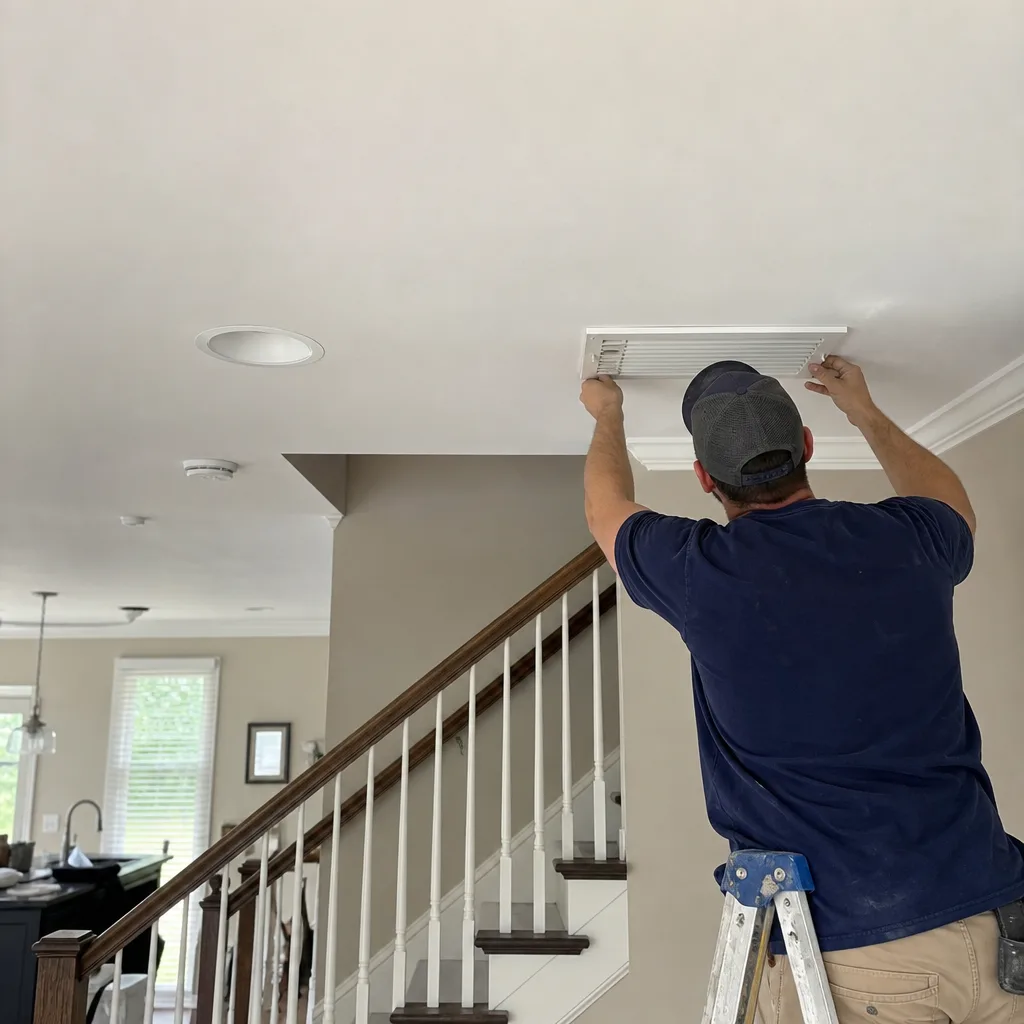
- Remove the register cover. Most Atlanta homes use stamped-steel or aluminum register covers held in place by two screws or simple friction clips. Unscrew or pop the cover off carefully and set it aside.
- Shine a flashlight into the duct opening. Aim the beam down the duct mouth and photograph what you see. You’re looking at the inside surface of the duct, not the air itself.
- Check the register cover itself. Turn it over and look at the back side. The back of the cover collects what the air carries. If the back of the cover has a gray, fuzzy coating, that same material is lining your ducts.
- Wipe the inside of the duct mouth with a white paper towel. Press gently against the duct wall about two inches inside the opening. Pull it out and look at the color. Light gray dust is normal household accumulation. Dark gray or black smudges suggest possible moisture contamination, which is a different problem than ordinary dust.
- Repeat at three or four registers in different rooms. The return grille, usually the largest vent in a hallway or stairwell, matters most. It’s the mouth of your system, and whatever accumulates there gets pulled across the entire interior.
What specific colors and textures mean: light gray, fluffy dust that wipes away easily is standard household dust, mostly skin cells, fabric fibers, and tracked-in soil. This is what normal duct cleaning removes. Dark gray or black residue that feels slightly damp or sticky means moisture is present in the duct environment, and you should investigate the source before or during a cleaning. White or tan powdery dust right after a renovation is drywall and construction residue. Rust-colored staining on the duct interior suggests condensation has been forming on the duct metal. None of these require panic, but the dark, damp, and rust indicators all mean you should call a professional sooner rather than later.
The Filter-Sizing Mistake That Voids the Point of Duct Cleaning
Here’s a failure we see in Atlanta homes more than any other: the homeowner pays for professional duct cleaning, then runs the wrong filter for the system’s actual airflow capacity, and within one season the ducts are as fouled as they were before the cleaning. The filter is the first line of defense for every inch of duct downstream. If the filter is wrong, everything behind it gets dirty faster.
The common error is upgrading to a MERV-13 filter because it sounds like more protection. A high-efficiency filter does capture more particles, but it also restricts airflow. In Atlanta’s climate, where your AC runs hard for five months straight, a restrictive filter forces the blower to work against higher static pressure. When the filter clogs, air finds the path of least resistance, and if the filter frame isn’t perfectly seated, that path is around the edges of the filter, not through it. The result is unfiltered air entering your supply ducts, which undoes the value of having clean ducts in the first place.
For most Atlanta homes with standard 1-inch filter slots, a MERV-8 pleated filter changed every 60 days during pollen season is the right balance. A MERV-11 is reasonable if someone in the house has allergies, but check it every two weeks during March and April and expect to replace it monthly. If you want MERV-13 filtration, don’t force it into a 1-inch slot. That requires a 4-inch or 5-inch media cabinet retrofit, which changes the filter surface area and keeps static pressure manageable. If you’re not sure what your system can handle, ask the technician during your next duct cleaning. A qualified professional can measure static pressure and tell you precisely which MERV rating your blower can carry without bypass.
Atlanta’s particulate mix is also worth understanding. Our air carries heavy tree and grass pollen from late February through May, then construction dust and city particulates year-round. It’s not one kind of contaminant; it’s a rotating cast. The filter you run in March needs to be checked and likely replaced more often than the filter you run in October. There is no set-and-forget filter schedule in this city.
The Five Atlanta-Specific Duct Failure Points
Between professional cleanings, Atlanta’s climate works on your ductwork in five predictable ways. These are the specific failure points we’ve seen consistently across metro Atlanta homes, and they’re what your maintenance checklist should be built around.
1. Pollen-Caked Filters and Filter Bypass
Atlanta produces some of the highest pollen counts in the country for eight to ten weeks every spring. A filter that would last 90 days anywhere else gets saturated here in 45 to 60 days. When a filter saturates, air pressure builds behind it, and if the filter isn’t seated perfectly in its slot, or if the frame is slightly bowed, air slips around the edges. That unfiltered air carries pollen directly into your supply ducts where it coats the interior surfaces. The maintenance answer is a strict 60-day filter replacement schedule from March through May, with visual checks every two weeks at the peak.
2. Summer Humidity and Condensation
When warm, humid Atlanta air meets cooler duct surfaces in unconditioned spaces like attics and crawlspaces, water condenses. Over time, that moisture supports microbial growth on the inside of ducts and on the insulation surrounding them. The result is the musty smell homeowners describe as “the AC smells like a basement.” If you catch condensation early, you can fix the cause, often by sealing duct joints and adding insulation around the ducts. If you let it ride for multiple summers, the contamination builds until cleaning alone isn’t enough and sections of duct need replacement. This is where air duct repair in Atlanta becomes necessary: deteriorated duct insulation and rusted duct sections are repairs, not cleanings.
3. Post-Renovation Drywall Dust
Atlanta’s housing stock includes a lot of 1970s through 1990s construction that’s been repeatedly renovated, and the city’s hot real estate market means renovations happen constantly. Drywall dust is an extremely fine particulate that HVAC systems pull through even with filters in place, because it’s generated in such large volume during sanding. That dust settles inside ductwork and stays there until it’s mechanically removed. If your renovation involved any drywall work, assume your ducts need attention afterward, even if the contractor used zip walls and dust barriers.
4. Crawlspace Moisture Intrusion
Many Atlanta homes sit on crawlspace foundations, and Atlanta’s humid climate makes crawlspace moisture a persistent issue. If your return ducts run through the crawlspace and there are gaps or disconnected joints, the system pulls crawlspace air directly into the house. That air carries moisture, mold spores, and whatever else lives in the crawlspace. The maintenance signal is a persistent earthy smell when the system runs and dark residue at return grilles. If you see standing water, visible mold on crawlspace walls, or disconnected duct sections, address the crawlspace first, then have the ducts cleaned and sealed.
5. Dryer Vent Lint Trap Bypass
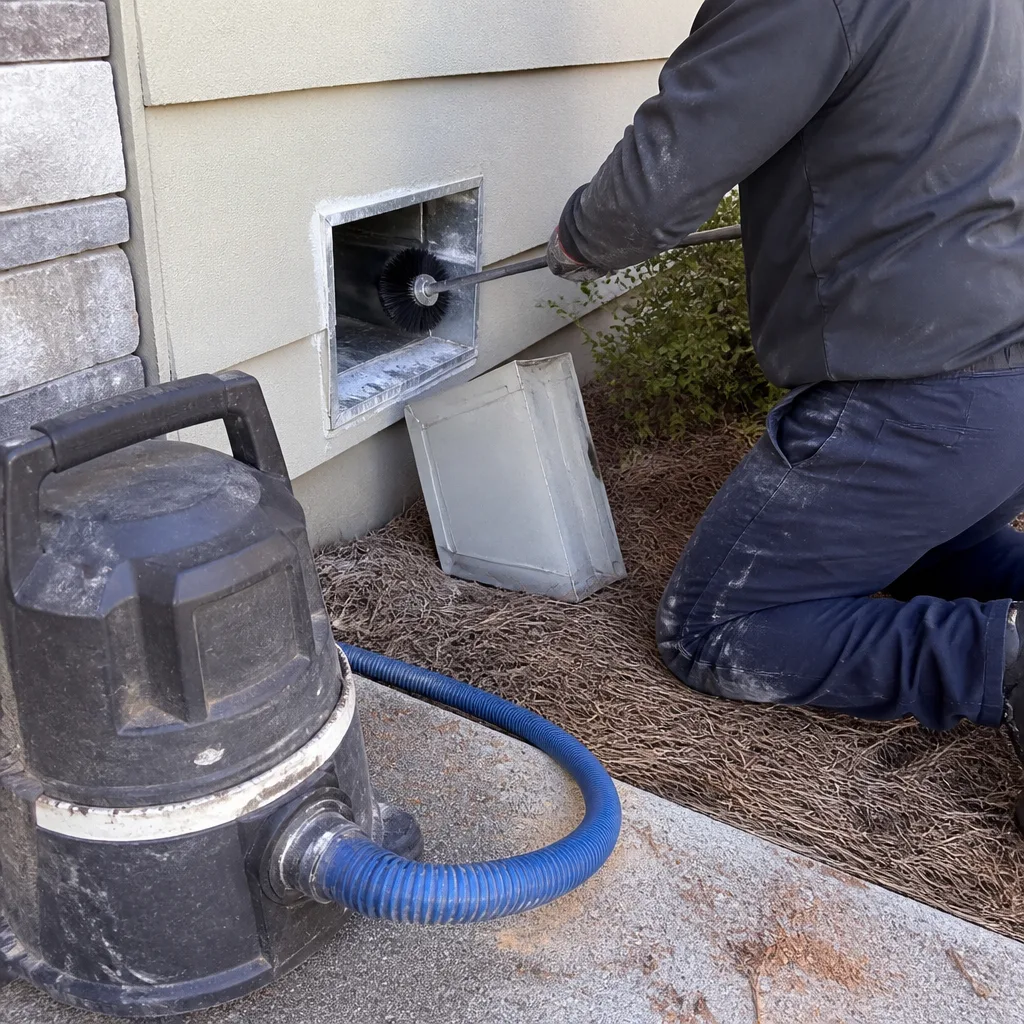
This one isn’t technically a supply duct issue, but it’s adjacent enough that Atlanta homeowners should include it in their maintenance thinking. Dryer vents clog with lint over time, and when the vent restricts, the dryer’s exhaust pressure pushes lint past the trap and into the surrounding duct environment. The result is lint accumulation on the back of the dryer, around the vent connection, and inside the wall cavity where the vent runs. In Atlanta homes where laundry rooms sit in interior spaces rather than against an exterior wall, vent runs are longer, which means more surface area for lint to accumulate. We recommend a dryer vent cleaning in Atlanta every 12 to 18 months depending on household size and dryer use.
When to Call Mid-Cycle: Specific Triggers, Not Guesswork
“If you notice problems” is useless advice because by the time the average homeowner notices a problem, the contamination is already well established. Here are the specific triggers that mean you should call a duct professional before your scheduled cleaning window arrives.
- You see dust accumulating on furniture within one week of dusting. Your ducts aren’t the only possible source, but if your filter is clean and the dust returns this fast, the ducts are releasing what they’ve collected.
- The musty odor persists after changing the filter. A filter change fixes filter-related smells. A musty smell that survives a fresh filter points to moisture and microbial growth inside the duct system.
- One room consistently smells or feels different from the others. This suggests a duct branch issue specific to that run, whether a disconnected joint, a crushed section, or contamination isolated to that run.
- You completed renovation work with drywall sanding, and visible dust appears at registers. Don’t wait for your next scheduled cleaning. This dust will work its way through your system until it’s removed.
- Visible dark or damp staining appears around ceiling registers. This is a moisture signal and needs professional attention, not just for the ducts but to identify where the moisture is coming from.
- You or a family member has unexplained allergy symptoms that improve when away from home. This is a strong signal that something in your indoor environment, often the duct system, is carrying an irritant.
None of these are panic situations. They’re call-for-an-estimate situations. A professional inspection will tell you whether the issue is confined to the ducts, the HVAC equipment, or the surrounding building structure.
How to Log Duct Maintenance for Warranties and Resale
A simple duct maintenance record does two things: it protects you if you ever file an HVAC warranty claim, and it gives you a document to show a buyer when you sell your Atlanta home. In a market where buyers are increasingly asking about indoor air quality, a maintenance log is a real selling point.
Here’s a practical system that takes five minutes per entry.
- Use a simple notebook or a digital note on your phone. It doesn’t need to be fancy. The key is consistency, not presentation.
- Record the date, what you did, and what you observed. Example entry: “March 14, 2026. Replaced MERV-8 filter after 52 days. Filter was heavily coated with yellow pollen. Register inspection at living room vent: light gray dust, no moisture indicators.”
- Photograph register inspections with your phone. Time-stamped photos are strong documentation if a warranty claim ever requires evidence of regular maintenance, and they give you a visual baseline to compare against six months later.
- File professional service invoices with your maintenance log. Every professional cleaning or repair should have a written invoice, and in Atlanta, those invoices are what an HVAC manufacturer will ask for if you file a warranty claim related to system performance or failure.
- When you sell, offer the log to buyers. It’s a small thing that signals the home has been cared for, and in competitive Atlanta neighborhoods, small differentiators matter.
If you’re not sure what your baseline should look like, get a professional cleaning done and ask the technician to walk you through what they found. That first professional assessment becomes the starting point for your own ongoing log.
What Professional Duct Cleaning Actually Covers in Atlanta
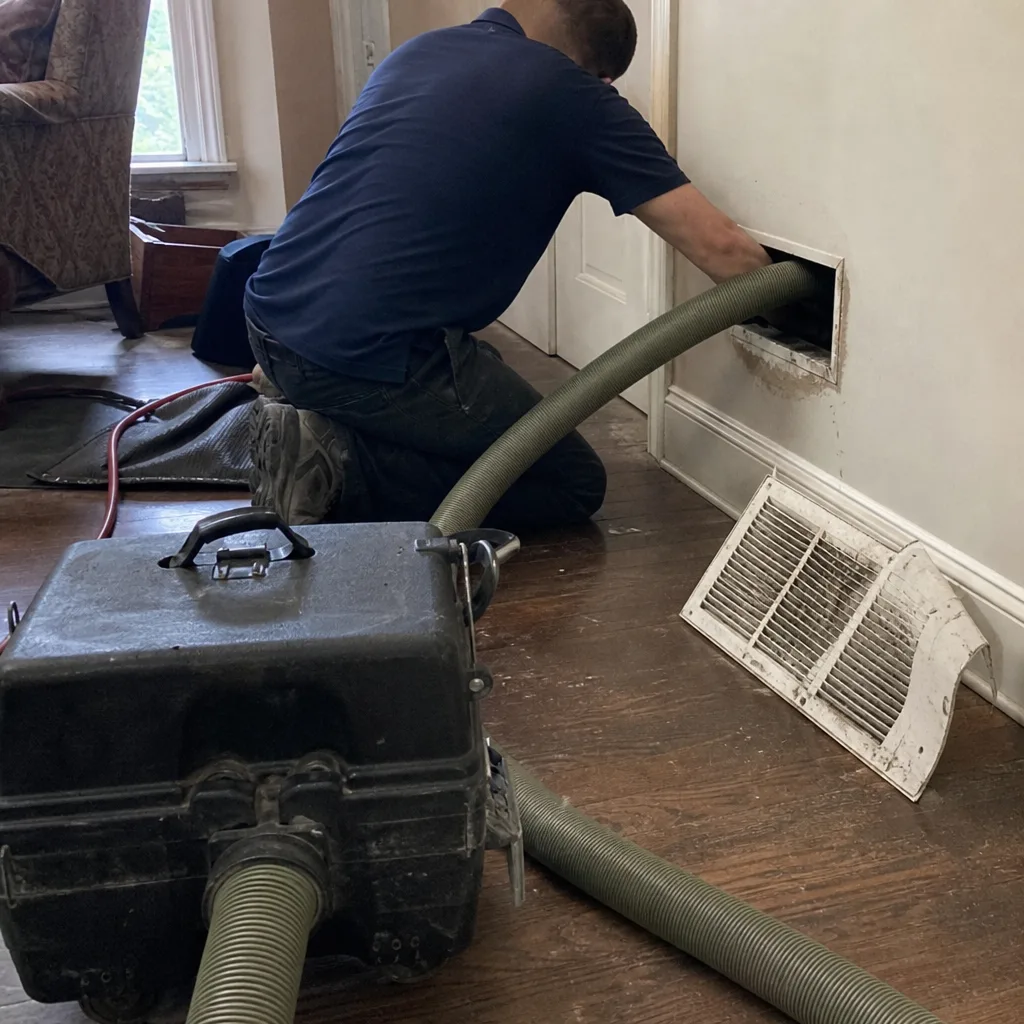
Understanding what happens during professional duct cleaning helps you build a realistic maintenance schedule around it. The process uses negative-pressure extraction, which means a powerful vacuum is connected to the duct system to create suction, while agitation tools dislodge debris from the duct walls so the vacuum can remove it. In practice, that means a technician accesses your duct system, often through the return, seals off registers as needed to create directed airflow, and works through the supply and return runs systematically.
A complete professional cleaning in Atlanta should include the supply ducts, return ducts, the return-air box, the air handler cabinet where accessible, and the registers themselves. It should also include an assessment of the duct condition in general: whether there are disconnected joints, deteriorated insulation, or sections that need air duct repair in Atlanta rather than cleaning. Some Atlanta homes, especially those with original ductwork from the 1980s or earlier, have insulation that’s worn or ducts that have pulled apart at the seams. Cleaning won’t fix those issues, and a good technician will tell you that plainly.
For equipment, companies in Atlanta vary widely. We run professional-grade extraction systems from Rotobrush and Nikro, and we work with air-quality products from brands like Aprilaire and Abatement Technologies. What matters to you as a homeowner isn’t the brand name on the truck; it’s whether the equipment creates true negative pressure throughout the system and whether the technician can show you before-and-after photos from inside your actual ducts. We provide those on every cleaning, along with a written price before any work begins. If a company won’t give you a written price before starting, that’s a red flag no matter what equipment they advertise.
We’re independently owned and operated as part of the Threshold Group family, and we’ve been serving Atlanta homeowners since 2004. Every technician who arrives at your door has already been background-checked and identity-verified under the Threshold Standard. You’ll receive the technician’s name and photo before the visit, and they’ll show a photo ID badge at your door. That’s not an upsell; it’s the baseline for letting someone into your home.
Common Mistakes to Avoid
- Relying on a single annual filter change. In Atlanta’s climate, a filter schedule that works for one season isn’t adequate for another. Pollen season demands 60-day replacements; you can stretch longer in late fall and winter.
- Upgrading to a high-MERV filter without checking airflow capacity. In many Atlanta homes, especially older ones with original blowers, a MERV-13 filter in a 1-inch slot creates bypass and makes duct cleaning pointless.
- Ignoring the return grille in favor of supply registers. The return is where the system breathes in. Many homeowners check the vents in their bedrooms and never look at the large return in the hallway.
- Assuming renovated rooms mean dirty ducts automatically. Renovation dust is a real problem, but some construction is contained well enough that ducts remain clean. Check registers before paying for a cleaning you might not need.
- Treating musty smells as normal Atlanta humidity. Atlanta is humid, but your supply air shouldn’t smell damp or earthy. That odor signals moisture in the system that needs investigation.
- Forgetting the dryer vent in your duct maintenance plan. Dryer vents clog faster than supply ducts, and the stakes are higher: restricted dryer vents are a leading cause of house fires.
- Hiring a duct cleaner based on a low coupon price without verifying what the job includes. The duct cleaning industry has a reputation for bait-and-switch pricing. Before anyone starts work in Atlanta, get a written price that covers the entire system, not a per-vent figure that grows once the technician arrives.
When to Call a Professional
You’ve done the register inspections, you’ve kept up with filter changes, and you’ve logged everything. Here’s when maintenance ends and professional help begins. Call if you see dark, damp staining at registers or grilles, if musty odors persist after filter replacement, if you’ve completed renovation work with drywall sanding, if dust returns to furniture within a week of cleaning, or if you’ve lived in your Atlanta home for more than four years and have never had the ducts professionally assessed. A professional evaluation will tell you exactly what’s accumulating inside your system and what it will take to remove it. Linden Air Duct Atlanta offers free estimates in Atlanta. Call (912) 493-7110 and we’ll tell you exactly what your system needs, in writing, before any work begins.
Frequently Asked Questions
Every 3 to 5 years is the right window for most Atlanta homes, with houses that have pets, smokers, recent renovations, or allergy-sensitive occupants falling closer to the 3-year mark. Atlanta’s heavy pollen seasons and humid summers shorten the realistic interval compared to drier climates. If you’ve never had your ducts inspected and you’ve lived in your home for more than four years, schedule an assessment to establish a baseline.
Whole-home air duct cleaning in Atlanta typically ranges from $450 to $900 for a standard single-system home, depending on home size, number of returns, system accessibility, and the level of contamination present. Homes with extensive renovation dust, microbial growth, or multiple HVAC systems run higher. You should receive a written price for the entire job before work starts, not a per-vent quote that adjusts once the technician arrives. Call (912) 493-7110 for a free estimate specific to your home’s system.
Cheap duct cleaning quotes in Atlanta often come from companies that either price per vent and find more vents once they’re in the house, or that run a vacuum hose into the return without properly sealing and cleaning the full system. Some low-price operations also skip important steps like cleaning the air handler and return-air components. A legitimate whole-system cleaning that includes supplies, returns, the air handler cabinet, and before-and-after documentation carries real labor and equipment costs. If a quote looks too low to pay for a full day’s professional labor, it probably doesn’t cover a full professional job. Call (912) 493-7110 and we’ll give you a written, whole-system price.
Ask for before-and-after photographs taken inside your actual ductwork. A reputable Atlanta duct cleaning company should be able to supply them. You can also inspect your registers visually after the job: the inside surfaces should look clean, and the register covers themselves should be free of the gray coating you documented during your pre-cleaning inspection. At Linden Air Duct Atlanta, we photograph the interior of your ducts before and after every cleaning and include those images with your service documentation.
A homeowner can clean the first few inches of duct run from each register, but that reach is limited, and the interior of the system beyond arm’s length requires professional negative-pressure extraction equipment to properly remove accumulated material. More importantly, DIY duct cleaning that pushes debris deeper into the system can make the problem worse. Duct cleaning is not dangerous in the way that, say, electrical work is dangerous, but it’s genuinely inaccessible without professional equipment. The rotobrush-style agitation tools and high-powered vacuum systems we use are designed to reach the full duct run length and create the suction needed to pull debris out rather than push it around.
For many Atlanta allergy sufferers, yes, professional duct cleaning reduces the amount of pollen, dust, and particulate that recirculates through the system long after the outdoor peak has passed. Atlanta’s spring pollen season fills ducts with material that keeps re-entering your air stream for months afterward if it’s not removed. If your allergy symptoms are worse at home than away, and particularly if they spike when your HVAC runs, cleaning is worth the investment and often provides measurable relief. Pair the cleaning with the right filter strategy (a MERV-8 or MERV-11 changed on Atlanta’s 60-day pollen season schedule) for the best result.
The Bottom Line
Atlanta’s climate makes duct maintenance specific: you’re not following a generic national checklist. You’re managing pollen seasons that clog filters in half the expected time, humidity that invites microbial growth, renovation dust that settles in duct interiors, and crawlspace conditions that affect return-air quality. The maintenance that works here is monthly register inspection during peak seasons, 60-day filter changes from March through May, professional cleaning every 3 to 5 years, and a written log that documents everything. When the signals point to professional help, get a written estimate and make sure you know who’s coming to your door before they arrive. That’s the standard we hold ourselves to, and it’s what every Atlanta homeowner should expect.
Written by Marcus Veale, Owner at Linden Air Duct Atlanta, serving Atlanta since 2004.
See the difference
 Before
 After
After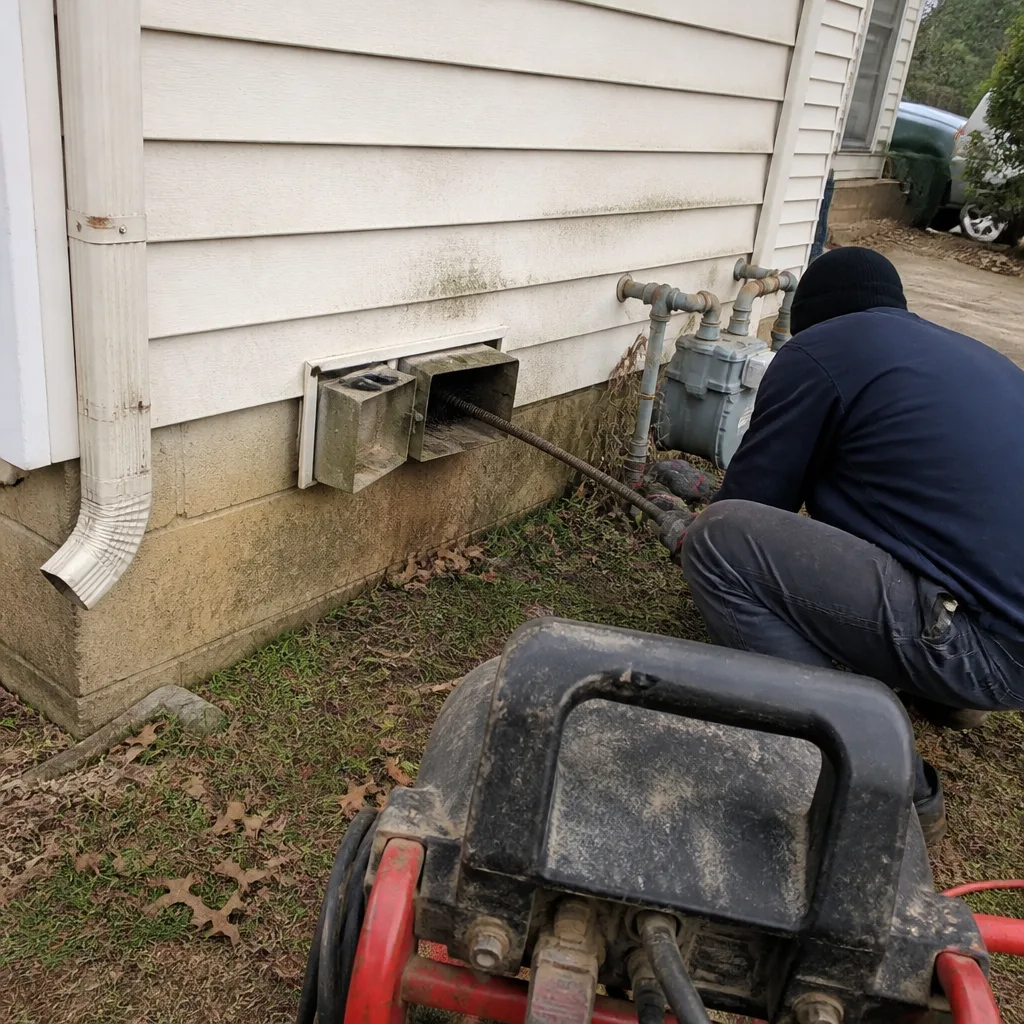 Before
 After
After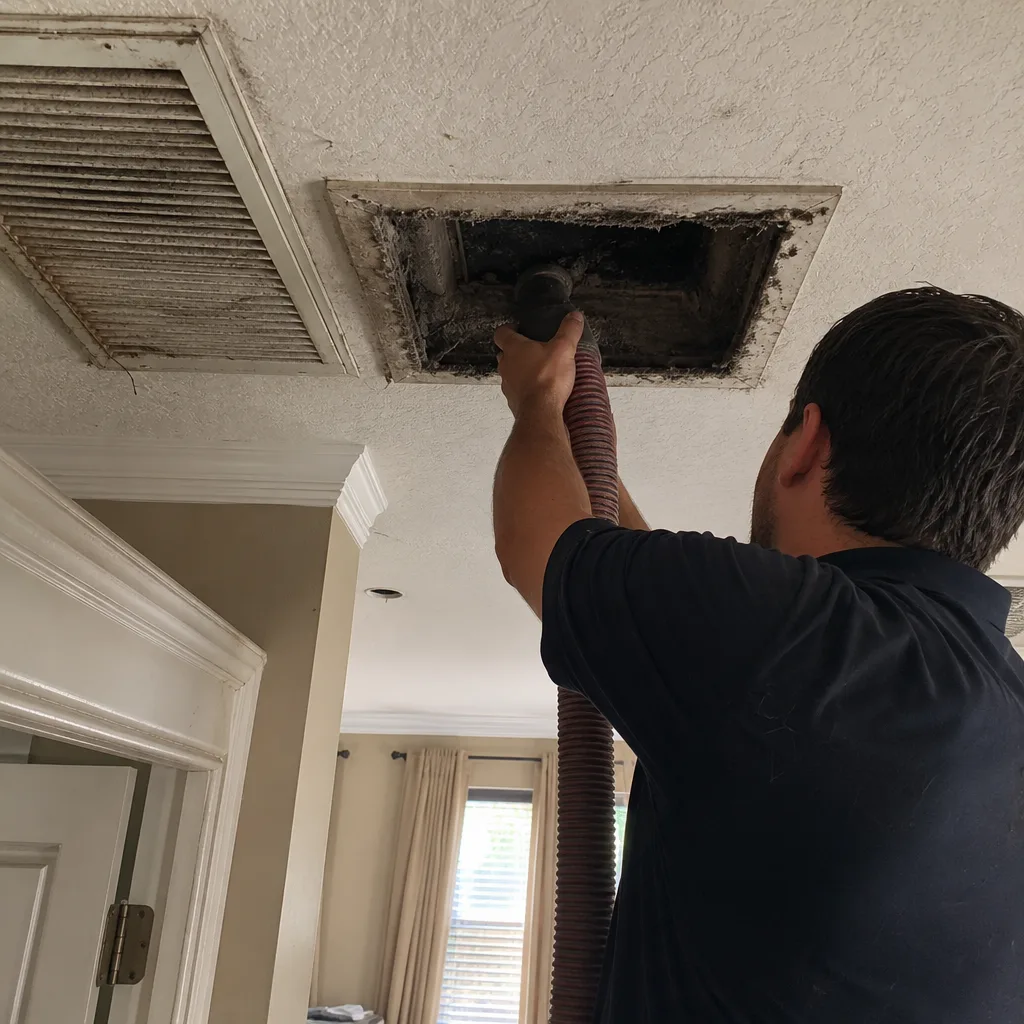 Before
 After
After