

Last updated October 17, 2026
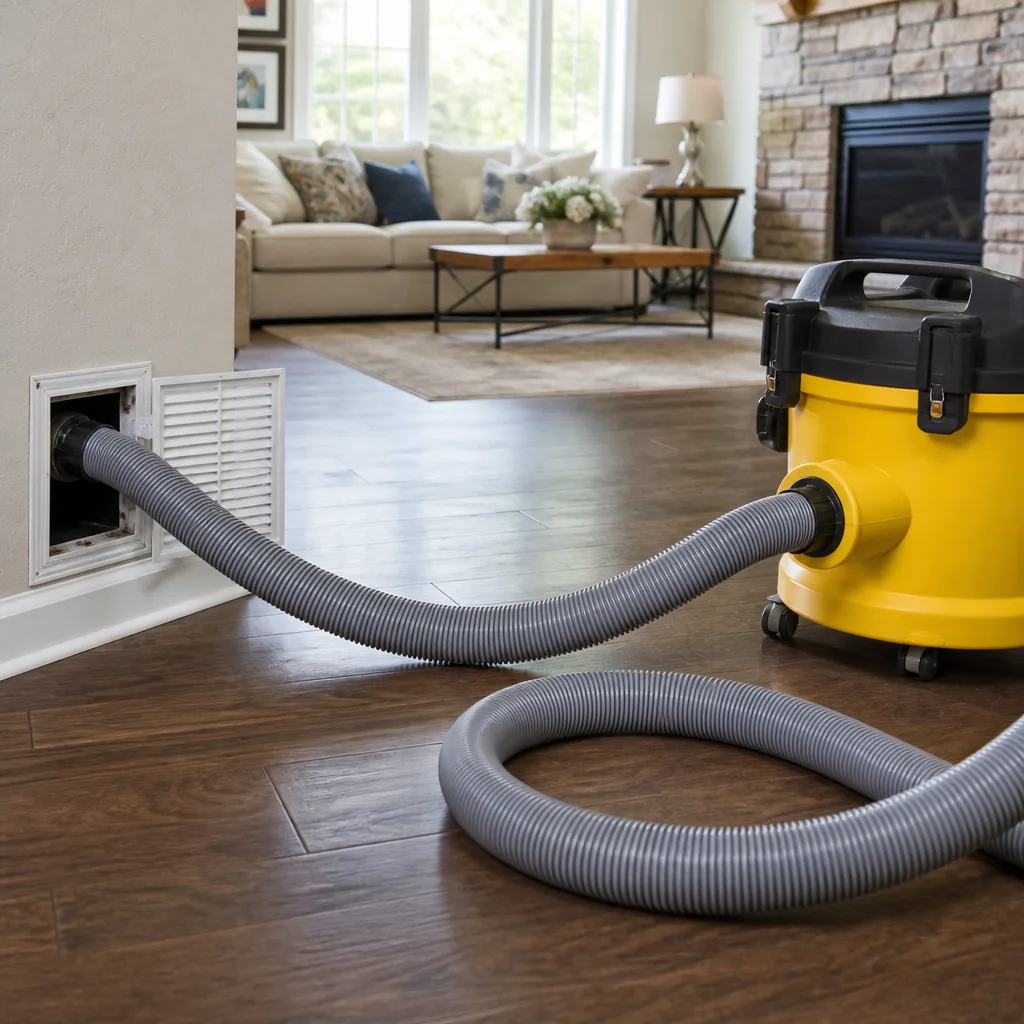 Whole-home duct cleaning
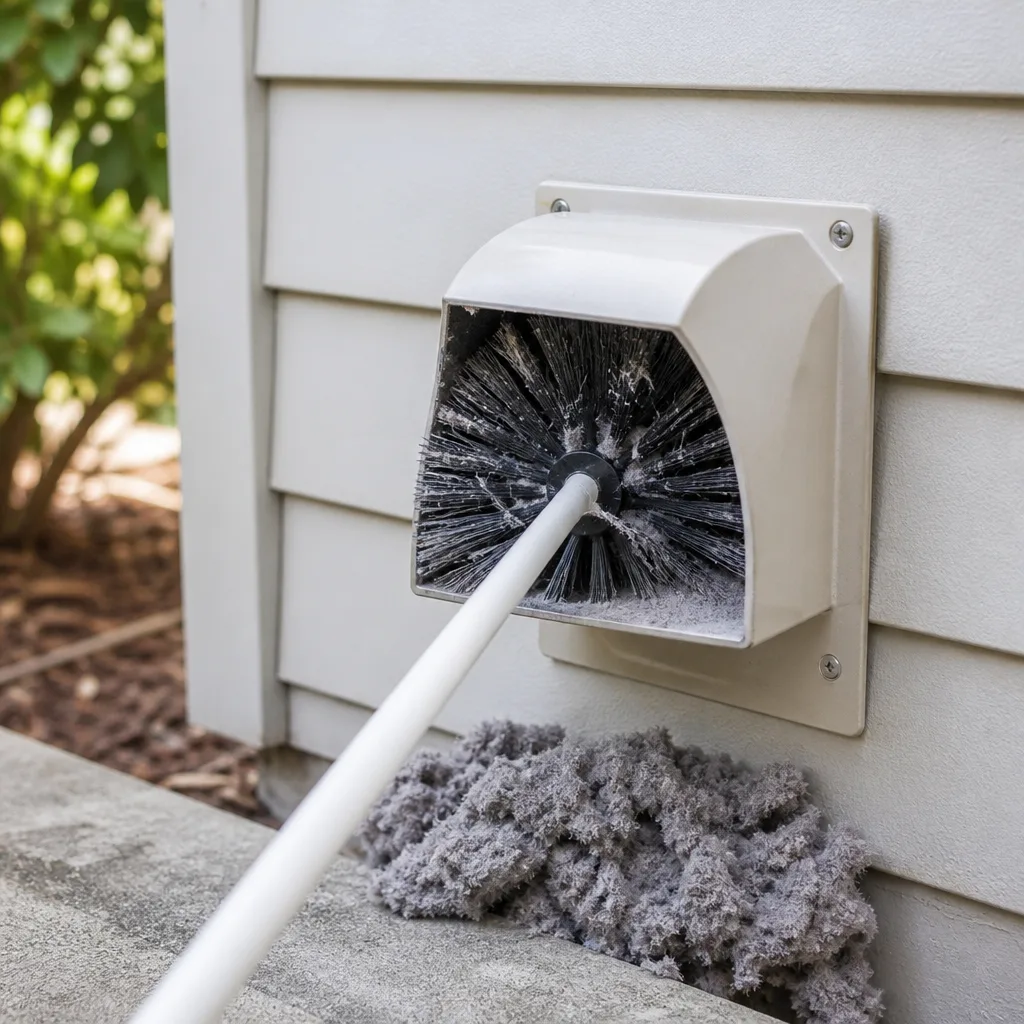 Dryer vent cleaning
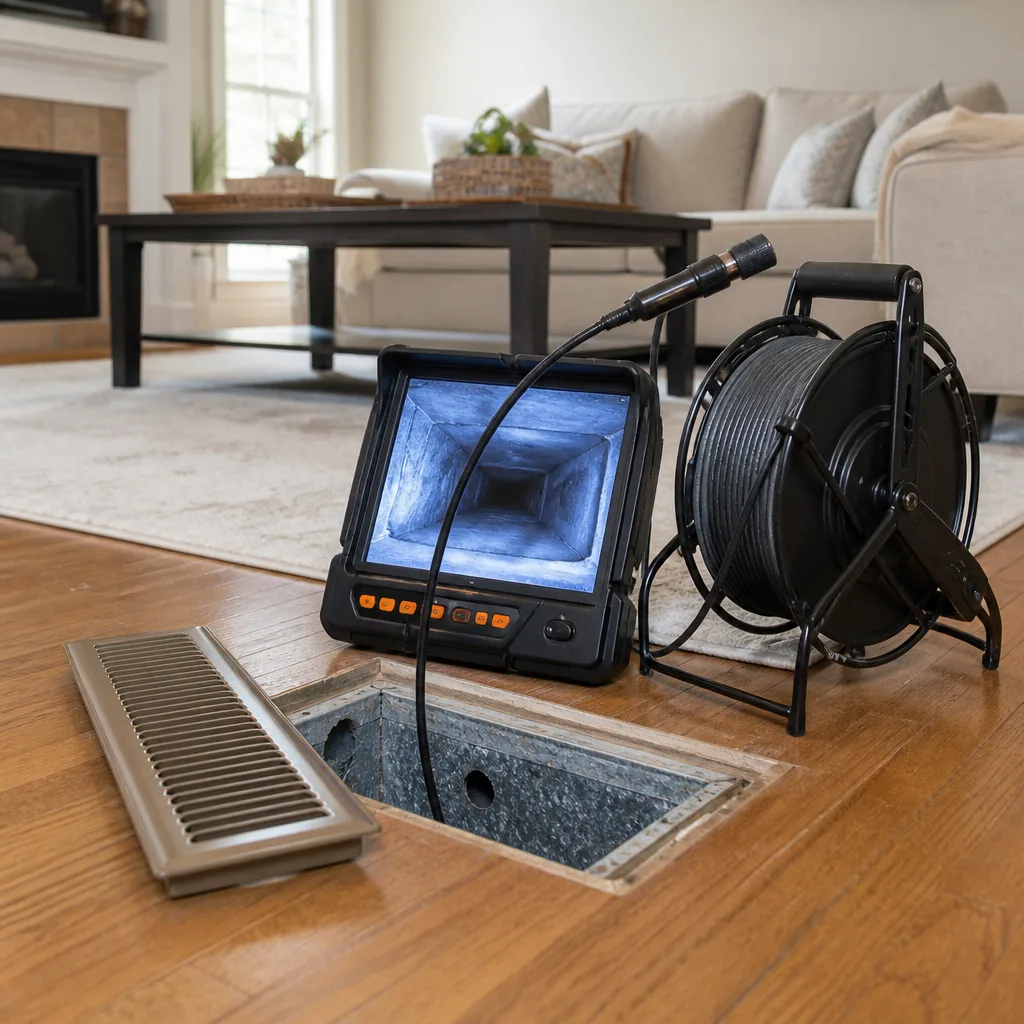 Camera inspection
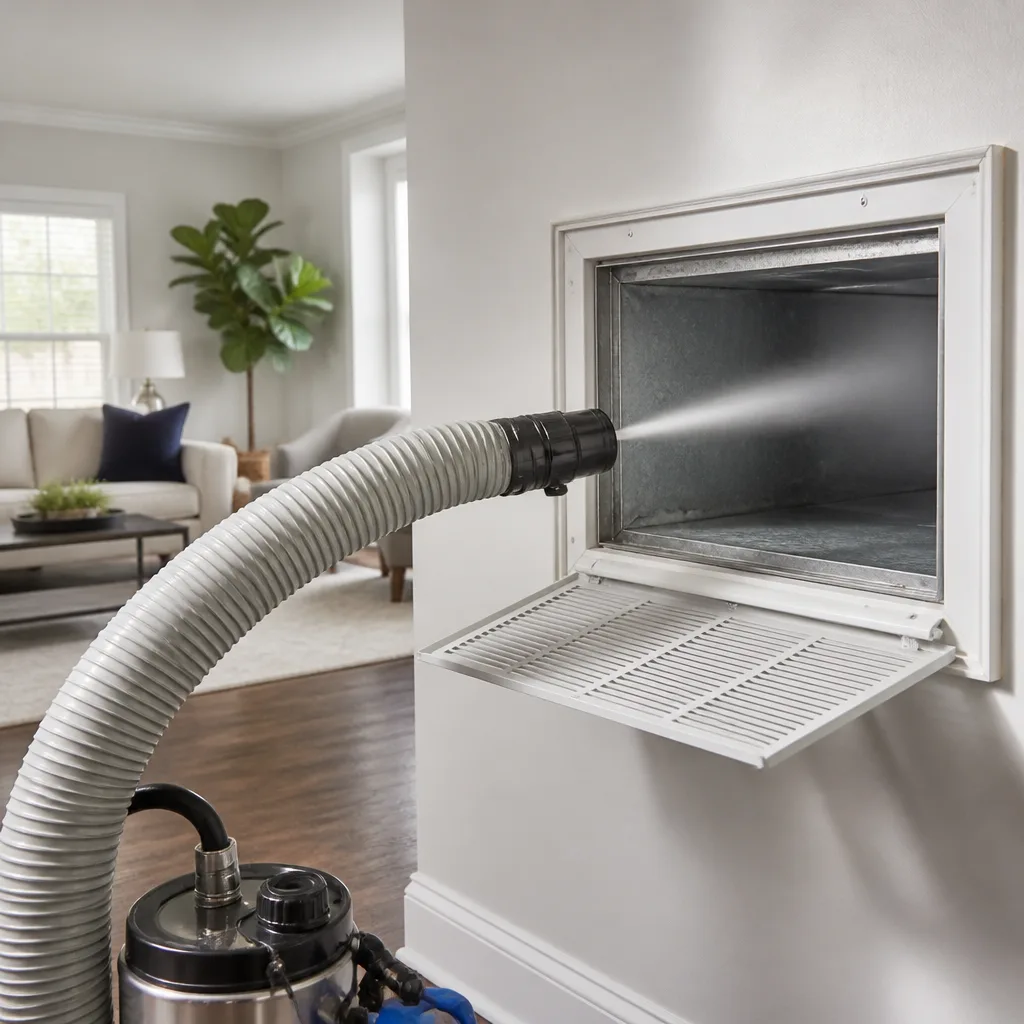 Sanitizing & deodorizing
Whole-system duct and dryer vent check with before-and-after photos - you see exactly what came out of your vents
That "$99 whole-house special" is a bait ad - the real number appears once they are in your hallway, or the "clean" is a shop-vac at the register. We photograph the inside of your ducts before and after instead.
The Complete Guide to Air Duct Cleaning in Atlanta
Atlanta sits in the top 10 most pollen-saturated metropolitan areas in the United States, year after year. In April, the pine pollen is so thick it turns cars yellow and leaves a film on every windowsill in the city. But most national air duct cleaning guides are written for dry, low-humidity climates, places where pollen blows through a house and keeps moving. In Atlanta, that pollen doesn’t just pass through. It enters your return vents, hits the humid air inside your ductwork, and sticks. It clumps. It bonds with dust and condensation. And it stays there. This guide explains what that means for Atlanta homeowners, what a proper Air Duct Cleaning actually involves, and how to know whether the job was done right.
Styles & brands we work with
Quick Answer
Air duct cleaning in Atlanta typically costs $350 to $700 for a full system cleaning of an average single-family home, with the job taking 3 to 6 hours depending on house size and duct condition. Because Atlanta’s humidity causes pollen and dust to bond into a sticky film inside ductwork, a proper cleaning here requires negative-pressure extraction with mechanical agitation, not just a surface vacuum pass. Before you hire anyone, you should verify they follow the NADCA ACR 2021 process standard, get a written price before work starts, and receive before-and-after photos when the job is done. For help choosing, see our DIY vs Professional Air Duct Cleaning: The Atlanta Homeowner’s Decision Guide.
Table of Contents
- Why Atlanta’s Climate Makes Duct Cleaning Different
- What Air Duct Cleaning Actually Involves
- How Much Air Duct Cleaning Costs in Atlanta
- The NADCA Standard and Why It Matters
- What a Legitimate Pre-Cleaning Inspection Covers
- Atlanta Home Styles and Their Duct Problems
- Documentation You Should Receive After the Job
- Common Mistakes to Avoid
- When to Call a Professional
- Frequently Asked Questions
- The Bottom Line
Why Atlanta’s Climate Makes Duct Cleaning Different
Atlanta’s air is wet. Between May and September, relative humidity regularly sits above 70%, and even in the cooler months the city sees more moisture than most of the country. That humidity changes how debris behaves inside your ductwork. In a dry climate like Phoenix or Denver, dust settles as a loose powder that a basic vacuum pass can remove. In Atlanta, that same dust absorbs moisture from the air and forms a paste-like film that adheres to the interior walls of your ducts.
We’ve opened ducts in homes across Atlanta, from older ranch houses in Decatur to newer construction in Buckhead, and the pattern is consistent: pollen, red clay dust, and household dust combine into a gray-brown residue that hardens over time. Red clay is its own factor. The soil around Atlanta is iron-rich and fine-textured, which means it travels easily on shoes, pet paws, and air currents. Once inside the return system, those fine clay particles act like an abrasive, grinding against duct walls and giving other debris more surface area to cling to.
Then there’s the pollen calendar. Atlanta effectively has three pollen seasons: tree pollen in March and April (pine, oak, birch), grass pollen in May and June, and weed pollen in August through October. Ragweed counts in Atlanta regularly exceed 100 grains per cubic meter during peak weeks, and much of that fine pollen finds its way indoors. A home’s HVAC system cycles that air through ductwork continuously. In a humid environment, pollen doesn’t stay dry and mobile; it absorbs moisture and becomes part of that sticky film.
Biofilm is the technical term for what forms when organic material, moisture, and dust combine. In Atlanta’s climate, biofilm develops faster and resists basic cleaning methods more than it does in drier regions. That’s why “clean” in Atlanta means removing adhered material, not just vacuuming loose debris. A contractor who treats an Atlanta home the same way they’d treat a home in Phoenix is going to leave a significant amount of contamination behind.
For a deeper look at how this works in practice, see our Air Duct Cleaning in Atlanta service page.
What Air Duct Cleaning Actually Involves
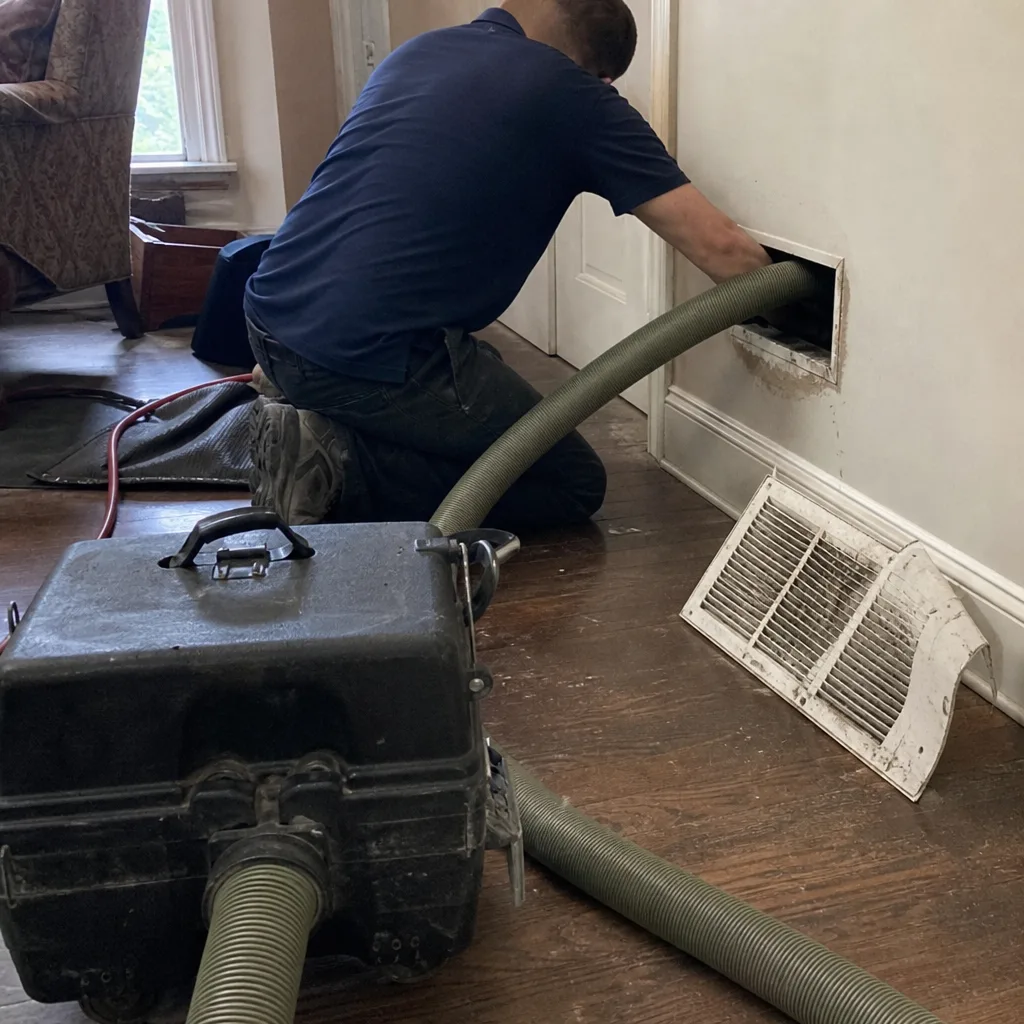
A proper air duct cleaning is not a guy with a shop vac. It’s a systematic process that uses negative-pressure extraction to pull loosened contaminants out of the entire system, not just push them around. The industry standard involves several distinct steps.
Step 1: System Inspection. Before any cleaning begins, the technician should inspect your air handler, supply and return plenums, and accessible duct runs. They should identify the duct material type (flexible duct vs. sheet metal), locate all access points, and assess the level and type of contamination. This inspection determines the scope of work and the final price.
Step 2: Negative-Pressure Setup. A powerful vacuum unit is connected to the duct system, usually at the return side near the air handler. This creates negative pressure inside the ductwork, which means air and debris are being pulled out of the system rather than blown into living spaces. The vacuum exhaust is either vented outside or through HEPA filtration.
Step 3: Mechanical Agitation. This is the step that separates real cleaning from a surface pass. A technician uses rotating brushes, compressed air whips, or other agitation tools to break loose the adhered film from duct walls. Without this mechanical action, negative pressure alone cannot remove the bonded pollen-dust residue common in Atlanta homes. Each branch line gets agitated from register to trunk line.
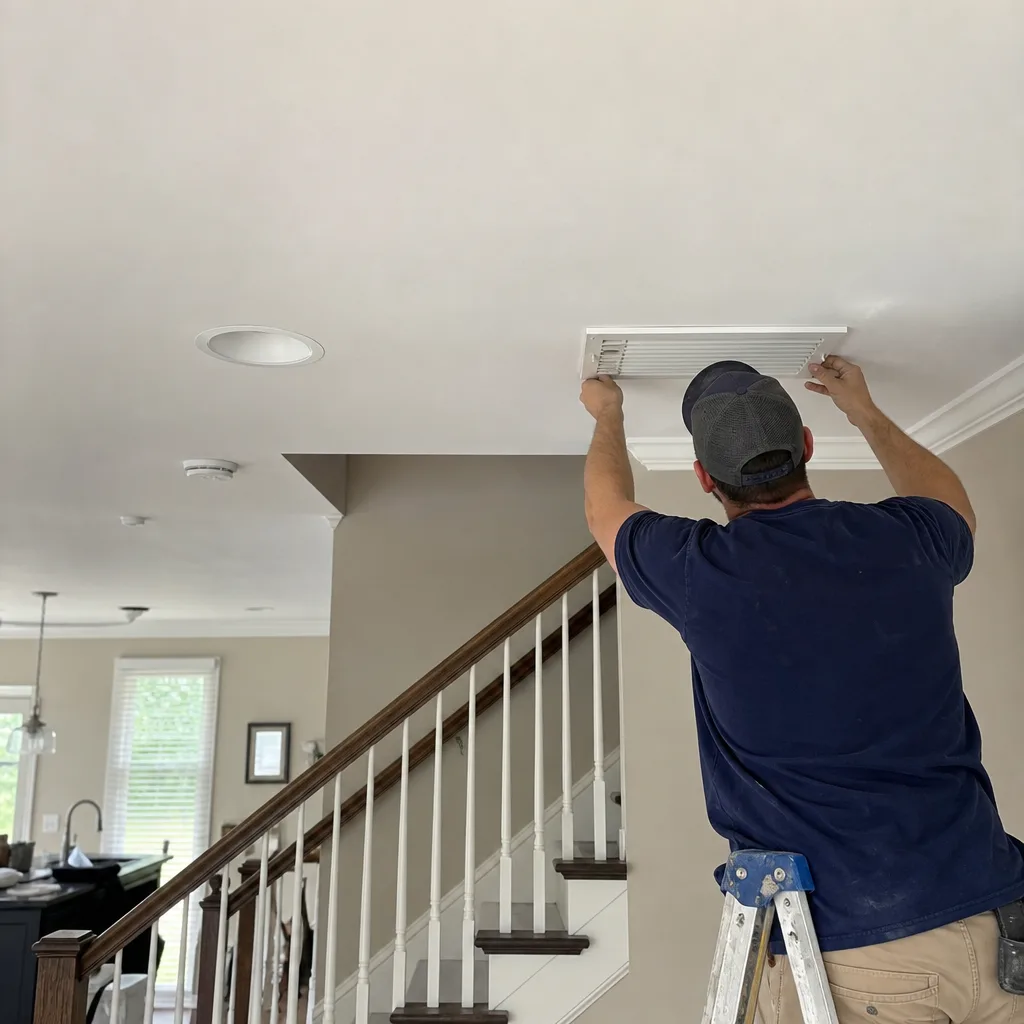
Step 4: Register and Grille Cleaning. Every supply register and return grille is removed, cleaned, and reinstalled. These components accumulate significant buildup after years of conditioned air passing over them.
Step 5: Component Cleaning. The blower motor, evaporator coil, drain pan, and air handler cabinet should be inspected and cleaned if contamination is present. A duct cleaning that skips the air handler leaves a significant source of contamination directly upstream of your cleaned ducts.
Step 6: Final Inspection and Documentation. The technician should walk you through what was done, show before-and-after photos, and note any deficiencies found during the job, such as disconnected ducts, damaged insulation, or mold growth requiring remediation.
How Much Air Duct Cleaning Costs in Atlanta
Air duct cleaning in Atlanta typically costs between $350 and $700 for a full-system cleaning of an average home. If you see a quote below $200, you should be skeptical; that price point usually means a surface-only vacuum pass that will leave the bonded film in place. Here’s a breakdown of what drives pricing in the Atlanta market:
| Factor | Cost Impact |
|---|---|
| Home size (ductwork scale) | $250 – $600 base range for 1,500 – 3,500 sq ft homes |
| Number of supply/return vents | Larger homes with more runs cost more; some charge per vent, but flat system pricing is more transparent |
| Duct accessibility | Crawlspace and attic access in Atlanta’s older homes can add $50 – $150 for access point creation |
| Contamination severity | Heavy biofilm or years of neglect may require additional agitation time, adding $100 – $200 |
| Additional services (dryer vent, coil cleaning) | Often bundled; expect $75 – $150 per added service |
Atlanta’s housing stock skews older than many Sun Belt cities, and older homes often have ductwork that hasn’t been serviced in a decade or more. That means more buildup, which means more time, which means a higher final number. The honest approach is flat pricing per system: one written number before work begins, covering the entire duct system regardless of how many vents or runs are involved. Per-vent pricing creates incentives to inflate the scope, and it’s a common source of bait-and-switch complaints in the industry.
When you call around Atlanta for quotes, ask for a flat system price in writing before the technician arrives. If a company won’t put a number in writing before scheduling, that’s a red flag. You should also ask what is and isn’t included: some companies quote a base cleaning but charge extra for the air handler, registers, or access point creation.
The NADCA Standard and Why It Matters
NADCA, the National Air Duct Cleaners Association, publishes the industry’s primary process standard: ACR 2021. It’s the most widely recognized benchmark for what constitutes a proper HVAC system cleaning, and any legitimate Atlanta contractor should be able to tell you whether they follow it and how.
The ACR 2021 standard covers several critical points that separate real cleaning from a vacuum pass:
- Negative-pressure extraction is mandatory. The standard requires that cleaning be performed under continuous negative pressure so contaminants are removed from the system, not dispersed into the home.
- Mechanical agitation is required. The standard explicitly requires agitation devices to loosen debris from duct surfaces. Vacuum alone is not compliant.
- All components, not just ducts. ACR 2021 requires cleaning of the air handler cabinet, blower, coil, and drain pan when contamination is present. Ducts are only one part of the HVAC system.
- Filtration during cleaning. Vacuum exhaust must be filtered to prevent recontamination, typically through HEPA filtration or external venting.
- Visual inspection before and after. The standard specifies that technicians verify results through visual inspection, often with camera equipment.
Here’s the practical question for an Atlanta homeowner: how do you verify a contractor is actually following ACR 2021 when the ductwork is mostly hidden? The short answer is you ask before you hire. A legitimate company will explain their process in plain language, confirm they use negative-pressure extraction and mechanical agitation, and provide documentation after the job. A company that gets defensive or vague when you ask about NADCA standards is telling you something worth hearing. Learn what to look for in our How to Hire a Air Duct Cleaning Contractor in Atlanta: A Step-by-Step Guide.
For Atlanta’s humid climate specifically, the mechanical agitation requirement matters more than it does in drier regions. That bonded biofilm won’t come loose with suction alone. If a contractor skips agitation, they’ve skipped the part of the job that matters most here.
What a Legitimate Pre-Cleaning Inspection Covers
Before any cleaning work begins, a proper inspection should occur. This is not a five-minute glance; it’s a systematic evaluation that determines what the job will involve and what it should cost. Here’s what a legitimate pre-cleaning inspection in an Atlanta home should cover:
- Access point identification. The technician should locate or create access points to reach the interior of the supply and return trunk lines. In many Atlanta homes, especially older ones, access points may not exist and will need to be cut into the ductwork. A good inspection notes where these openings will be made.
- Duct material assessment. Atlanta homes contain both rigid sheet metal ductwork (common in mid-century construction) and flexible insulated duct (common in attic runs and newer additions). The cleaning method varies by material; flex duct requires lower-pressure agitation to avoid damage. The inspection should identify what type of duct each run uses.
- Visible contamination evaluation. The technician should look into the ducts with a camera or borescope and describe what they see. Is it loose dust, or is it adhered film? Is there visible mold growth, or just discoloration that looks like mold? Is there evidence of pest activity? These findings shape the scope of work.
- System condition check. The inspection should note any existing damage: disconnected ducts, crushed flex runs, gaps at joints, missing insulation, or water staining. Air duct repair needs should be documented separately from cleaning.
- Air handler and coil inspection. The blower compartment, evaporator coil, and drain pan are part of the airflow path. A legitimate inspection looks at these components, because cleaning ducts while leaving a contaminated coil in place achieves little.
A technician who quotes a price before looking at any of this is not doing a legitimate inspection. In our experience, the inspection is the part of the job that most separates serious companies from quick-cash operations. If someone is willing to quote you a price over the phone without seeing the system, with a promise that it won’t change once they arrive, ask yourself what they’re actually going to do when they get there.
Atlanta Home Styles and Their Duct Problems
Atlanta’s housing stock is not uniform. The city’s growth patterns created distinct eras of construction, and each era has characteristic duct problems. Understanding what you’re likely dealing with helps you know what to ask about.
Craftsman bungalows (1900s – 1930s). Homes in neighborhoods like Grant Park, Inman Park, Virginia-Highland, and East Atlanta often have original ductwork from mid-century retrofits, because most were built before central HVAC existed. The retrofitted systems frequently have undersized return ducts; the original house wasn’t designed for forced air, and the return path was an afterthought. Undersized returns create higher static pressure and pull more debris through the system, which means filters clog faster and contamination accumulates more quickly. Homeowners in these neighborhoods often need cleaning on a 3-year cycle rather than the 5-year cycle common in newer construction.
Ranch-style homes (1950s – 1970s). The suburban ranch explosion that built neighborhoods like Morningside, North Druid Hills, and much of DeKalb County used sheet metal ductwork run through crawlspaces. In Atlanta’s humid climate, crawlspace ducts face two enemies: moisture and pests. Unsealed joints let humid crawlspace air into the system, which feeds the biofilm problem, and rodent activity in crawlspaces can damage insulation and leave contamination inside ducts. Sheet metal ducts also rust in these environments, and rust particles mix with the regular dust load.
McMansion-era construction (1990s – 2008). The boom years built thousands of larger homes in the northern suburbs, many with long flexible duct runs through hot attics. Flex duct, when installed with sharp bends or insufficient support, creates airflow restrictions and collects debris at those restriction points. Attic temperatures in Atlanta regularly exceed 130°F in summer, which accelerates the breakdown of flex duct inner liners over time. If your home is in this era and has never had its ducts touched, expect the first cleaning to reveal significant accumulation.
New construction (2010 – present). Newer homes in Atlanta’s expanding suburbs generally have more thoughtfully designed duct systems, but construction debris is a real problem. Drywall dust, sawdust, and insulation fibers left in the system during construction get recirculated until the first proper cleaning removes them. A new home’s first cleaning often produces surprising amounts of debris.
If you’re in an older Atlanta neighborhood with retrofitted HVAC, see our Air Duct Repair in Atlanta page for information on how we address undersized returns and other legacy system problems.
Documentation You Should Receive After the Job
You’re paying for a service you can’t easily see. The ducts are in walls, crawlspaces, and attics. The only way to verify the work was actually done is documentation. A legitimate air duct cleaning company in Atlanta should provide all of the following after the job:
- Before-and-after photos. Every access point opened during the job should have photographic documentation. You should see the condition of the ducts before cleaning and the same ducts after. If a company can’t or won’t provide photos, you have no way to verify anything happened.
- Scope of work completed. A written summary of what was cleaned: the number of supply runs, return runs, whether the air handler and coil were included, which registers were removed and reinstalled. If something was excluded, it should be documented as excluded with a reason.
- Deficiency findings. Any issues discovered during the job should be documented in writing: disconnected ducts, mold growth, water damage, rodent activity, damaged flex runs. You need this information whether or not you choose to address the issues immediately.
- Written guarantee terms. If the company offers a guarantee, get the terms in writing: what’s covered, for how long, and what happens if you’re not satisfied. At Linden Air Duct Atlanta, every job includes our 365-Day Done Right Promise in writing: if the work is not right, we make it right, and that promise is part of your paperwork, not something explained verbally and then forgotten.
After the job is a good time to ask about maintenance. Most Atlanta homes benefit from duct cleaning every 3 to 5 years, with the shorter interval applying to older homes, homes with pets, and households with allergy sufferers. Your technician should be able to give you a recommendation based on what they observed, not a scripted upsell.
Common Mistakes to Avoid
- Hiring on price alone. A $99 whole-house duct cleaning in Atlanta is not cleaning your ducts. It’s a surface vacuum pass designed to generate leads for other services. The job will need to be redone properly, and you’ll pay twice.
- Not asking about the process before booking. If you don’t know whether the company uses negative-pressure extraction and mechanical agitation, you don’t know whether you’re hiring a real cleaner or a vacuum operator. Ask before you book.
- Accepting a quote that changes on arrival. Some Atlanta companies quote a low price over the phone, then “discover” additional work once they’re in your home. Get the price in writing before the technician arrives, and hold them to it.
- Skipping the air handler and coil. If a company offers a duct-only price that excludes the air handler, evaporator coil, and blower, you’re getting a partial cleaning. In Atlanta’s humid conditions, the coil is often the most contaminated component in the system.
- Not getting documentation. Without before-and-after photos and a written scope of work, you have no evidence the job was done. A legitimate company provides this by default; you shouldn’t have to ask.
- Using a company that won’t identify the technician before arrival. You’re letting someone into your home. You should know their name, see their photo, and verify their ID at the door. A company that can’t or won’t provide this is not treating your home with the seriousness it deserves.
- Waiting until there’s a visible problem. By the time you see dust blowing from your registers or smell musty air when the HVAC runs, the contamination is severe. Regular maintenance every 3 to 5 years prevents that level of buildup and the higher cost required to remove it.
When to Call a Professional
If you’re seeing visible dust buildup on register covers, dust accumulating rapidly after cleaning, musty odors when the HVAC runs, or if your home has pets and hasn’t had a duct cleaning in five years or more, it’s time. If anyone in the home suffers from allergies or respiratory issues, Atlanta’s long pollen season makes clean ductwork a practical mitigation measure, not a luxury. If you’ve never had your system inspected, an evaluation is the starting point; you may not need a full cleaning, but you’ll know where you stand. Linden Air Duct Atlanta offers free estimates in Atlanta, including a pre-cleaning inspection with photographic documentation. Call (912) 493-7110 to schedule a visit, and you’ll know the written price before any work begins.
Frequently Asked Questions
Air duct cleaning in Atlanta typically costs $350 to $700 for a full-system cleaning of an average single-family home. Larger homes, older systems with heavy buildup, and homes that haven’t been cleaned in many years can run higher. Be wary of quotes under $200; at that price, you’re likely getting a surface-only vacuum pass that leaves the adhered film in place. Call (912) 493-7110 for an exact written quote before any work begins.
Most Atlanta homes benefit from duct cleaning every 3 to 5 years. Homes in older neighborhoods with retrofitted HVAC systems, homes with pets, and households with allergy sufferers should lean toward the 3-year interval. Atlanta’s humidity and pollen load mean contamination accumulates faster here than in drier climates, so the national “every 5 to 7 years” guidance often understates what Atlanta homes actually need.
Cheaper quotes almost always reflect a less thorough process. A $99 or $150 cleaning typically means a technician with a basic vacuum making a pass through accessible registers without negative-pressure extraction, mechanical agitation, or component cleaning. The bonded film that forms in Atlanta’s humid ductwork stays behind. You’re paying for an incomplete job that will need to be redone. Legitimate cleaning requires industrial equipment, time, and training, and the price reflects that.
Before-and-after photos are the verification standard. A legitimate Atlanta duct cleaning company will photograph every access point before and after cleaning and provide those photos to you. You should also receive a written scope of work and a written guarantee. If a company can’t provide photographic evidence of the work, you have no way to verify it happened. At Linden Air Duct Atlanta, before-and-after photos are standard documentation on every job, and every cleaning includes our 365-Day Done Right Promise in writing.
Clean ductwork can reduce the amount of accumulated pollen, dust, and debris recirculating through your home. It will not eliminate outdoor allergens entirely; Atlanta’s pollen counts are high enough that open windows and normal foot traffic bring allergens in regardless. But removing years of accumulated pollen and dust from your ducts means your HVAC system stops redistributing the backlog every time it runs. Homes in Atlanta with allergy sufferers see the most noticeable benefit when ducts are cleaned on a regular 3-year cycle.
A $99 duct cleaning is typically a vacuum pass through accessible registers without negative-pressure extraction or mechanical agitation. A legitimate cleaning sets up negative pressure at the air handler, agitates every duct run from register to trunk line, cleans the air handler and coil, removes and cleans all registers, and documents the work with before-and-after photos. The legitimate version takes 3 to 6 hours; the $99 version takes 45 minutes. In Atlanta’s humid conditions, the difference in results is even more pronounced, because bonded biofilm requires real agitation to remove.
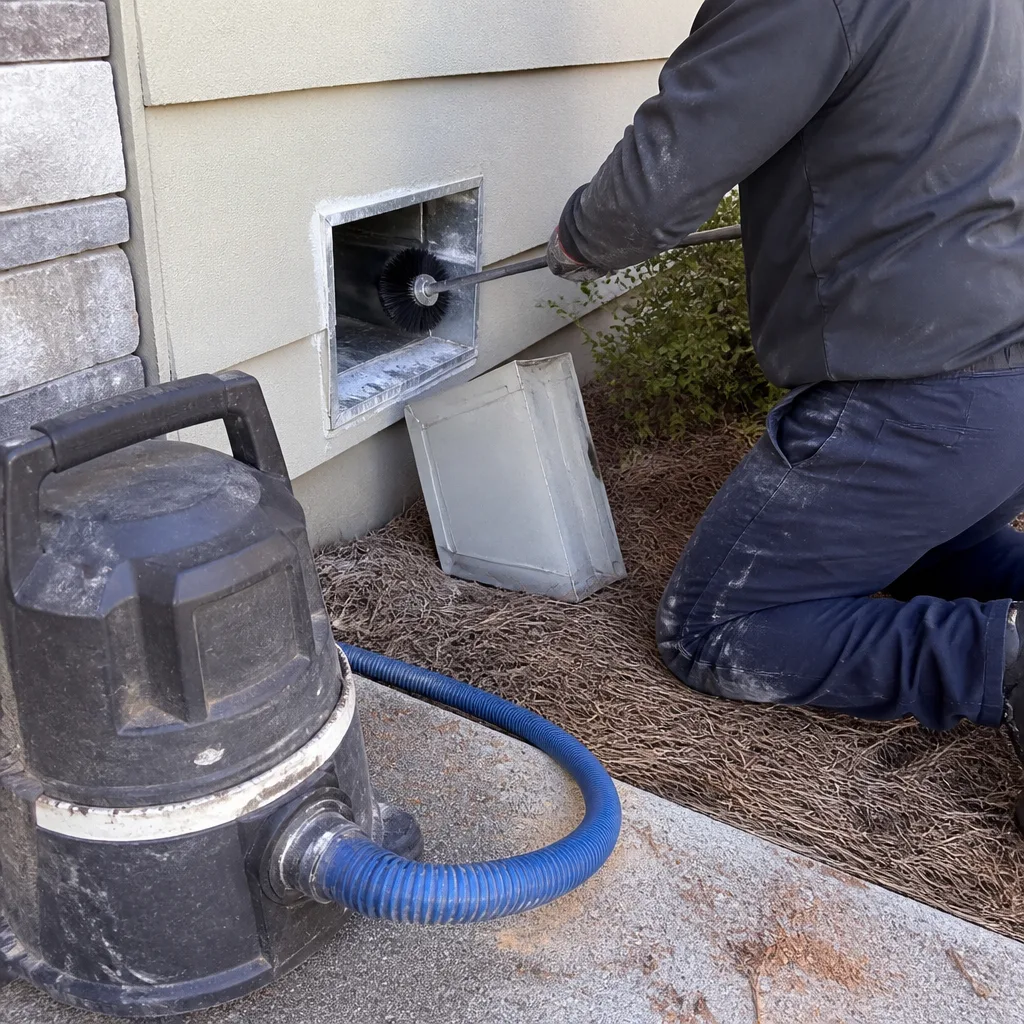
Yes. Dryer Vent Cleaning in Atlanta is one of our core services, and it’s commonly bundled with duct cleaning because dryer vents in Atlanta homes face the same humidity-related lint clumping problems as HVAC ducts. Lint that absorbs moisture becomes heavier and sticks to vent walls, which is why dryer vent cleaning matters even when you clean the lint trap regularly.
The Bottom Line
Air duct cleaning in Atlanta is a different job than it is in most of the country. The humidity, the pollen, and the red clay combine to create contamination that bonds to duct surfaces and resists superficial cleaning. A legitimate cleaning here requires negative-pressure extraction, mechanical agitation, component cleaning, and honest documentation. Expect to pay $350 to $700 for a real job, demand a written price before work starts, and verify the results with before-and-after photos. The right company will send a technician whose name and photo you know before the doorbell rings, and will back the work in writing. If you’re ready to know exactly who’s coming to your door and exactly what the job will cost, Linden Air Duct Atlanta is ready to provide both. Call (912) 493-7110 for a free estimate.
Written by Marcus Veale, Owner at Linden Air Duct Atlanta, serving Atlanta since 2004. Explore more guides & resources from our team.
See the difference
 Before
 After
After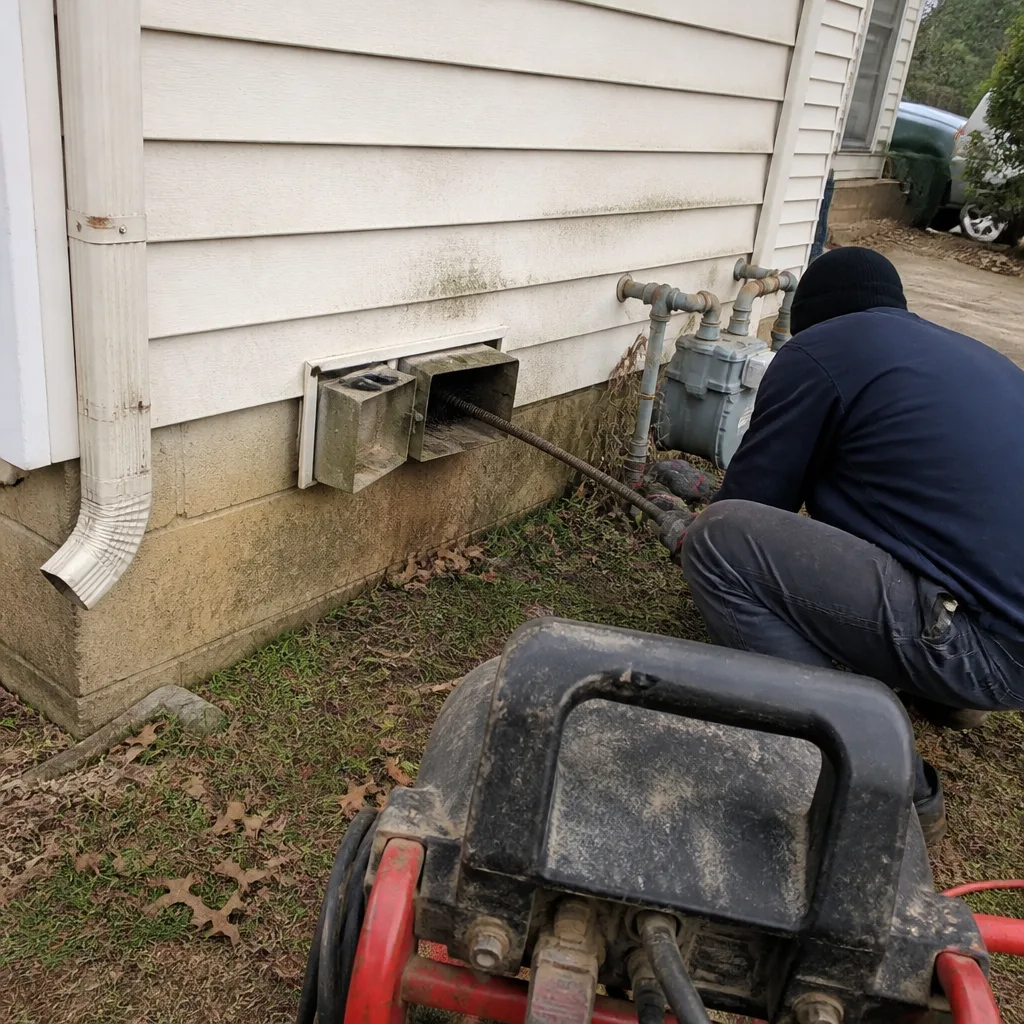 Before
 After
After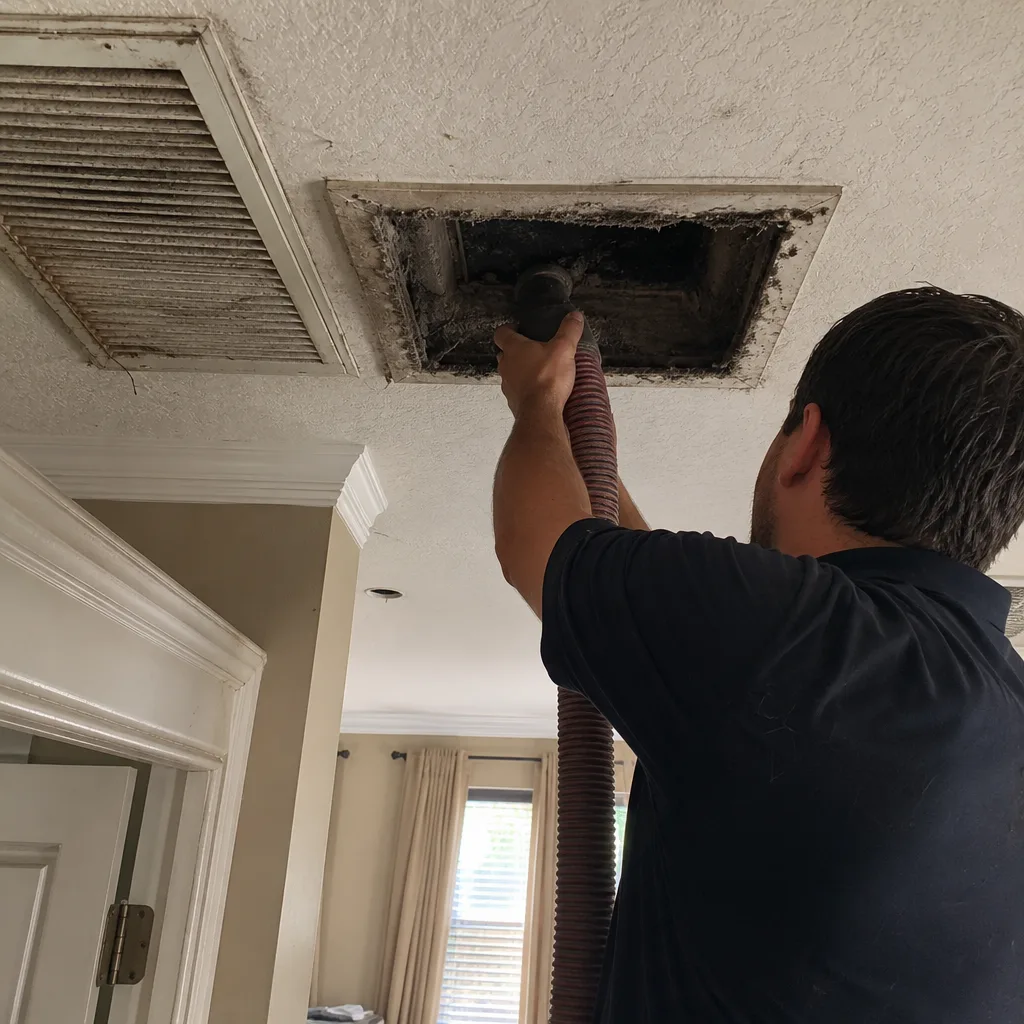 Before
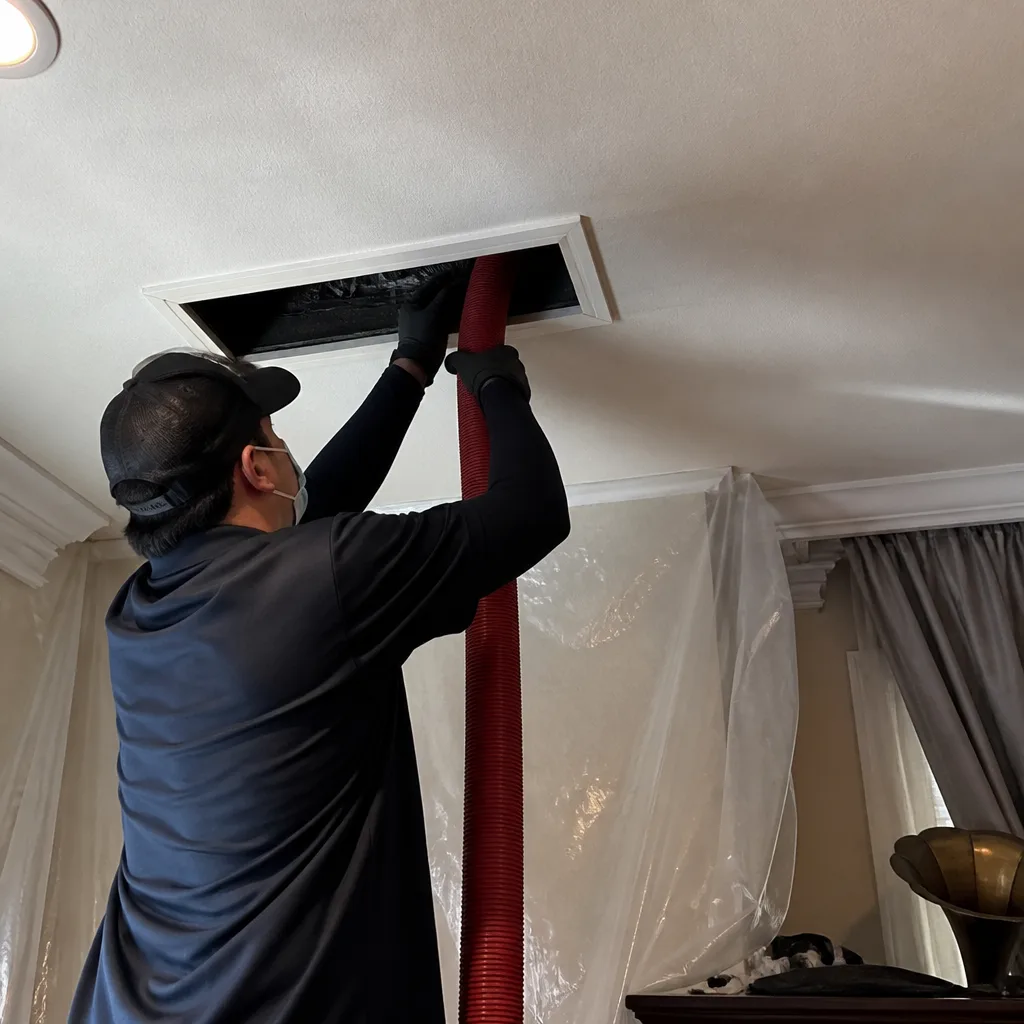 After
After