

Last updated October 17, 2026
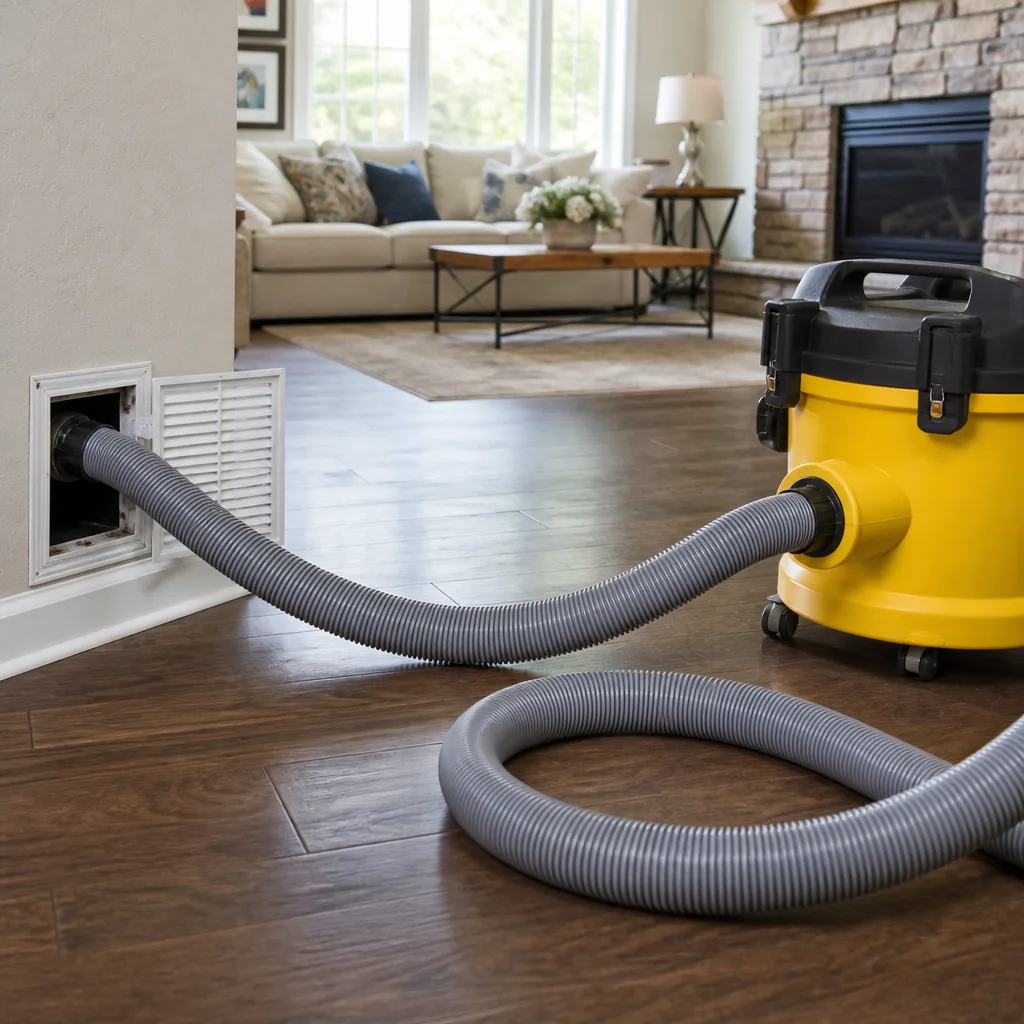 Whole-home duct cleaning
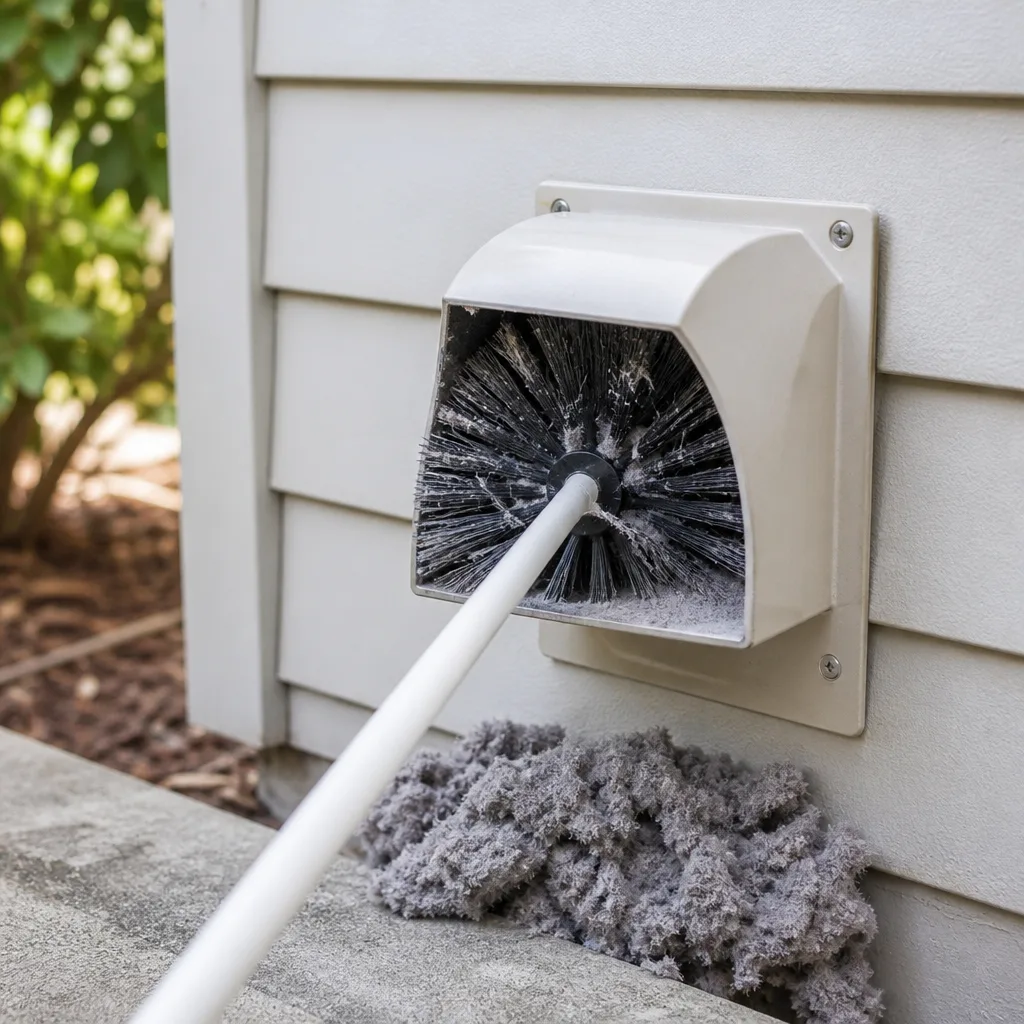 Dryer vent cleaning
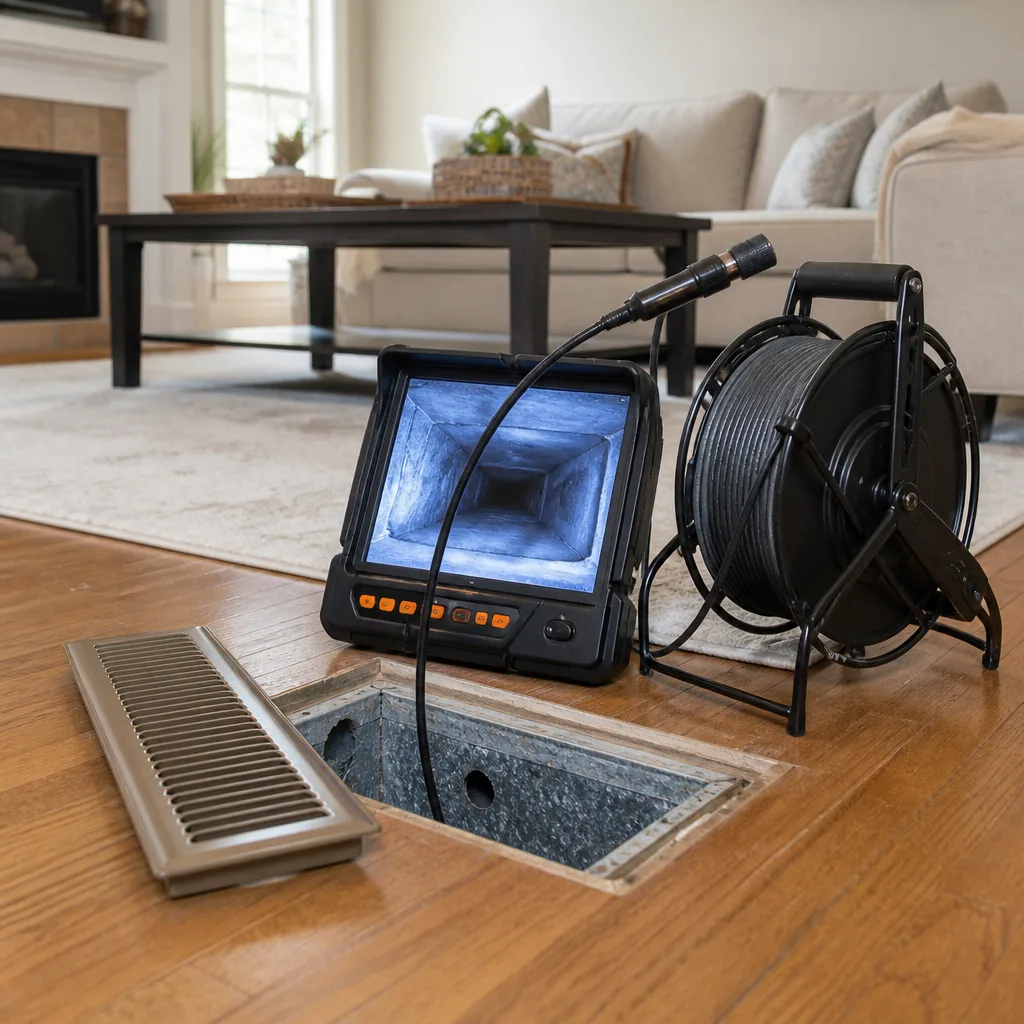 Camera inspection
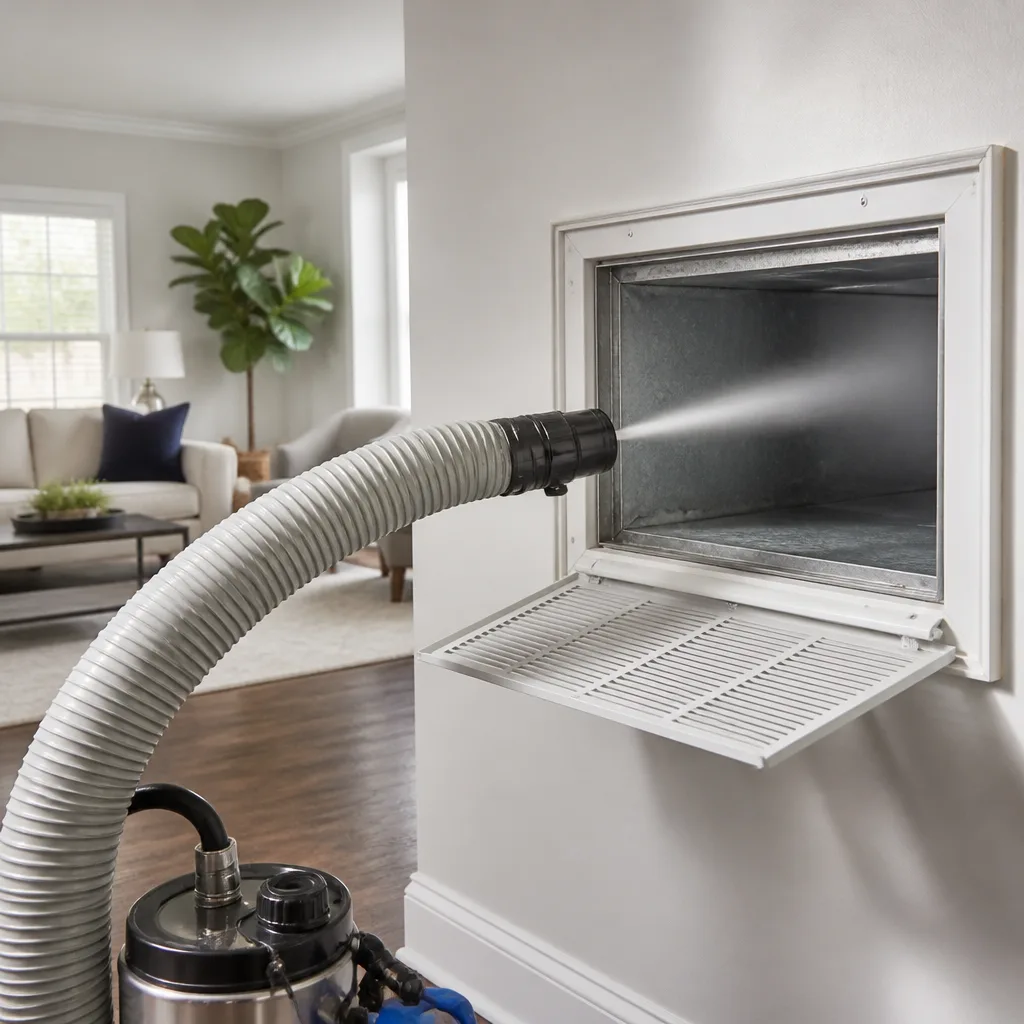 Sanitizing & deodorizing
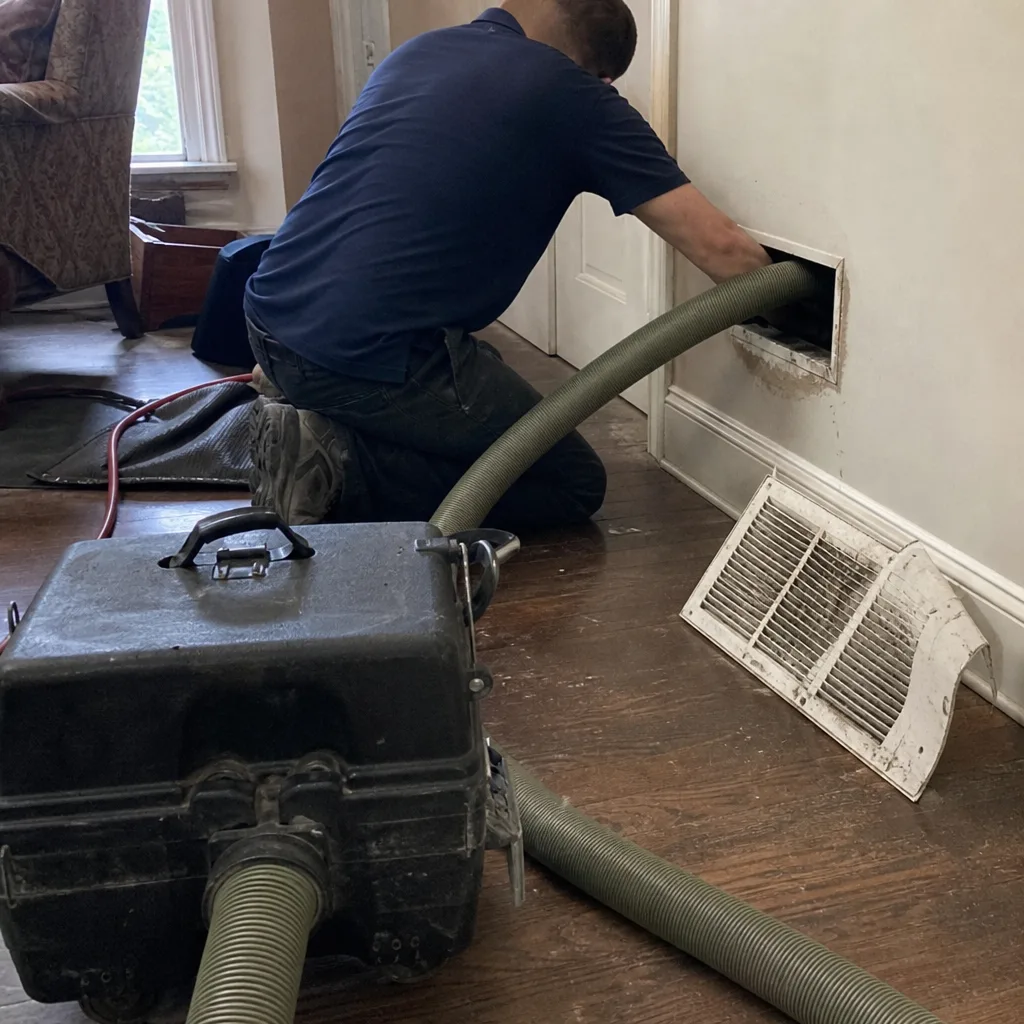
Whole-system duct and dryer vent check with before-and-after photos - you see exactly what came out of your vents
That "$99 whole-house special" is a bait ad - the real number appears once they are in your hallway, or the "clean" is a shop-vac at the register. We photograph the inside of your ducts before and after instead.
DIY vs Professional Air Duct Cleaning: The Atlanta Homeowner’s Decision Guide
The most popular DIY duct cleaning tutorial on YouTube has over 2 million views and recommends a $35 dryer vent brush and a shop vac. The problem: that brush can reach roughly 18 inches into a duct on a system that may run 40 feet from the air handler to the farthest register in a Buckhead colonial or a Decatur bungalow. This guide walks through what DIY duct maintenance can legitimately accomplish in Atlanta homes, where the physics makes DIY cleaning impossible, and how to decide whether to tackle tasks yourself or schedule our Air Duct Cleaning services.
Styles & brands we work with
Quick Answer
DIY air duct maintenance in Atlanta is real and worthwhile: cleaning registers, replacing filters, vacuuming what you can reach, and doing your own visual inspection are all jobs a homeowner can handle well. But DIY air duct cleaning that mimics professional work is functionally impossible without negative-pressure equipment that costs more to rent than hiring a professional for the whole job. The honest answer: do the maintenance yourself, hire out the cleaning, and you’ll come out ahead on both cost and air quality.
Table of Contents
- What DIY Can Legitimately Accomplish
- The Physics of Why a Shop Vac Fails
- The Atlanta-Specific DIY Risk: Mold and Humidity
- The Honest Cost Comparison
- The Decision Framework: 3 Scenarios for DIY, 2 for Professional
- DIY Tools Actually Worth Buying (and What to Skip)
- How Professional Cleaning Actually Works
- Common Mistakes to Avoid
- When to Call a Professional
- Frequently Asked Questions
- The Bottom Line
What DIY Can Legitimately Accomplish
Let’s start with what’s actually worth your Saturday morning. In our 20 years serving Atlanta homes, we’ve learned that the homeowners with the cleanest systems are not the ones who clean their own ducts. For more guides & resources, explore our blog. They’re the ones who do four specific maintenance tasks consistently and call professionals for the rest. Here is what DIY actually works for.
Register and grille cleaning
Every register in your home is removable, and every one of them collects a film of dust, pet hair, and cooking residue. Take them off, soak them in warm water with a few drops of dish soap, scrub with a stiff brush, and let them dry before reinstalling. This is a genuine air quality improvement, and it costs nothing but time. In Atlanta’s pollen season, doing this monthly from March through May makes a visible difference in the gray film that builds up on vent louvers.
Filter replacement and optimization
The single highest-impact DIY task is changing your HVAC filter on schedule. In Atlanta, where air conditioning runs from April through October, that usually means every 60 to 90 days, and more often if you have pets or live near active construction. The filter’s job is to protect the equipment, not deep-clean your air, but a clogged filter forces your blower to work harder, reduces airflow, and sends more unfiltered air through the gaps. We recommend checking the filter monthly during heavy pollen months and replacing it when you can no longer see light through it. This is a $12 to $25 task that does more for your system’s longevity than any cleaning service ever will.
Visible duct inspection
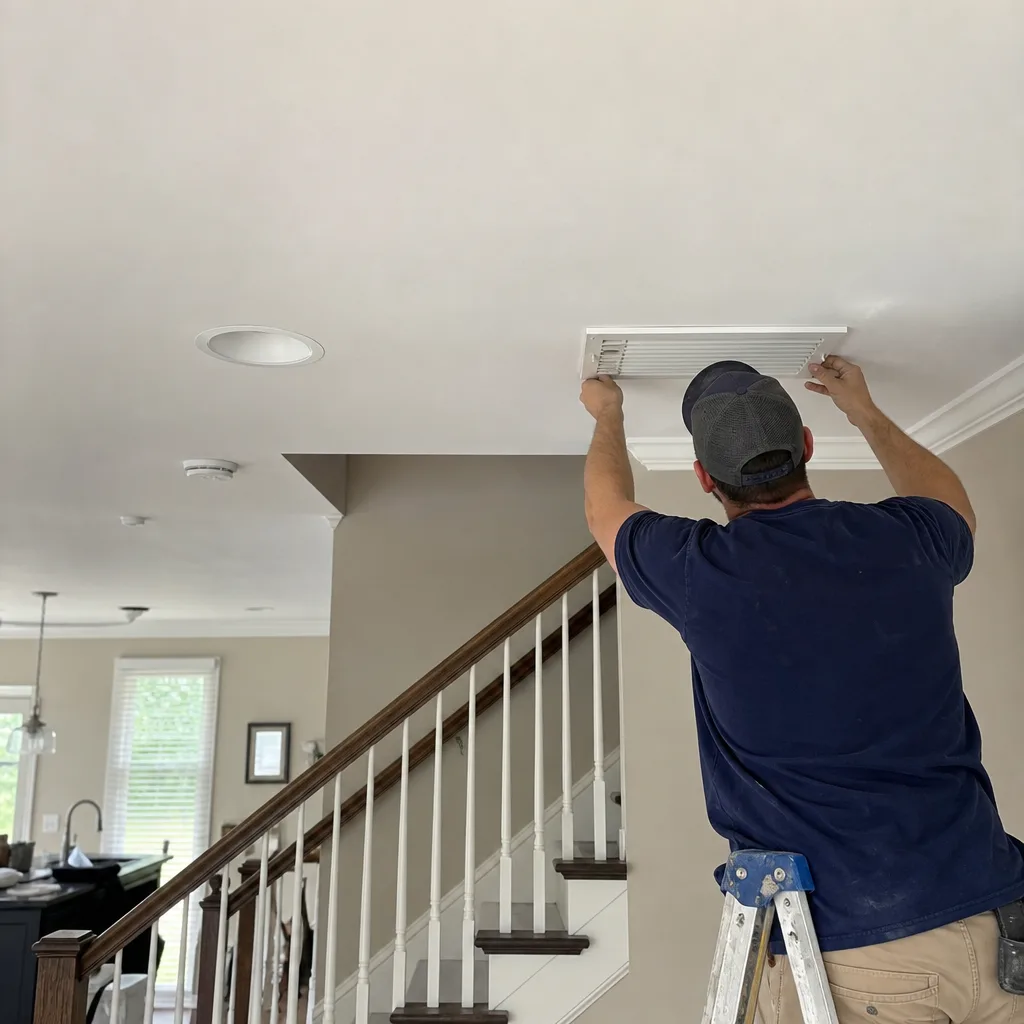
You can inspect the first few feet of ductwork yourself with a flashlight and your phone’s camera. Pull a register in a central hallway, take a photo with the flash on, and look for three things: visible dust accumulation thicker than a light coating, any water staining or rust, and any rodent droppings or insect activity. In crawlspace homes throughout Atlanta, we also recommend checking the flex duct runs visible from the crawlspace entrance for sagging, kinks, or tears. This inspection tells you whether you need professional attention at all. If the visible ductwork looks clean and dry, you may not need a full cleaning for another season or two.
Dryer vent maintenance
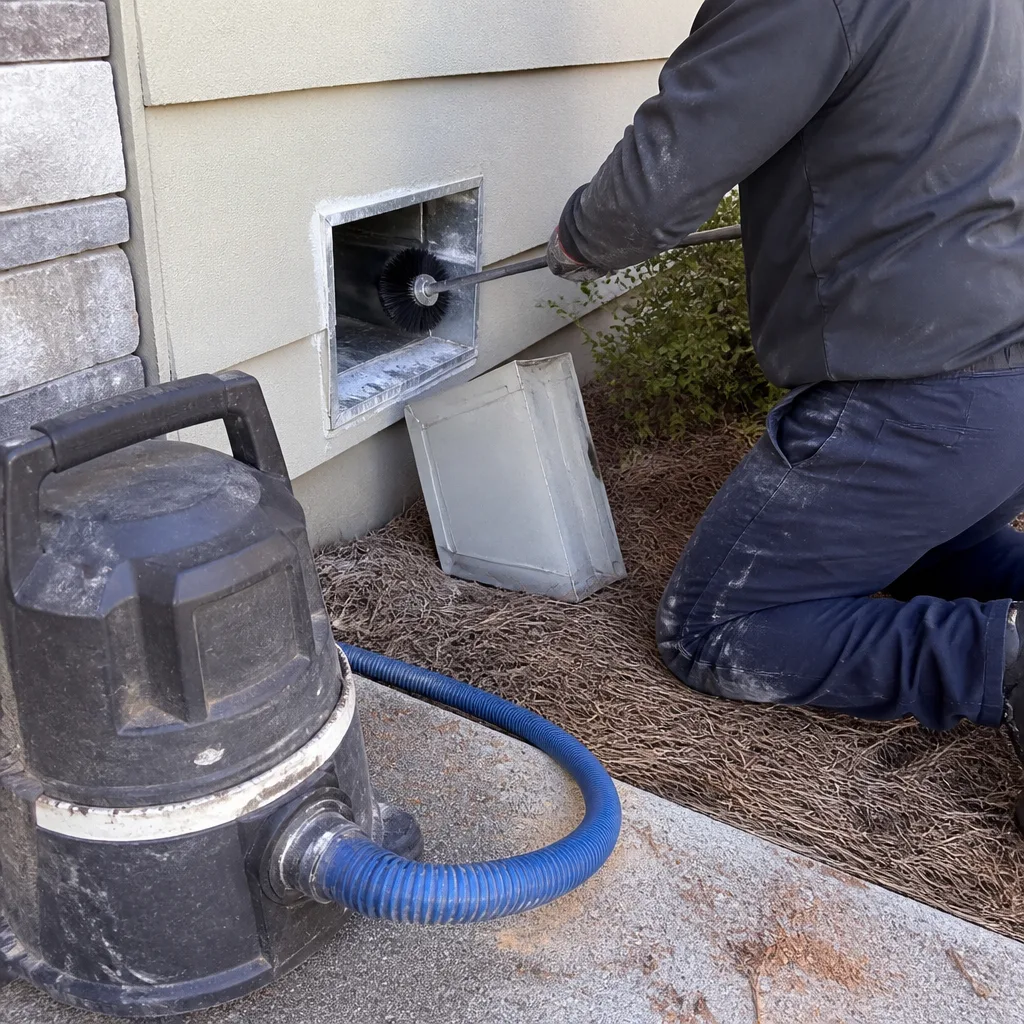
This is the one place where a DIY tool genuinely works. A dryer vent brush kit with flexible rods can reach 12 to 20 feet into a dryer vent run, which covers most single-story Atlanta homes where the dryer vents through an exterior wall. Disconnect the duct, run the brush through with a drill, vacuum what you dislodge, and clean the lint trap housing. We have a full Dryer Vent Cleaning in Atlanta guide that covers this in detail. For multi-story homes where the dryer vents through the roof, skip the DIY attempt: those runs are too long for consumer tools and too risky to access from the roof.
The Physics of Why a Shop Vac Fails
Here is the uncomfortable truth behind every DIY duct cleaning video: a shop vac cannot clean ductwork because it cannot create enough negative pressure. Professional air duct cleaning in Atlanta relies on a truck-mounted or high-powered portable negative-pressure system that pulls air through the entire duct system at a rate measured in thousands of cubic feet per minute, with a static pressure of one inch of water gauge or more. That pressure differential is what suspends debris in the airstream and carries it to the collection point.
A consumer shop vac, even a good 6.5-horsepower model, produces a fraction of that pressure. More importantly, a shop vac only creates suction at the end of the hose. When you push that hose 18 inches into a duct, you are cleaning a circle the diameter of the hose opening. The rest of the duct, which in an Atlanta home typically measures 6 to 12 inches in diameter and runs 20 to 40 feet to the air handler, remains untouched.
Worse, tools like a dryer vent brush attached to a drill do not remove debris. They dislodge it. Without negative pressure holding debris in suspension and pulling it out, whatever you break loose simply moves further down the duct, or falls into the air handler cabinet, or gets pushed into a low spot where it will sit until the next time airflow kicks up. You have not cleaned your ducts. You have redistributed the dirt.
There is a reason professional equipment from brands like Rotobrush and Nikro costs thousands of dollars and runs off dedicated power sources. The physics of moving air through a sealed system cannot be scaled down to a homeowner tool. It is not a matter of effort or technique. It is a matter of cubic feet per minute and inches of static pressure, and consumer equipment cannot produce those numbers.
The Atlanta-Specific DIY Risk: Mold and Humidity
Atlanta’s climate creates a DIY risk that most national guides ignore entirely. Our summer humidity stays above 70% for weeks at a time, and any home with a crawlspace foundation is pulling moisture into the ductwork for months every year. That moisture creates exactly the conditions where mold and mildew take hold inside ducts, especially in the flex duct runs that connect registers to trunk lines in most Atlanta homes built after 1980.
Here is the risk that matters. If your ducts contain mold colonies, and you start scrubbing them with a brush without containing the airflow, you are doing the worst possible thing: you are breaking the colonies apart and pushing the spores into the living space. A professional cleaning runs the system under negative pressure and often uses HEPA filtration at the collection point, which means spores get pulled out of the home rather than blown into it. A shop vac, even one with a HEPA filter, does not create sealed negative pressure on the duct system, and the brush itself aerosolizes spores as it works.
Before attempting any DIY duct work in Atlanta, do this check. Remove a register in a room that feels stuffy or smells musty when the AC kicks on. Look for the three signs of moisture trouble: black or green speckling on the metal, water stains or rust lines, or a persistent musty odor that gets stronger when air moves. If you see any of these, stop the DIY project immediately and call a professional who can assess whether you are dealing with mold, and whether it is surface mildew or something that requires remediation. The cost of a professional assessment is less than the cost of spreading spores through a whole house, especially one with children, elderly residents, or anyone with respiratory conditions.
Even without visible mold, Atlanta’s humidity means DIY duct work carries a secondary risk: condensation. When you open up duct access points in a humid house, you are introducing moist air into the system. If you do not properly seal access points after a DIY attempt, you will create condensation points that attract dust and eventually support mildew growth. That is a problem you created by trying to save money.
The Honest Cost Comparison
Let’s put real numbers on this, because the math reveals something most Atlanta homeowners don’t expect: DIY is usually the more expensive option once you price the equipment that could actually do the job. Here is what a legitimate attempt at DIY duct cleaning costs.
The DIY shopping list (and what it actually does)
- Shop vac with HEPA filter: $120 to $300. Reaches 18 to 24 inches into a duct. Cannot clean the full run.
- Dryer vent brush kit with flexible rods: $35 to $80. Good for dryer vents under 20 feet. Useless for HVAC ducts over 4 to 6 inches in diameter.
- Drill attachment duct brush: $25 to $50. Dislodges debris without removing it, as covered above.
- Inspection camera (endoscope) for smartphone: $40 to $100. Genuinely useful for visual inspection. Does not clean anything.
- MERV-rated replacement filter: $15 to $25 each, 4 to 6 per year in Atlanta. Worth every dollar regardless of cleaning decisions.
Total DIY outlay: roughly $235 to $555, and at the end of it you have not actually cleaned the ducts. You’ve cleaned the registers, the first two feet of some runs, and the dryer vent.
Professional cleaning cost in Atlanta
A full professional air duct cleaning in Atlanta typically runs between $350 and $700 for a single-system home, depending on square footage, number of registers, and whether the system includes crawlspace runs or attic runs that are difficult to access. Homes in neighborhoods like Inman Park and Grant Park with older ductwork may fall on the higher end because duct runs are irregular and access points are limited. Newer homes in areas like Smyrna or Kennesaw with uniform flex runs are often on the lower end.
So the honest comparison is not “$35 DIY versus $500 professional.” It is “$235 to $555 for tools that get you maybe 10% of the job, versus $350 to $700 for the entire job done properly.” The break-even point should make the decision clear. If you only need maintenance, the $35 brush and your own time are the right spend. If you need cleaning, the professional route costs about the same as the failed DIY attempt and actually accomplishes the goal.
Rental equipment does not change this math. Big-box stores occasionally rent what they market as “duct cleaning machines,” which are typically underpowered portable units that produce a fraction of the negative pressure professional equipment generates. Rental cost of $75 to $125 per day looks appealing until you factor in that you need to cut access holes, seal them afterward, and spend a full day learning technique on your own system. We’ve had Atlanta homeowners tell us they rented units, spent six hours, and ended up calling us anyway because they could not reach the far ends of the runs.
The Decision Framework: 3 Scenarios for DIY, 2 for Professional
Instead of asking “should I DIY or hire someone,” ask yourself which of these five scenarios describes your home. Three of them are DIY-appropriate. Two are professional-only. Here is the framework we use when Atlanta homeowners call us with this exact question.
Scenario 1: General housekeeping, no known air quality issues
You moved in within the last five years, or the ducts were cleaned within the last five years. You change filters regularly. No one in the home has unexplained respiratory symptoms. You see a light film of dust on registers. This is a DIY maintenance scenario. Clean the registers, replace the filter, vacuum what you can see, and keep an eye on it. Full professional cleaning is not urgent.
Scenario 2: You have visible debris in the first two feet of ductwork
When you pull a register and look down, you see pet hair, dust clumps, or construction debris sitting right there. This is also a DIY scenario, with a limit. Vacuum what you can reach with the shop vac hose. Do not push a brush deeper than two feet. What you can see and reach, you can clean. What you cannot reach requires professional equipment.
Scenario 3: The dryer vent is the problem, not the HVAC ducts
Your only symptom is that clothes take two cycles to dry. This is a DIY scenario if your vent run is short and accessible. Use the flexible brush kit, clean the lint trap housing, and check the exterior vent flap. This is the highest-value DIY task in the entire guide. A clogged dryer vent is a fire hazard, and the fix is genuinely within homeowner reach in most Atlanta ranch and single-story homes.
Scenario 4: Renovation dust, construction debris, or you bought a previously renovated home
If your home recently went through renovation, or you bought a home that was renovated before you bought it, skip DIY entirely. Drywall dust is the most difficult contaminant to remove from duct systems because it is fine enough to stay suspended in air and coats every surface evenly. It does not vacuum out with a shop vac. It requires negative-pressure extraction with agitation tools, and often a second pass with compressed air. In Atlanta’s active real estate market, this is one of the most common scenarios we see: homeowners in Kirkwood, East Atlanta, and West End who bought a flipped home and discovered drywall dust embedded in every duct run. This is professional-only.
Scenario 5: Mold, moisture, or unexplained respiratory symptoms
Any visible mold, any musty odor from the vents, any water staining in the ductwork, or any household member with respiratory issues that worsen at home: this is professional-only, and it is also a health question before it is a cleaning question. DIY attempts in this scenario are actively dangerous, as covered in the mold section above. Call for an assessment before you do anything else.
DIY Tools Actually Worth Buying (and What to Skip)
If you are going to do the maintenance tasks yourself, here is the short list of what earns its place in your Atlanta garage, and what does not.
Worth buying
- Dryer vent brush kit ($30-$50): The one tool on this list that genuinely cleans something end to end, assuming your vent run is under 20 feet and accessible.
- Smartphone inspection camera with light ($40-$80): This pays for itself in avoided service calls. You can check duct condition, dryer vent runs, and even look into wall cavities after water events.
- Quality HVAC filters, MERV 8-13 ($15-$25 each): Match the filter to what your system can handle. Higher MERV values restrict airflow and strain the blower if the system was not designed for them. MERV 8-11 is right for most Atlanta homes.
- Nitrile gloves and N95 masks ($20 total): When you open up registers and vents, what you find may include rodent droppings, insect frass, or deteriorated insulation. Protect yourself.
Skip entirely
- Drill-attached duct brushes: Covered above. They push debris deeper without removing it.
- Consumer air quality monitors claiming duct diagnosis: A $100 particle counter cannot tell you whether your ducts need cleaning. It can tell you that dust levels change in a room, which is not actionable information.
- Foggers and duct sanitizing sprays: If you have not addressed the source of moisture or contamination, spraying chemicals into ducts is at best ineffective and at worst introduces respiratory irritants. Any meaningful sanitizing requires professional equipment and products, like the Guardsman and Honeywell air quality products that professionals can apply correctly inside the system.
- Flame-retardant or “insulating” duct wrap as a DIY fix: Improperly applied duct wrap in an Atlanta attic creates condensation problems that did not exist before.
How Professional Cleaning Actually Works
Knowing what a professional cleaning involves helps you understand what you’re paying for and why the equipment matters. A proper professional air duct cleaning in Atlanta follows a specific sequence.
- Inspection: The technician documents the condition of the system before work begins, including photos of any damage, mold, or pre-existing issues. This is also when access points are identified.
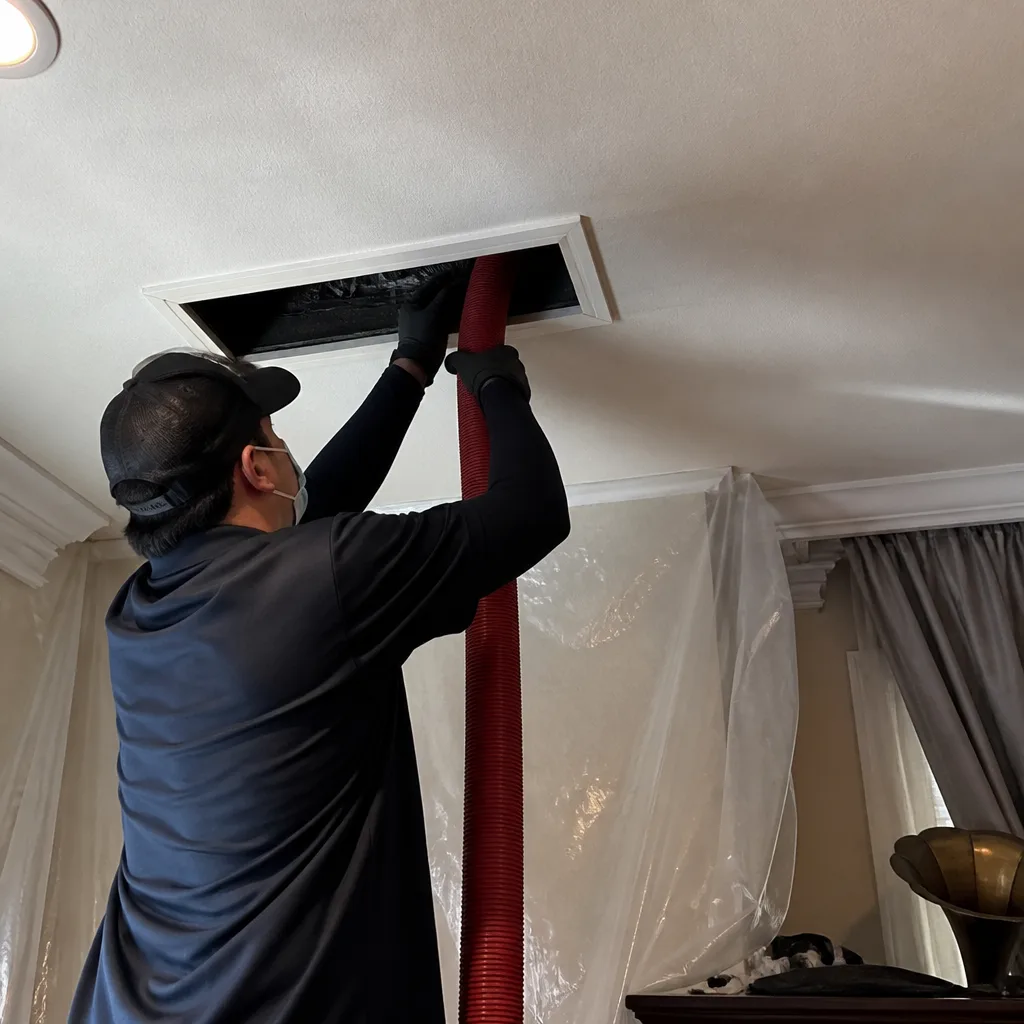
- System sealing: Access to the system is created and the system is placed under negative pressure. The collection unit, typically using HEPA filtration, is connected so that all dislodged debris is pulled out of the home, not pushed through it.
- Agitation: Debris that adheres to duct walls is mechanically loosened with rotating brushes, air whips, or compressed air tools. This is the step that actually separates cleaning from just vacuuming.
- Component cleaning: The blower assembly, evaporator coil, drain pan, and return air plenum are cleaned separately. These are the parts of the system where Atlanta’s humidity causes the most trouble, because condensation on the coil captures dust and creates a sludge that reduces efficiency.
- Sanitizing and sealing: If the system requires it, antimicrobial products are applied. This step should be done thoughtfully and only when there is a specific reason, not as a default upsell.
- Post-inspection: The system is inspected again, access points are sealed, and before-and-after photos document the work.
This is what Air Duct Cleaning in Atlanta means when done properly: the full sequence from inspection to post-inspection. It is also why we put our price in writing before any work begins, and why every repair includes a written guarantee with a free second visit if the repair fails. You are paying for a process, not a task.
Common Mistakes to Avoid
- Pushing brushes deeper than you can see. The moment you lose visual contact with the end of your brush or hose, you are working blind inside a system you cannot observe. Whatever you dislodge beyond your line of sight is now loose inside the ductwork. Limit DIY cleaning to what is visible and reachable.
- Using high-MERV filters as a substitute for air duct cleaning. A MERV 13 filter captures more particles at the filter, but it does not clean the ducts behind it. In fact, a restrictive filter forces the blower to pull air through bypass points and existing gaps, which means more unfiltered air moves through the system. Match the filter to the system, typically MERV 8-11 in Atlanta.
- Sealing visible gaps with duct tape. Despite the name, standard duct tape fails quickly on ductwork, especially in Georgia attic heat where surface temperatures exceed 140 degrees in summer. It dries, cracks, and falls off within a season. Professional sealing uses mastic or foil-backed tape, both available cheaply, and a proper seal job matters more than most people think for system efficiency.
- Ignoring the return side of the system. Most DIY attention goes to the supply registers where you feel air blowing out. In many Atlanta homes, the return side carries more debris because it runs through the attic or a dirty closet and pulls from areas that are rarely cleaned. Include return grilles in your visual inspection.
- Attempting DIY work in homes with older flex duct. Homes built in the 1980s and 1990s in areas like Dunwoody, Sandy Springs, and Marietta often have flex duct that has deteriorated to the point where the inner liner is brittle. Brushing these ducts tears the liner, and then you have insulation fibers and liner particles blowing into rooms. If your flex duct is gray, brittle, or cracked at the collar, professional replacement is the right call, not DIY cleaning.
- Using chemical cleaners in a system without identifying the contaminant first. If the problem is rodent contamination, mold, or construction dust, the fix for each is different. A chemical fog over drywall dust does nothing. A sanitizing spray on mold without removing the mold source makes it worse. Identify what you are dealing with before reaching for any product.
When to Call a Professional
Call a professional when any of these are true: you see mold or water staining in the ductwork, you smell must or mildew when the HVAC runs, you bought a home that was renovated before you purchased it, your ducts are made of older flex material that may be deteriorated, or you have household members with respiratory issues that flare at home. When you are ready for an assessment, Linden Air Duct Atlanta home offers free estimates in Atlanta. Call (912) 493-7110 and you will speak to a live person who can walk through what you are seeing. We also handle Air Duct Repair in Atlanta for systems that need more than cleaning.
Frequently Asked Questions
Professional air duct cleaning in Atlanta typically costs between $350 and $700 for a single-system home, depending on square footage, number of registers, and access difficulty. Homes in older Atlanta neighborhoods with irregular duct runs fall on the higher end, while newer homes with uniform flex runs are usually on the lower end. Call (912) 493-7110 for an exact quote, and you will get the price in writing before any work begins.
Cheap duct cleaning quotes in Atlanta usually come from companies that are not actually cleaning the full system, or that intend to upsell you once they arrive. A $99 whole-house special is a bait price designed to get a technician in the door, after which the invoice grows with add-ons. Honest pricing reflects the real work: full negative-pressure extraction, agitation, component cleaning, and documentation. If a price seems too low to cover the time and equipment involved, it is.
Ask for before-and-after photos of the duct interior, and confirm that the technician will provide them before you schedule. A legitimate professional air duct cleaning includes photographic documentation of the system condition before and after the job. Because we send our technicians’ names and photos before the visit and they show photo ID at the door, you will know exactly who did the work. The written guarantee also holds us accountable if anything falls short.
In Atlanta, every 3 to 5 years is the honest interval for most homes, with two exceptions. Homes with multiple pets, recent renovation, or household members with allergies may benefit from every 2 to 3 years. Homes where occupants change filters regularly, have no pets, and run the system seasonally can often go 5 to 7 years. The best signal is not a calendar but the visual inspection: pull a register, take a photo, and compare it to the previous inspection.
No, not in any meaningful sense. A shop vac cannot produce the negative pressure required to pull debris through the full duct run, and whatever you dislodge with a brush gets pushed deeper into the system. DIY is appropriate for register cleaning, filter replacement, visual inspection, and dryer vent maintenance. The duct cleaning itself requires professional negative-pressure equipment from trade-trusted brands, which costs far more to buy or rent than the service costs to hire out.
Duct cleaning can help with allergies if the ducts contain accumulated dust, pet dander, or pollen that gets redistributed through the home every time the system runs, which is common in Atlanta due to our extended pollen seasons. However, duct cleaning is not a substitute for addressing the source of allergens: filter quality, humidity control, and outdoor air infiltration. An honest professional will tell you whether the ducts are likely contributing to your allergy symptoms or whether the issue lies elsewhere.
The Bottom Line
The DIY versus professional question has a clear answer for Atlanta homeowners once you separate maintenance from cleaning. DIY maintenance, meaning register cleaning, filter replacement, visual inspection, and dryer vent work, is genuinely worth doing and saves money. DIY duct cleaning, meaning the attempt to clean the full duct system with consumer tools, is not possible because the equipment cannot produce the required negative pressure, and in Atlanta’s humidity, aggressive DIY attempts on mold-affected systems are actively risky. Professional cleaning costs about the same as the tools for a failed DIY attempt and includes written pricing, documented results, and accountability that a rental machine does not. Do the maintenance yourself. Hire the cleaning. It is the honest math.
Written by Marcus Veale, Owner at Linden Air Duct Atlanta, serving Atlanta since 2004.
See the difference
 Before
 After
After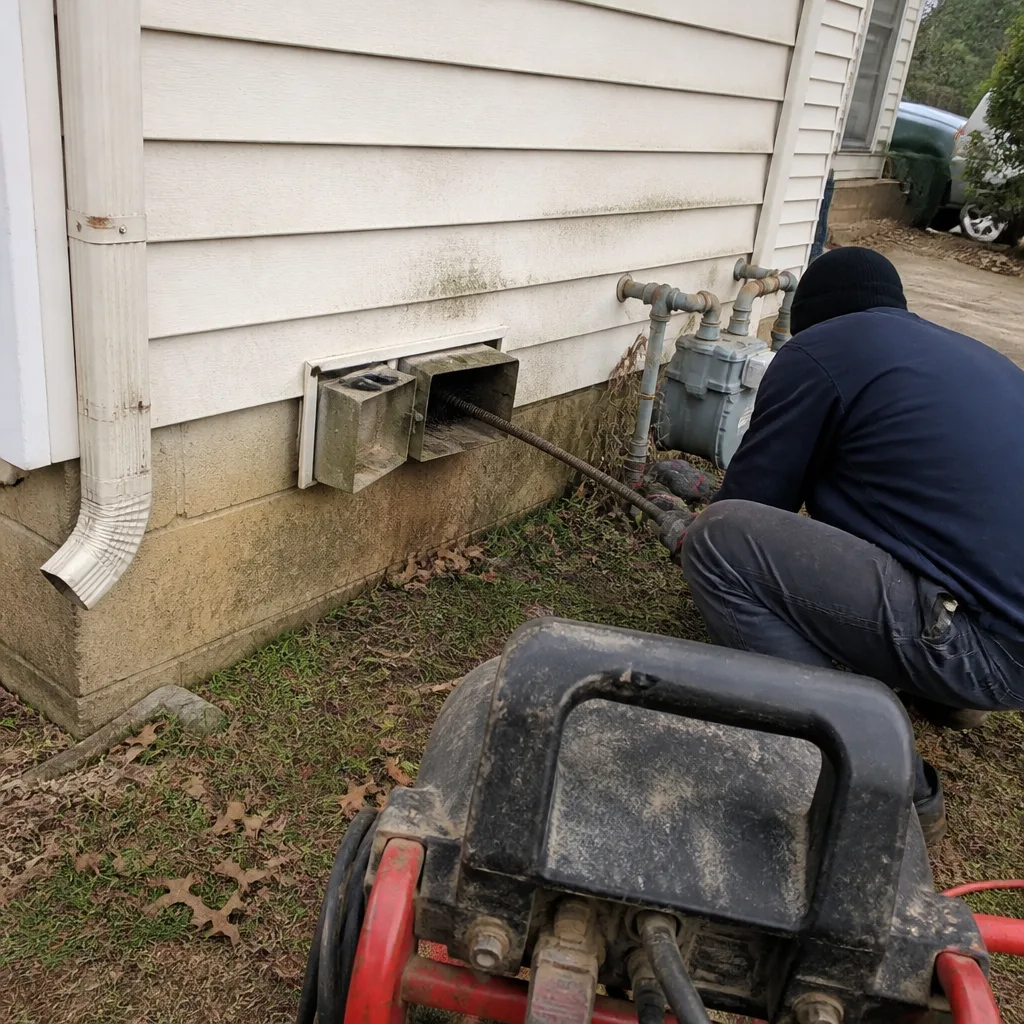 Before
 After
After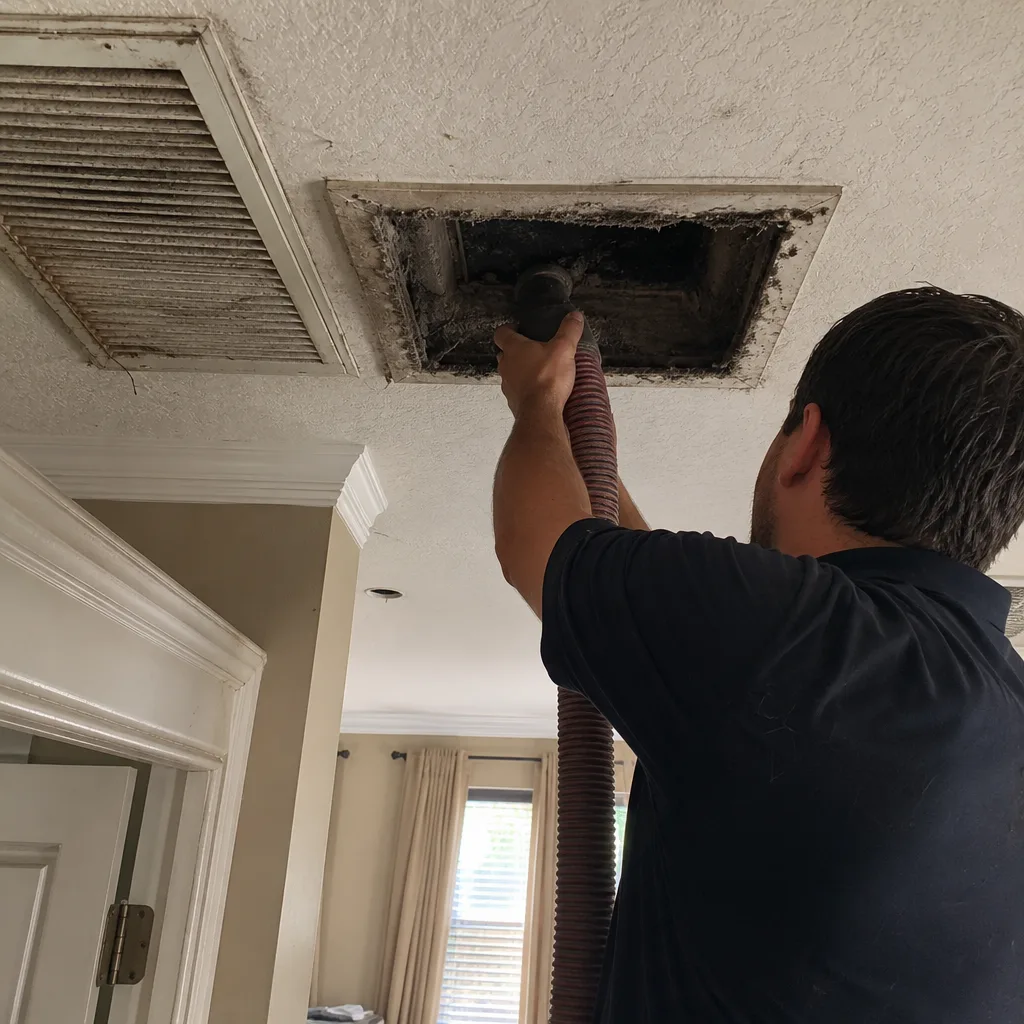 Before
 After
After